Prakash Raj meets Sonam Wangchuk ‘in solidarity’; Chinmayi Sripaada hopes activist calls off hunger strike
Source Entity
Latest News: Today's Latest News Headlines from India & World | Hindustan Times | Hindustan Times
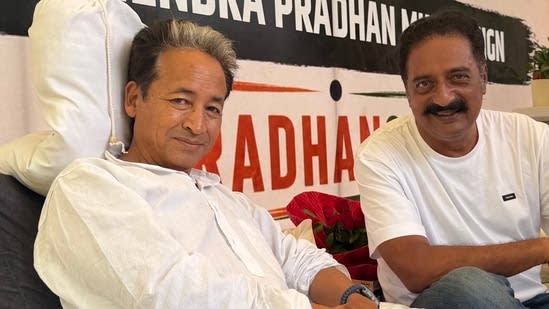
Even as Sonam Wangchuk continues his hunger strike at the Jantar Mantar while protesting with the Cockroach Janata Party, reactions have been varied.
Solidarity and Concern: Analyzing Sonam Wangchuk's Hunger Strike at Jantar Mantar
The recent gathering at Jantar Mantar, where renowned activist and innovator Sonam Wangchuk is conducting a hunger strike, has become a focal point for discussions on indigenous rights and environmental preservation in India. The event gained further visibility with the visit of actor Prakash Raj, who stood in solidarity with Wangchuk, and the public appeals from singer Chinmayi Sripaada, who expressed hope that the activist would end his fast. This intersection of celebrity influence and grassroots activism highlights the growing national attention toward the grievances of the people of Ladakh.
The Political Core: Ladakh's Struggle for Autonomy
To understand the gravity of Wangchuk's hunger strike, one must look at the broader political context of Ladakh. The protest is fundamentally rooted in the demand for Ladakh to be included under the Sixth Schedule of the Indian Constitution. This specific legal framework is designed to protect the tribal populations of Northeast India by allowing them to form autonomous district councils. For Wangchuk and his supporters, this is not merely a political request but a survival mechanism to protect the fragile Himalayan ecosystem from unchecked industrialization and to ensure that the local population retains a say in their own land governance.
Symbolism of the 'Cockroach Janata Party'
An intriguing and highly analytical aspect of this protest is the association with the 'Cockroach Janata Party.' This nomenclature is a satirical commentary on the perceived insignificance of the Ladakhi people in the eyes of the central administration. By adopting the persona of 'cockroaches'—creatures that are often overlooked, stepped upon, yet incredibly resilient—the protesters are utilizing political irony to highlight their marginalization. This strategy transforms a standard hunger strike into a poignant piece of performance art, drawing media attention to the gap between the government's rhetoric of development and the actual lived experience of the border region's inhabitants.
The Role of Public Figures and Cultural Influence
The involvement of personalities like Prakash Raj and Chinmayi Sripaada illustrates the dual nature of public reaction to high-stakes activism. Prakash Raj's presence serves as a catalyst for visibility, leveraging his platform to bring the nuances of the Ladakh issue to a wider, more diverse audience across India. Conversely, Chinmayi Sripaada's plea for Wangchuk to call off the strike represents the humanitarian concern that often accompanies long-term fasts. This tension between the necessity of the political statement and the fragility of human health adds a layer of emotional urgency to the narrative, forcing the public to weigh the cost of political change against personal well-being.
Broader Implications for Indian Federalism
This event is a microcosm of the ongoing tension between centralized governance and regional autonomy in India. The hunger strike at Jantar Mantar signifies a breakdown in dialogue between the central government and the representatives of the Union Territory of Ladakh. If the government continues to ignore these demands, it could set a precedent for other ecologically sensitive or tribal regions to adopt similar drastic measures. The outcome of this strike will likely influence how the state manages indigenous rights and environmental protections in the high-altitude regions of the Himalayas moving forward.
Conclusion: The Path Forward
In summary, Sonam Wangchuk's hunger strike is more than a personal sacrifice; it is a calculated political act aimed at securing the future of Ladakh. The support from figures like Prakash Raj and the concern from others like Chinmayi Sripaada underscore the event's resonance beyond the borders of Ladakh. Whether the government chooses to engage in a meaningful dialogue or maintains its current stance, the 'Cockroach Janata Party' has succeeded in turning a regional grievance into a national conversation on democracy, ecology, and the right to self-determination.
Verification Required?