Vandita Mishra writes: The regional party does not hold
Source Entity
Vandita Mishra
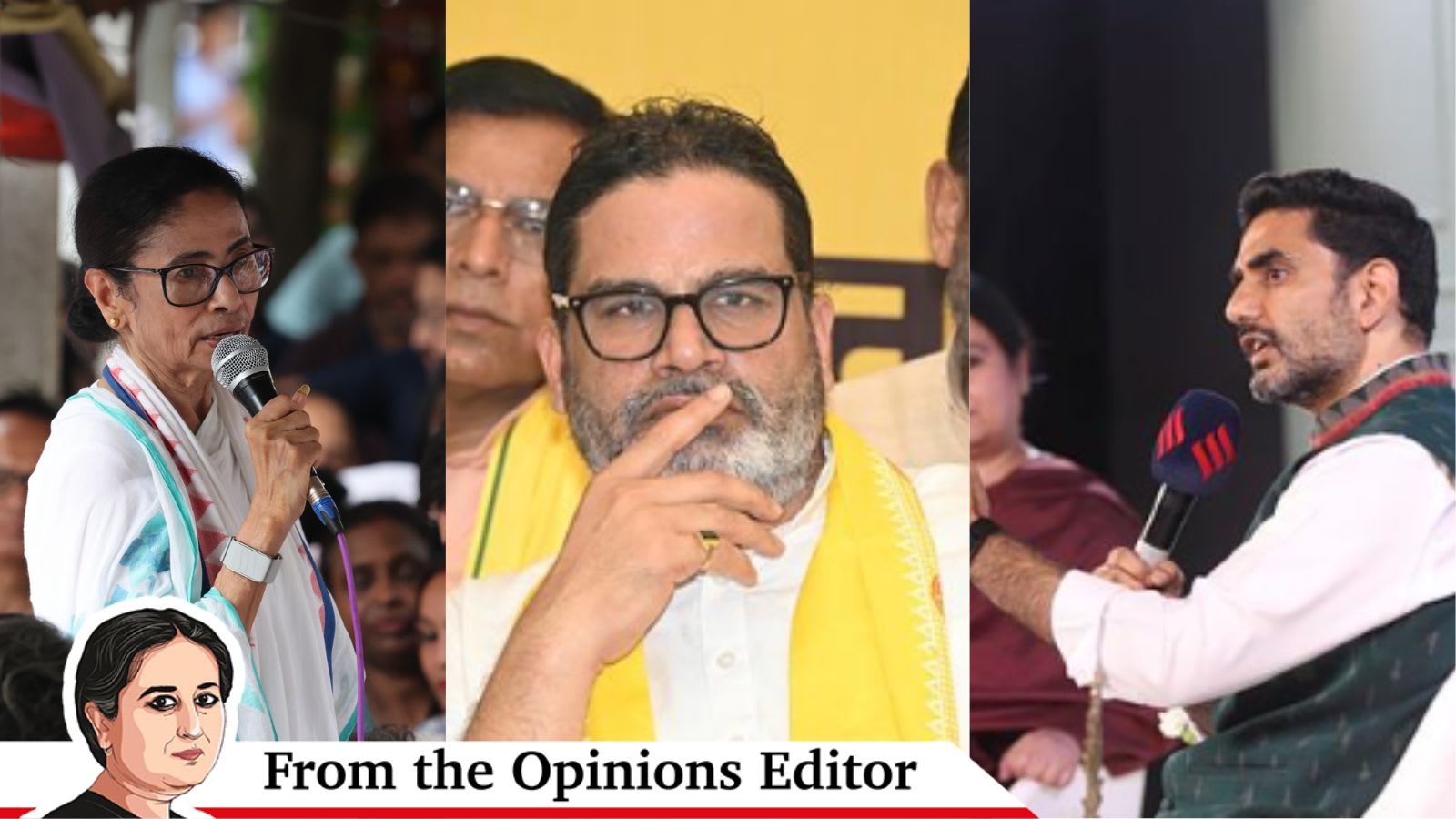
Dear Express Reader At the end of this month, Prashant Kishor will contest a bypoll in Bihar, in a renewed bid to claim some political space, months after his new party failed to achieve a foothold i...
The Strategic Pivot: Prashant Kishor's Bihar Bypoll Bid
Prashant Kishor, once the most sought-after political strategist in India, is now navigating the precarious transition from kingmaker to candidate. The recent report by Vandita Mishra highlights a critical juncture in Kishor's political journey: his decision to contest a bypoll in Bihar at the end of this month. This move comes as a direct response to the initial struggles of his new political entity, which has yet to secure a meaningful foothold in the state's complex electoral landscape. This bypoll is not merely a local contest but a calculated attempt to validate his viability as a leader rather than just a consultant.
Overcoming the Initial Inertia
The mention that his party "failed to achieve a foothold" underscores the immense difficulty of breaking into Bihar's established political order. For years, Kishor operated behind the scenes, engineering victories for others by analyzing data and managing narratives. However, translating that intellectual capital into grassroots loyalty is a different challenge entirely. The failure to gain early traction suggests that while Kishor's strategies may be sound, the emotional and caste-based loyalties that dominate Bihar politics are resistant to purely strategic or programmatic appeals. This bypoll represents a 'reset' button, allowing him to focus his resources on a smaller, more manageable geography to prove his concept.
The Bypoll as a Litmus Test
Choosing a bypoll as a point of entry is a classic tactical maneuver. By narrowing the field of competition, Kishor can deploy a concentrated campaign strategy, mirroring the hyper-local focus he once advised other candidates to adopt. If successful, this victory would serve as a powerful proof-of-concept, signaling to the electorate and potential allies that his movement can actually convert rhetoric into votes. Conversely, a failure in a limited bypoll would severely damage his credibility, potentially labeling him as a strategist who cannot apply his own theories to his own career. The stakes are therefore exceptionally high, as this result will likely dictate the trajectory of his party leading up to the general assembly elections.
Navigating Bihar's Political Binary
Historically, Bihar's political arena has been defined by a rigid binary—often oscillating between the RJD, JD(U), and the BJP. These parties have built deep-rooted networks based on social engineering and identity politics. Kishor's attempt to carve out a "third space" is an uphill battle against these established hegemonies. By contesting this bypoll, he is attempting to disrupt this binary, positioning himself as an alternative to the traditional power structures. His success depends on whether he can convince the youth and the disillusioned sections of the electorate that a new, non-traditional approach to governance is possible in a state traditionally governed by caste alignments.
The Transition from Strategist to Politician
There is a profound psychological and professional shift occurring here. As a strategist, Kishor was insulated from the direct wrath of the voters; as a candidate, he is the primary target. The transition requires a shift from the 'boardroom' to the 'dusty roads' of rural Bihar. This bypoll will test his ability to build a personal connection with the masses—a skill that differs fundamentally from the ability to analyze polling data. The narrative of the 'outsider' or the 'intellectual' can be a double-edged sword; it can attract those seeking change, but it can also alienate those who perceive him as disconnected from the ground reality of the rural poor.
Future Implications and Trends
Looking forward, the outcome of this bypoll will likely influence the broader trend of 'personality-led' regional parties in India. If Kishor succeeds, it may encourage other technocrats or strategists to enter the political fray, shifting the focus from traditional dynasty politics to competency-based leadership. However, if he fails, it will reinforce the notion that in states like Bihar, strategic brilliance is no substitute for long-term grassroots networking and traditional political patronage. This event is a critical case study in the limits of political consultancy when faced with the raw realities of electoral politics.
Conclusion
In summary, Prashant Kishor's decision to contest the Bihar bypoll is a high-stakes gamble designed to rescue his political ambitions from early stagnation. By attempting to claim political space through a localized contest, he is testing whether his brand of strategic politics can survive the volatility of the Bihar electorate. Whether this move results in a breakthrough or a setback, it will provide definitive clarity on Kishor's future role in Indian politics—either as a legitimate political force or as a strategist who found the transition to candidacy insurmountable.