Activist shot dead while exposing drug trade in Punjab; caught on social media live
Source Entity
NEEL KAMAL
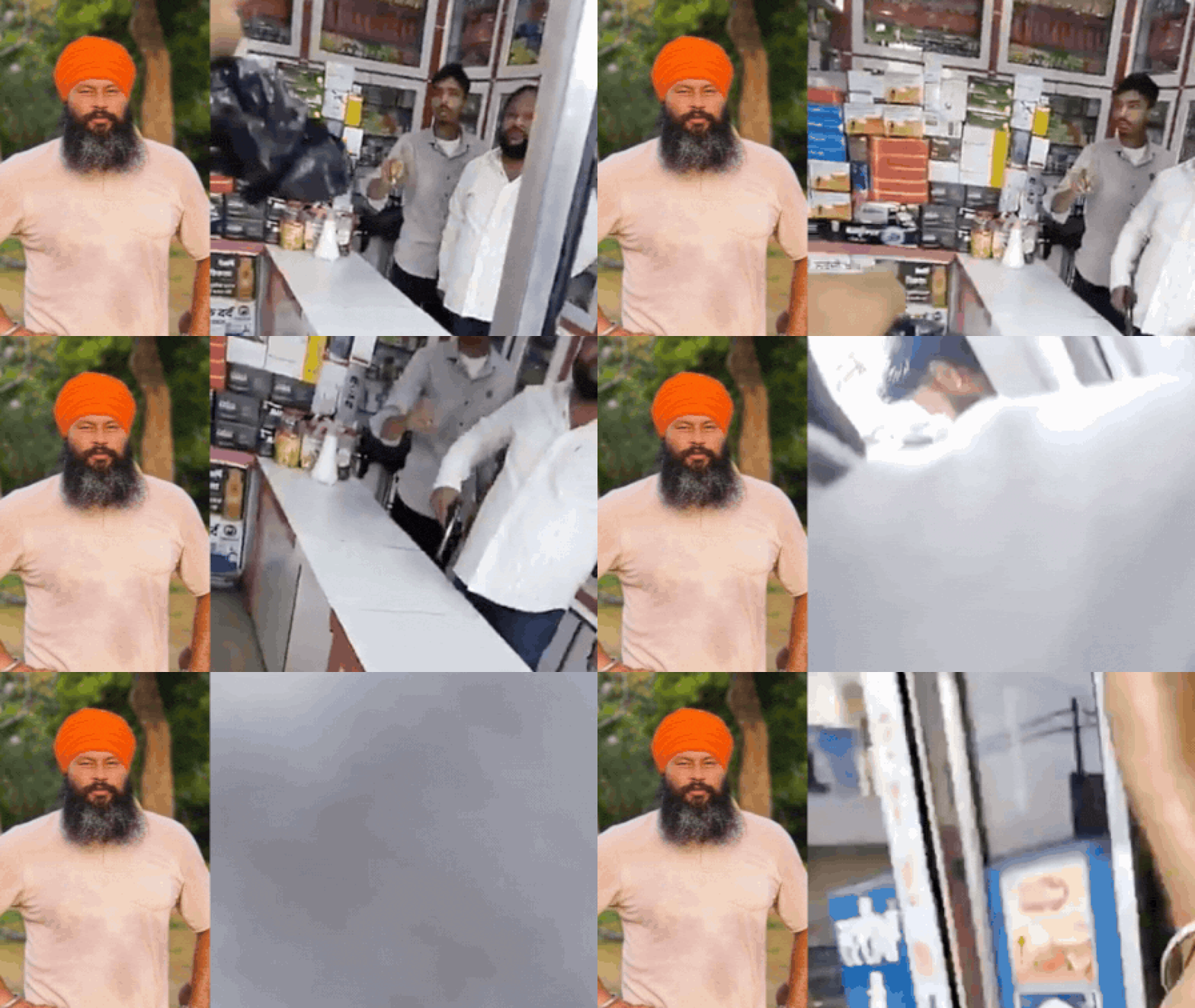
Anti-drug activist Parvinder Singh Jhota was shot dead by a medical store owner in Mansa, Punjab, during a sting operation against the illegal sale of narcotics. The incident has sparked massive public protests and intense political scrutiny of the AAP government's handling of law and order.
The Tragic Killing of Parvinder Singh Jhota: A Crisis in Punjab
The cold-blooded murder of Parvinder Singh Jhota, a prominent anti-drug crusader in Punjab's Mansa district, has sent shockwaves through the state. Jhota, known for his relentless efforts to expose the illegal trade of addictive substances, was shot dead on Tuesday after confronting a medical store owner. This brutal incident, which occurred in broad daylight, has ignited a firestorm of public outrage and placed the ruling Aam Aadmi Party (AAP) government under severe pressure regarding the state's law and order situation.
The Anatomy of the Incident
According to official police reports and circulating video evidence, the tragedy unfolded when Jhota conducted a sting operation at a local medical store. Jhota had been vocal about his concerns regarding medical stores acting as hubs for the distribution of intoxicating pills and synthetic drugs. While recording the confrontation on his mobile phone, Jhota engaged in a heated exchange with the store owner, identified as Ashwani Kumar. The situation escalated rapidly when the accused drew a pistol and fired at the activist. Despite attempting to flee the scene, Jhota succumbed to his injuries and was declared dead upon arrival at the Mansa Civil Hospital.
A Pattern of Vigilantism and Risk
Jhota’s death underscores the extreme personal risks faced by those attempting to combat the drug epidemic in Punjab. For a long time, Jhota had been actively campaigning against the proliferation of prohibited substances, specifically targeting the medical sector, which he accused of fueling the addiction crisis. This incident highlights a disturbing trend where the burden of enforcement often falls on private citizens in the absence of stringent oversight, leading to fatal confrontations between whistleblowers and those profiting from the illegal drug trade.
Political Fallout and Public Unrest
In the wake of the murder, Mansa has witnessed massive protests from residents demanding justice and immediate accountability. The victim’s family has taken a firm stance by refusing to cremate the body until their demands for action against the perpetrators are met. This public defiance has provided the political opposition with leverage to corner the AAP government, arguing that the incident is symptomatic of a broader collapse in state security and the unchecked growth of criminal elements involved in the narcotics trade.
Law and Order Implications
The fact that the accused, Ashwani Kumar, managed to flee the scene immediately after the shooting has further fueled public anger and skepticism toward local law enforcement. While police teams have been formed to apprehend the suspect, the incident highlights the challenges of policing the drug trade in border regions where criminal networks are deeply entrenched. The use of social media to document such crimes provides clear evidence of the assailant's actions, yet the occurrence of such a violent act in a public space raises questions about the efficacy of current deterrent measures.
Future Trends and Conclusion
Moving forward, the killing of Parvinder Singh Jhota is likely to serve as a catalyst for a more aggressive state-wide crackdown on medical stores suspected of illicit activities. The incident will undoubtedly force the government to re-evaluate its drug-control strategy, shifting focus from reactive measures to proactive, intelligence-led enforcement. As the investigation continues, the focus will remain on whether the state can successfully prosecute the perpetrator and restore public confidence in the face of a mounting crisis that continues to claim lives and destabilize communities.
Multiple Citing Sources