PM Modi sets Quad agenda, calls for 'concrete goals' to ensure Indo-Pacific security
Source Entity
PRISHA PATNAIK
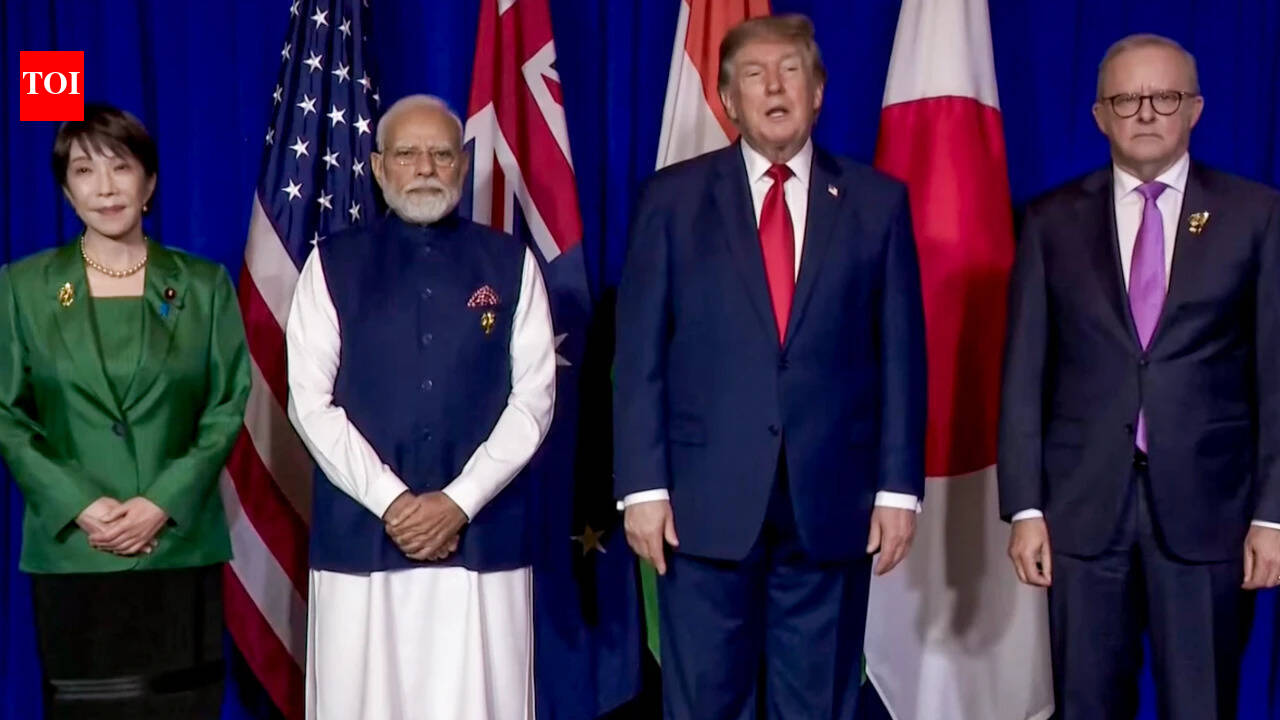
The Quad nations have reaffirmed their commitment to Indo-Pacific security during a meeting in Manila. Simultaneously, global diplomacy shifts as the US, China, and Russia prepare for their first-ever trilateral summit in Shenzhen.
Strategic Realignment in the Indo-Pacific
The recent Quad meeting in Manila, featuring leaders from India, Australia, Japan, and the United States, marks a significant pivot in regional security dynamics. After a two-year hiatus at the leader level, this gathering serves as a critical signal that the grouping remains a cornerstone for maintaining a rules-based order. By explicitly opposing unilateral military action and economic coercion, the Quad is positioning itself as a vital countervailing force against regional hegemony, reinforcing its 2017 mandate to ensure stability across the Indo-Pacific.
Navigating the Multi-Alignment Era
For India, the Manila summit underscores the country's sophisticated approach to foreign policy. By engaging in the Quad while simultaneously balancing relations with other global powers, New Delhi is successfully navigating a volatile international landscape. The revival of this dialogue suggests that despite the diverse national interests of its members, the shared commitment to sovereignty and maritime security is sufficient to overcome previous doubts regarding the grouping's long-term effectiveness.
The Rise of Trilateral Diplomacy
Simultaneously, the global order is witnessing an unprecedented shift with the announcement of a first-ever trilateral summit between the United States, China, and Russia. Scheduled for November 19 in Shenzhen, this meeting represents a departure from traditional bilateral diplomacy. By convening on the sidelines of the APEC summit, these three nuclear powers signal an intent to address the most pressing global challenges directly, including the regulation of artificial intelligence and the management of nuclear arms proliferation.
Addressing Global Conflicts and Technological Governance
The agenda for the Shenzhen trilateral is expected to be expansive, covering not only active geopolitical conflicts but also the existential governance of emerging technologies. The participation of Presidents Trump, Xi, and Putin highlights a pragmatic recognition that systemic stability requires dialogue between the world's most influential actors. This shift toward trilateralism could potentially mitigate the risk of miscalculation in ongoing conflicts that have long strained international relations.
Future Trends in Geopolitics
As these developments unfold, the intersection of Quad-led security frameworks and US-China-Russia trilateral cooperation suggests a complex, layered approach to global governance. While the Quad focuses on regional maritime stability and economic autonomy, the Shenzhen summit addresses the broader systemic issues facing the international community. Moving forward, the success of these initiatives will depend on the ability of these nations to balance competitive rivalries with the necessity of cooperation on global security, marking a transformative period in modern statecraft.
Multiple Citing Sources