Watch: PM Modi picks up Tricolour from floor at Quad photo op; Trump reacts
Source Entity
PRISHA PATNAIK
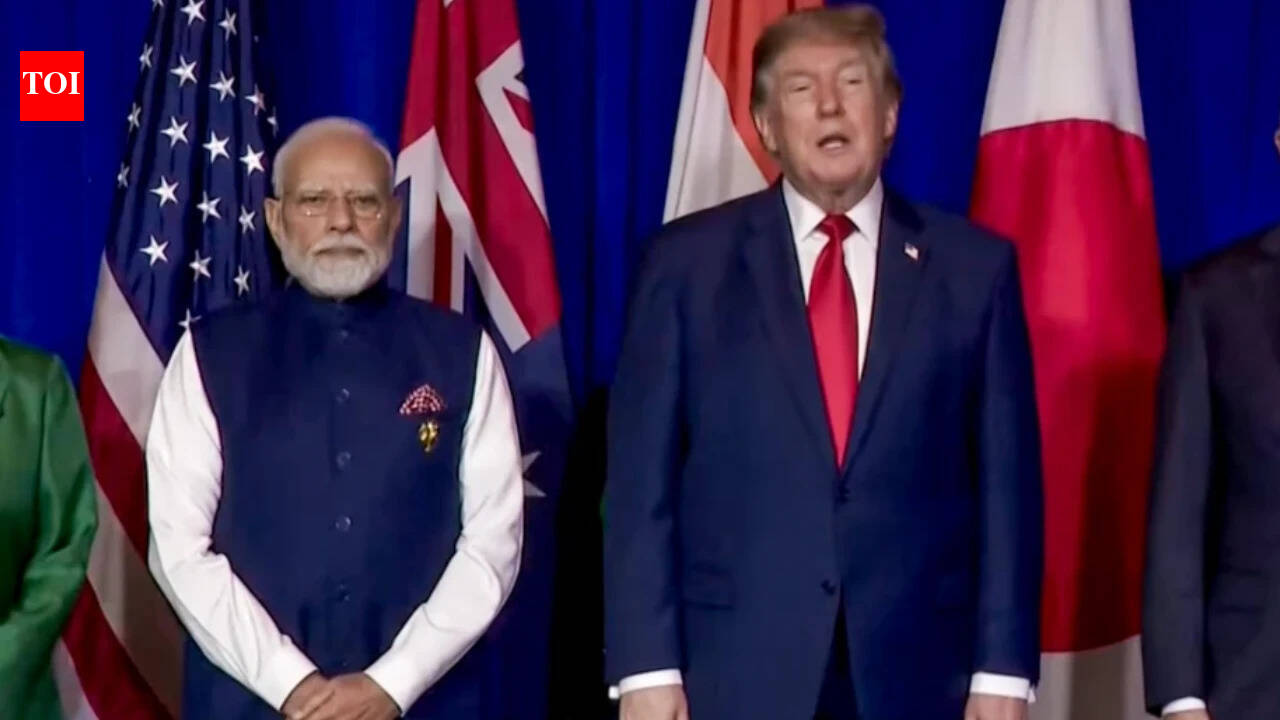
The Quad has reconvened in Manila to address Indo-Pacific security, while simultaneously, a historic first-ever trilateral summit between the leaders of the US, China, and Russia is set for November 19 in Shenzhen. These developments signal a complex shift in global power dynamics as major nations balance security alliances with high-stakes direct diplomacy.
The Shifting Landscape of Global Power
The recent diplomatic activity involving the world's most powerful nations marks a pivotal moment in contemporary international relations. The revival of the Quad grouping in Manila, featuring leaders from India, Australia, Japan, and the United States, signals a renewed commitment to maintaining a rules-based order in the Indo-Pacific. By explicitly opposing unilateral military action and economic coercion, the Quad seeks to re-establish its relevance as a stabilizing force in a region increasingly defined by competitive tensions.
Quad Resilience and Regional Security
Since its revival in 2017, the Quad has faced scrutiny regarding its long-term efficacy, particularly due to the absence of a leader-level summit over the last two years. The recent meeting on the sidelines of the ASEAN Summit serves to dispel doubts regarding the commitment of its member states. For India, this participation underscores its strategic doctrine of multi-alignment, allowing it to navigate the complexities of Great Power competition while fostering regional security partnerships that act as a countervailing force to regional hegemony.
The Historic US-China-Russia Trilateral
In an unprecedented development, the geopolitical landscape is further complicated by the announcement of a first-ever trilateral summit between US President Donald Trump, Chinese President Xi Jinping, and Russian President Vladimir Putin. Scheduled for November 19 in Shenzhen, this meeting occurs on the sidelines of the APEC Economic Leaders' Meeting. The convergence of these three leaders suggests an urgent need for direct communication regarding the most pressing challenges of the era.
Agenda and Global Implications
While the Quad focuses on regional stability, the trilateral summit in Shenzhen is expected to address broader, systemic global issues. The inclusion of topics such as conflict resolution, the regulation of artificial intelligence, and nuclear arms reduction highlights the existential nature of the dialogue. The fact that both the Kremlin and the White House have confirmed this meeting points to a high degree of preparation and a mutual recognition that these three nations hold the key to managing global instability.
Balancing Multilateralism and Great Power Diplomacy
These simultaneous diplomatic tracks reflect the dual reality of modern statecraft. On one hand, nations are strengthening regional blocs like the Quad to protect specific interests and maintain strategic balance. On the other, the necessity of direct engagement between the US, China, and Russia remains paramount for managing global crises. The ability of these nations to move between these two spheres of diplomacy will ultimately determine the trajectory of international security as the world faces an increasingly volatile period of transition.
Multiple Citing Sources