The quirky personal homepages of programming language creators
Source Entity
Hacker News
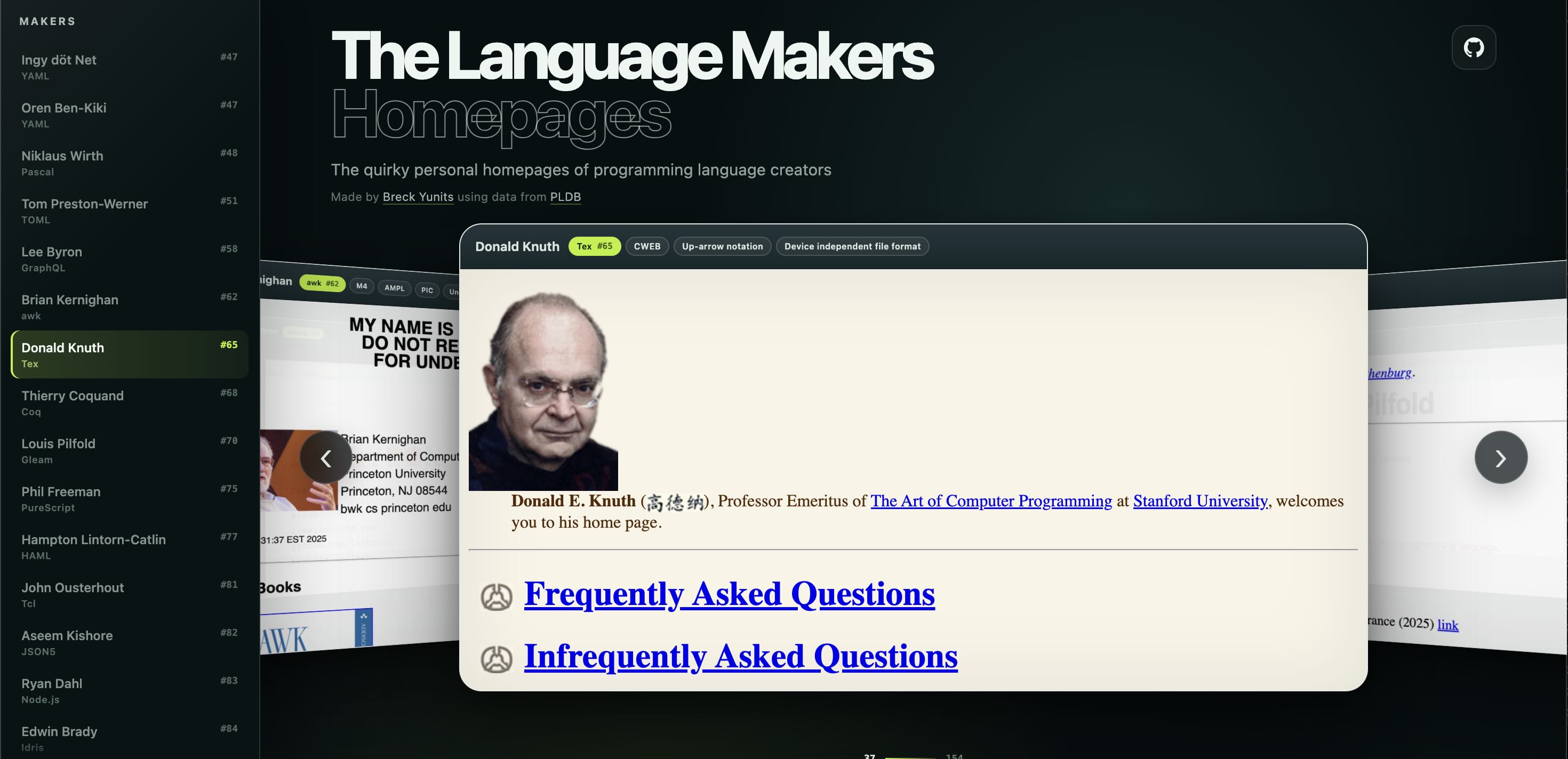
A project by Breck Yunits, utilizing data from the Programming Language Database (PLDB), highlights the unique and often eccentric personal homepages of famous programming language creators. This collection serves as a digital archive, preserving the aesthetic and cultural history of the pioneers who built the foundations of modern computing.
The Digital Footprints of Computing Pioneers
In an era dominated by sleek, corporate-managed social media profiles and standardized web templates, the personal homepages of programming language creators stand out as relics of a more idiosyncratic internet. A new project curated by Breck Yunits, drawing upon the comprehensive data housed in the Programming Language Database (PLDB), has brought these digital spaces into the spotlight. By cataloging these sites, the project offers a rare glimpse into the personal expressions of the individuals whose work underpins the entire global software ecosystem.
A Window into the Maker's Mind
The allure of these homepages lies in their departure from modern design conventions. Many of these sites retain a minimalist, text-heavy aesthetic that reflects the early days of the World Wide Web. For the creators of languages like C, Python, or Ruby, these pages were not merely portfolios but extensions of their technical philosophies. The quirkiness observed by Yunits is often a direct reflection of the creator's personality—ranging from highly structured, documentation-focused layouts to chaotic, experimental interfaces that mirror the early development phases of the languages themselves.
The Role of PLDB in Historical Preservation
Central to this analysis is the Programming Language Database (PLDB), a project dedicated to tracking the history and evolution of thousands of programming languages. By leveraging PLDB, Yunits is not just sharing a curiosity; he is performing a form of digital archaeology. Each homepage is a data point in the history of computer science, providing context to the era in which the language was conceived. Understanding where a creator chose to host their thoughts—and how they chose to present them—allows researchers to map the evolution of developer culture over the last four decades.
Beyond the Code: Humanizing Technology
It is easy to view programming languages as abstract mathematical constructs or rigid sets of rules, but they are fundamentally human inventions. The personal homepages serve as a reminder that these tools were born from the iterative, often messy processes of human thought. When we look at these sites, we see the hobbies, the evolving interests, and the collaborative networks of the people who shaped our digital reality. This project humanizes these figures, transforming them from distant names on a compiler manual into individuals with distinct creative voices.
Future Trends in Developer Identity
As we move toward a future where AI-generated content and platform-enforced uniformity are becoming the norm, the value of these personal homepages increases. They represent an era of the 'indie web' where autonomy was paramount. The work of Breck Yunits serves as a cautionary and inspiring look at how developers once projected their identities online. It suggests that while the tools of the trade change, the human impulse to create a unique digital space remains a vital component of the developer experience.
Conclusion
The initiative to highlight these homepages is a significant contribution to the history of technology. By bridging the gap between technical data and human expression, Yunits has provided a valuable resource for anyone interested in the culture of software development. These sites are not just quirky artifacts; they are essential chapters in the history of the digital age, documenting the origins of the languages that power our modern world.