Rainmakers: The drones used to seed clouds
Source Entity
BBC News
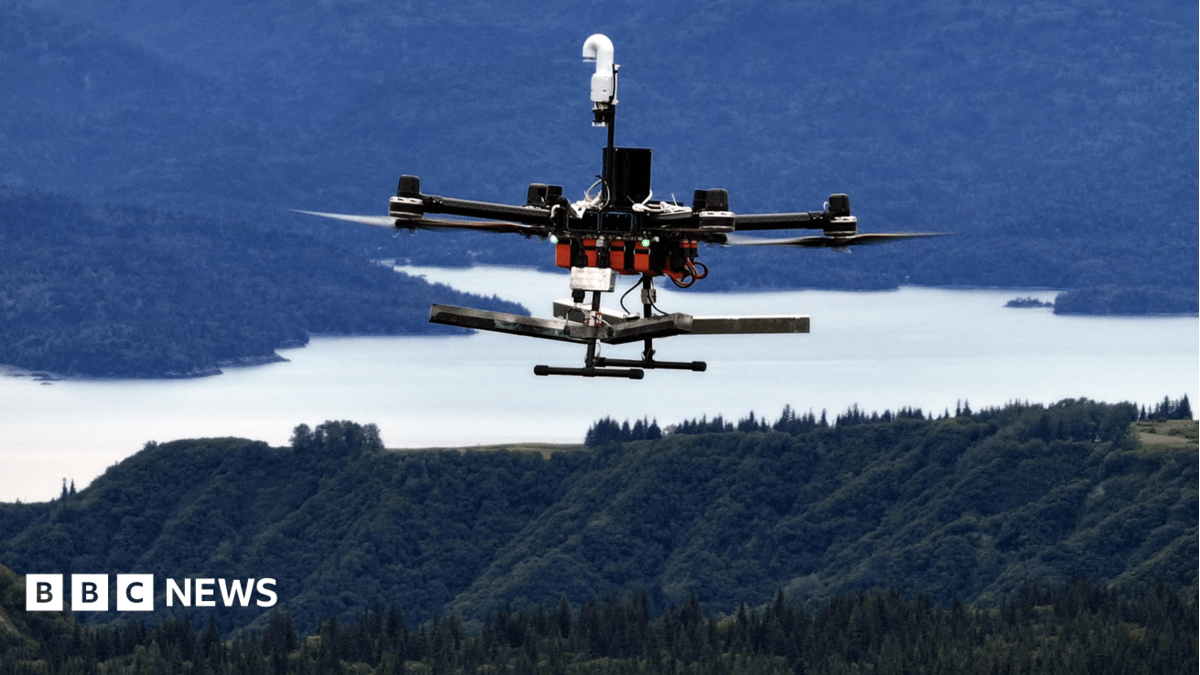
San Francisco startup Rainmaker recently conducted a cloud seeding experiment in Homer, Alaska, using drone technology. This 80-year-old weather modification technique aims to increase precipitation by dispersing compounds to accelerate ice crystal formation.
The Evolution of Weather Modification: Drones and Cloud Seeding
Recent developments in Homer, Alaska, have brought the long-standing practice of weather modification into the modern era. On August 23, the San Francisco-based startup Rainmaker conducted an unannounced cloud-seeding operation over the region, reportedly generating 19 million US gallons of water in the sky over a span of three hours. This event has sparked significant public interest and debate regarding the ethics of atmospheric intervention and the role of private technology firms in altering local climates.
Understanding the Science of Precipitation
Cloud seeding is not a novel concept; it is an established practice that has been utilized for over 80 years. The fundamental mechanism involves the introduction of substances—most commonly silver iodide—into clouds to facilitate the condensation of water vapor. By providing cloud condensation nuclei, the process encourages the formation of ice crystals. As these crystals grow in mass and density, they eventually fall from the sky as precipitation. While nature performs this process autonomously, cloud seeding is designed to accelerate or intensify the natural cycle.
The Shift Toward Autonomous Delivery
Traditionally, cloud seeding relied heavily on manned aircraft to disperse chemical agents. The recent experiment in Alaska highlights a significant shift toward the use of drones for these operations. Drones offer a potentially more precise, cost-effective, and scalable solution for weather modification. By utilizing autonomous systems, companies like Rainmaker aim to target specific cloud formations with greater accuracy, potentially reducing the operational risks and logistical overhead associated with piloted flights.
Broader Implications and Public Perception
One of the most critical aspects of the Alaska experiment was the lack of public awareness. Thousands of residents were unaware that their local environment was being subjected to weather modification technology until after the fact. This raises significant questions regarding regulatory oversight, public consent, and the transparency of private companies experimenting with atmospheric conditions. As climate change continues to exacerbate water scarcity, the demand for such technology will likely grow, necessitating a robust framework for public communication and policy governance.
Future Trends and Environmental Considerations
As the industry moves forward, the integration of drone technology into climate management strategies appears inevitable. However, the environmental impact of long-term, large-scale silver iodide dispersal remains a subject of scientific scrutiny. Furthermore, the legal and ethical implications of "water theft" or transboundary weather modification—where seeding in one region might affect precipitation levels in another—will likely become a focal point for international environmental law. The case of Rainmaker serves as a precursor to a future where weather is increasingly viewed as an asset that can be managed, rather than a force of nature to which we must simply adapt.