40 years ago October 7, 1986: PM optimistic on Punjab
Source Entity
The Indian Express
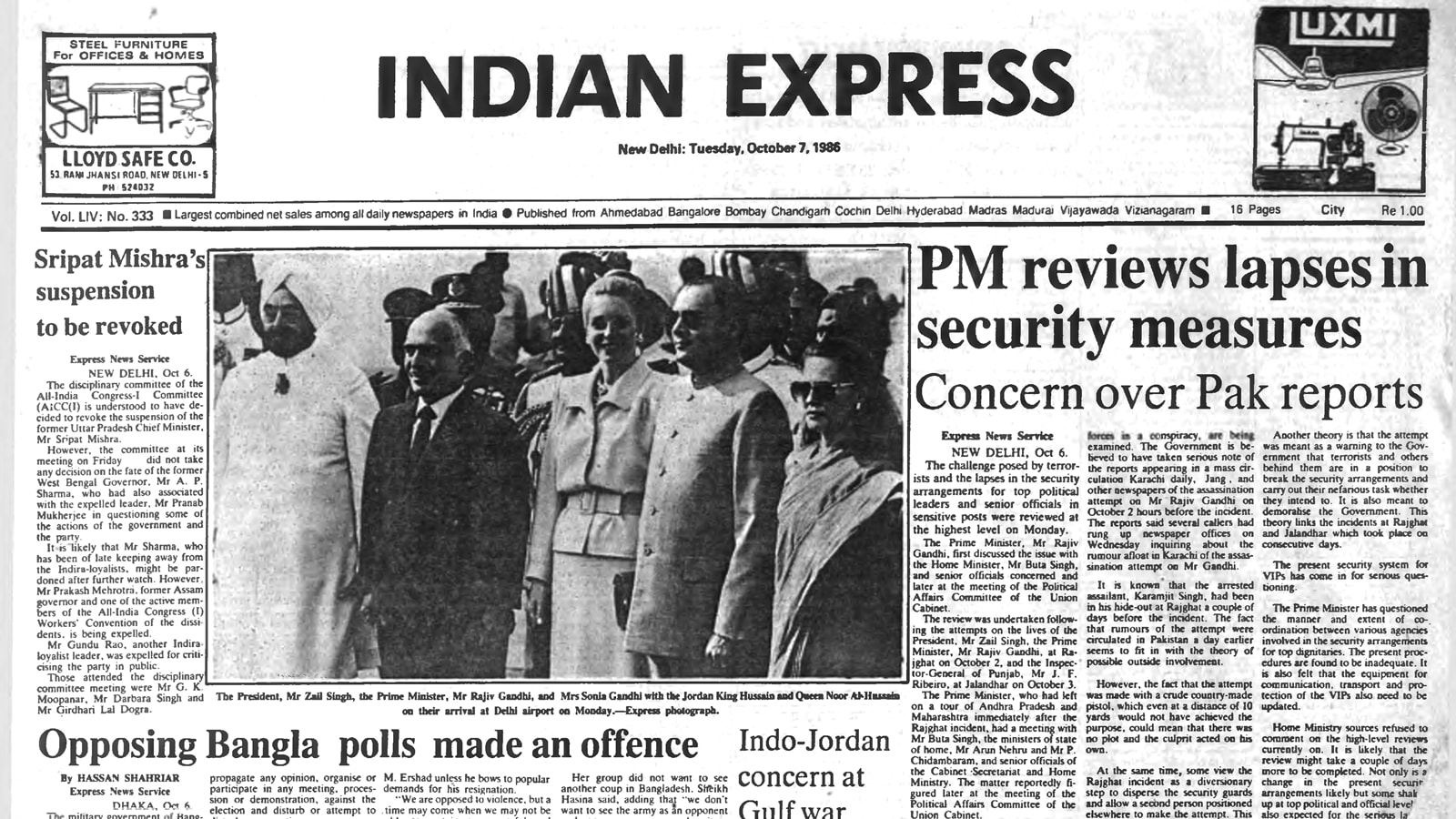
Prime Minister Rajiv Gandhi expressed optimism regarding the security situation in Punjab in October 1986, citing a decline in terrorism despite recent assassination attempts. The government subsequently reviewed security protocols for high-ranking officials to address identified lapses.
The Security Climate of 1986: A Historical Reflection
On October 7, 1986, Prime Minister Rajiv Gandhi issued a significant assessment of the internal security situation in Punjab, claiming that the state had reached a period of relative stability not seen for some time. Despite the persistent threat posed by militancy, Gandhi asserted that the level of terrorism had reached a historic low. This statement was made against the backdrop of a volatile decade characterized by the aftermath of Operation Blue Star and the subsequent political turbulence that gripped the Punjab region throughout the 1980s.
Analyzing the Prime Minister's Stance
Rajiv Gandhi’s optimism was framed by a specific strategic context: he argued that recent attempts on his own life and that of police chief J. F. Ribeiro were not signs of growing strength among militants, but rather acts of desperation. According to the Prime Minister, these high-profile assassination attempts were calculated efforts by insurgent groups to salvage their waning image and morale. By characterizing these attacks as a sign of weakness rather than a resurgence of capability, the government sought to project a sense of normalcy to the Indian public.
The Review of Security Apparatus
However, the rhetoric of optimism did not preclude a rigorous internal assessment of state failures. The gravity of the attempts on top-level officials forced a high-level review of security arrangements. Prime Minister Gandhi conducted these discussions with Home Minister Buta Singh and senior cabinet officials within the Political Affairs Committee. This focus on security lapses indicates that while the administration publicly touted a decline in terrorism, they were acutely aware of the systemic vulnerabilities that allowed militants to target the highest echelons of the Indian government.
Broader Implications for State Stability
The dual approach of public optimism and private concern reflects the delicate balancing act required of the Indian leadership during this era. Managing the Punjab insurgency was the primary domestic challenge for the Rajiv Gandhi administration. The focus on J. F. Ribeiro, a key figure in the state's security apparatus, underscores the central role that law enforcement leadership played in the government's strategy to contain the violence. The review process initiated by the Political Affairs Committee highlights the shift toward more centralized and stringent security protocols for those holding sensitive posts.
Historical Context and Future Trends
Reflecting on this period provides insight into the long-term struggle against extremism in India. The 1986 assessments suggest that the government was attempting to normalize the state through a combination of administrative oversight and a narrative of resilience. While the immediate threat of the 1980s would continue to evolve, the events of October 1986 serve as a critical case study in how the Indian state navigates the intersection of internal security, political image, and the protection of its leadership. This period remains a cornerstone in understanding the evolution of modern Indian counter-terrorism policy.