Rajnath launches first desi fleet support ship ‘Surya’ at Visakhapatnam
Source Entity
SURENDRA SINGH
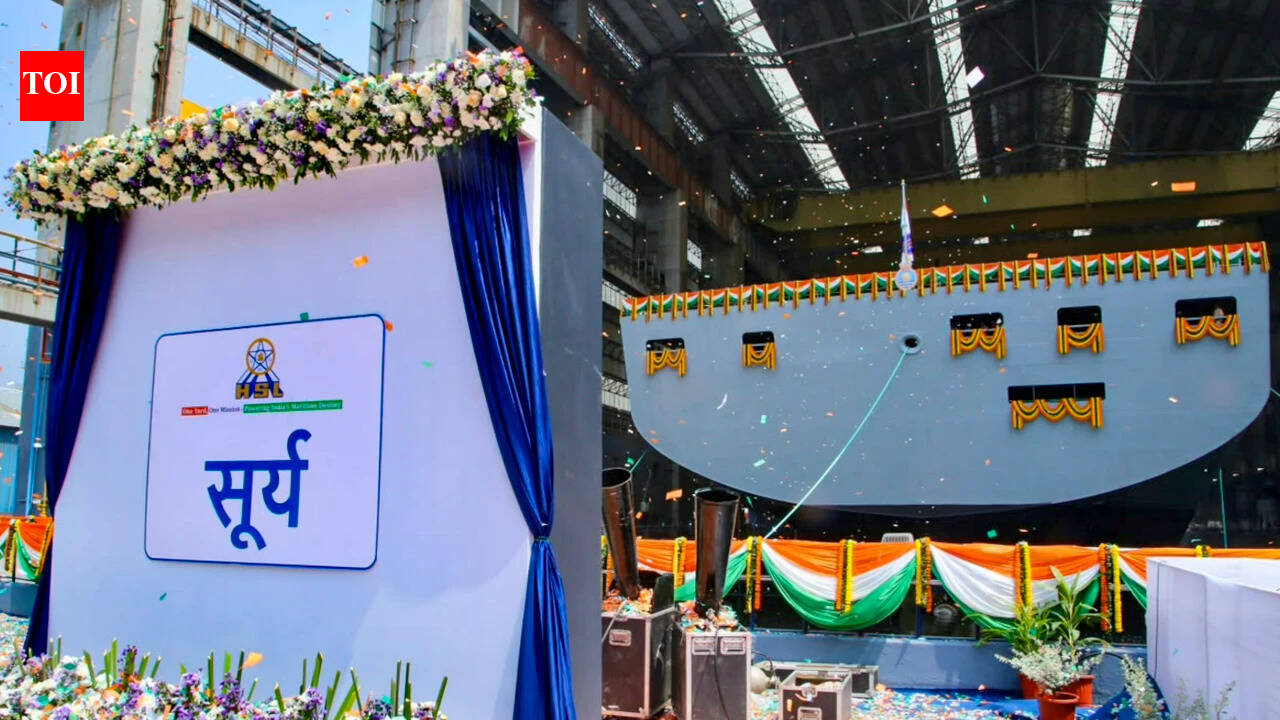
Defence Minister Rajnath Singh launched India's first indigenous fleet support ship, 'Surya', in Visakhapatnam. Part of a ₹19,000 crore project, this initiative aims to significantly enhance the Indian Navy's endurance and self-reliance in maritime operations.
Strengthening India’s Blue Water Ambitions: The Launch of INS Surya
On October 6, 2026, Defence Minister Rajnath Singh marked a historic milestone in India's naval evolution by launching the first indigenously built Fleet Support Ship (FSS), named 'Surya', at the Hindustan Shipyard Limited (HSL) in Visakhapatnam. This event represents more than just the addition of a vessel to the fleet; it signifies a strategic shift toward total self-reliance in naval logistics. With 82% indigenous content, the 43,500-tonne vessel underscores India’s growing prowess in heavy maritime engineering.
Expanding Operational Endurance
Historically, the Indian Navy has relied on a limited number of fleet tankers, such as INS Shakti, INS Jyoti, INS Deepak, and INS Aditya, to maintain its operational tempo. These vessels are critical for mid-sea replenishment, allowing warships to remain deployed for extended periods without the need to return to port. The introduction of the 'Surya' class—a series of five ships—is designed to drastically increase this endurance, ensuring the Navy can sustain a presence across vast maritime theaters with greater efficiency.
A ₹19,000 Crore Strategic Push
This project, valued at ₹19,000 crore, is a cornerstone of the government's push to bolster the nation's reach. By launching the first ship and simultaneously laying the keel for the fifth vessel in the series, the Ministry of Defence is signaling an accelerated production timeline. These ships are engineered to refuel and resupply multiple warships simultaneously, a capability that is essential for modern naval task forces operating in contested or distant waters.
Revitalizing Maritime Infrastructure
The modernization efforts extend beyond the vessels themselves. During his visit to Visakhapatnam, Rajnath Singh also inaugurated upgraded infrastructure at HSL, including a new slipway and a 300-tonne crane. Such infrastructure upgrades are vital for the shipyard to handle the increasing complexity and scale of domestic warship construction. Furthermore, the announcement of a second production line for Shakti engines in Koraput highlights a coordinated effort to secure the supply chain for critical propulsion systems.
Geopolitical and Economic Implications
As India aspires to transition from a regional maritime actor to a global maritime power, the ability to project force relies heavily on logistical sustainability. The 'Surya' class ships are the backbone of this strategy. By reducing dependence on foreign supply chains and utilizing indigenous technology, India is not only insulating its defense sector from global volatility but also fostering a robust domestic industrial ecosystem that supports long-term national security.
Future Trends in Naval Shipbuilding
The focus on indigenous content and rapid production cycles suggests a future where the Indian Navy will be increasingly defined by its own technological advancements rather than imported platforms. As the keel for the fifth ship is laid, the momentum at Hindustan Shipyard reflects a broader trend of institutionalizing high-capacity warship building. This trajectory ensures that India remains well-positioned to protect its maritime interests in the Indian Ocean Region and beyond, cementing its status as a significant player in global naval affairs.
Multiple Citing Sources