‘Ritabrata-TMC real party’: Rebel Trinamool leader cites ‘court order’
Source Entity
Tanusree Bose
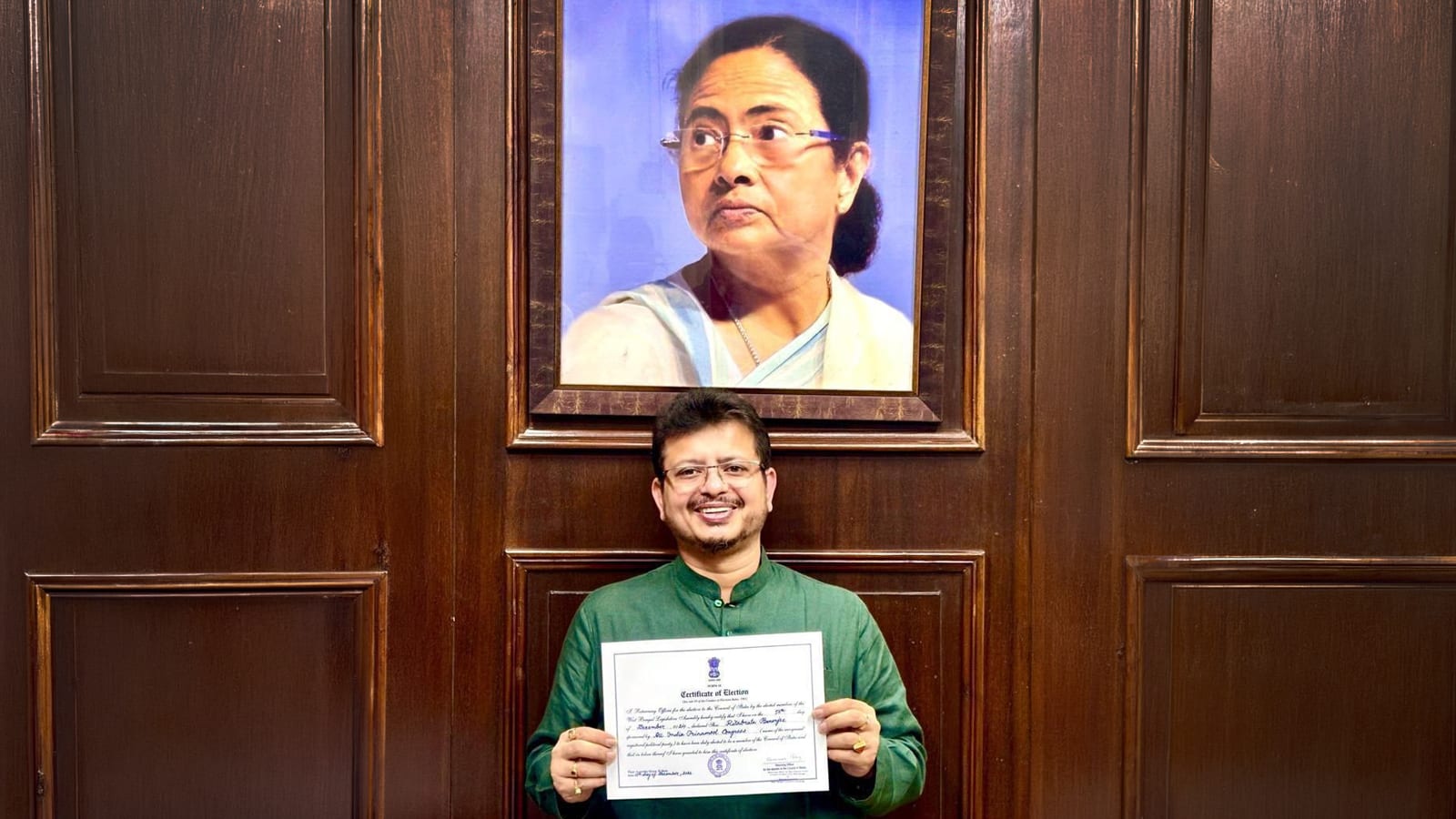
Rebel Trinamool Congress leader Ritabrata Banerjee claimed Sunday that the TMC faction led by him, the ‘Ritabrata-TMC’, is the real TMC, while citing a purported court order. However, the Mamata Baner...
The Battle for Legitimacy: Analyzing the 'Ritabrata-TMC' Split
The political landscape of West Bengal is currently embroiled in a contentious leadership dispute as rebel Trinamool Congress (TMC) leader Ritabrata Banerjee has publicly asserted that his faction, dubbed 'Ritabrata-TMC', is the legitimate entity of the party. This claim, rooted in a purported court order, represents a significant escalation in the internal rift between the party's central leadership and its dissident elements. The boldness of this claim suggests a strategic attempt to delegitimize the current administration of the party led by Mamata Banerjee, shifting the conflict from mere internal disagreement to a formal challenge of ownership.
The Legal Tug-of-War and Nomenclature
The crux of this dispute lies in the interpretation of a court order, which Ritabrata Banerjee cites as the basis for his claim to be the 'real' TMC. In the context of Indian political law, disputes over party names, symbols, and legitimacy are often adjudicated by the courts and the Election Commission of India (ECI). By claiming legal recognition, Banerjee is attempting to move the conflict into a judicial arena where membership lists and party bylaws become the primary evidence. This tactic is frequently employed by rebel factions to force a negotiation with the central leadership or to secure a legal foothold that prevents the main party from simply expelling them without legal repercussions.
Power Struggles and Rebel Factions
This incident highlights the precarious balance between the centralized authority of the TMC leadership and the ambitions of its regional leaders. The emergence of the 'Ritabrata-TMC' is not an isolated event but rather a symptom of deeper ideological or strategic disagreements within the party. When leaders feel sidelined or disagree with the party's strategic direction, the creation of a 'real party' narrative serves as a powerful tool for leverage. The swift denial from Mamata Banerjee's camp underscores the party's commitment to maintaining a monolithic structure of command, which has been a hallmark of its dominance in West Bengal politics.
A Legacy of Political Fragmentation
West Bengal has a long history of political volatility and party fragmentation. From the splits within the Left Front in previous decades to the rise and subsequent internal challenges of the TMC, the state's political culture often sees factions breaking away to form new identities or claiming the mantle of the 'true' ideology of the original group. The current standoff between the mainstream TMC and the Ritabrata faction mirrors these historical patterns, where legitimacy is contested not just through the ballot box, but through legal declarations and the manipulation of public perception regarding who represents the 'true' spirit of the movement.
Strategic Implications for Governance and Stability
The implications of this split extend beyond mere nomenclature. If a significant portion of the party's grassroots machinery aligns with the rebel faction, it could weaken the TMC's organizational strength ahead of crucial electoral cycles. Furthermore, such public disputes can create a perception of instability, potentially encouraging opposition parties to capitalize on the internal chaos to recruit disgruntled members. The battle for the party's identity thus becomes a battle for political survival, as 'real party' status determines who controls the party's assets, official symbols, and recognition from the state.
Future Trends: The Role of the Election Commission
Moving forward, the resolution of this conflict will likely depend on the intervention of the Election Commission of India. The ECI typically decides which faction is the 'real' party based on the majority of the party's elected representatives (MLAs and MPs). If Banerjee's faction cannot demonstrate majority support among these representatives, the legal claim may ultimately fail. However, the process of adjudication often takes considerable time, during which the 'Ritabrata-TMC' may continue to operate as a disruptive force, potentially leading to further defections or the formation of a new political alliance.
Conclusion
In summary, Ritabrata Banerjee's claim to be the leader of the 'real' TMC is a high-stakes gamble designed to challenge the hegemony of the party's central leadership. While the legal validity of the purported court order remains a point of intense contention, the political damage—in terms of public perception and internal cohesion—is already evident. As the legal battle unfolds, the outcome will serve as a critical indicator of how the TMC handles internal dissent and whether it can maintain its unity in the face of mounting rebel challenges.