Sam Altman’s space data center trash talk is what most experts already believe
Source Entity
Tim Fernholz
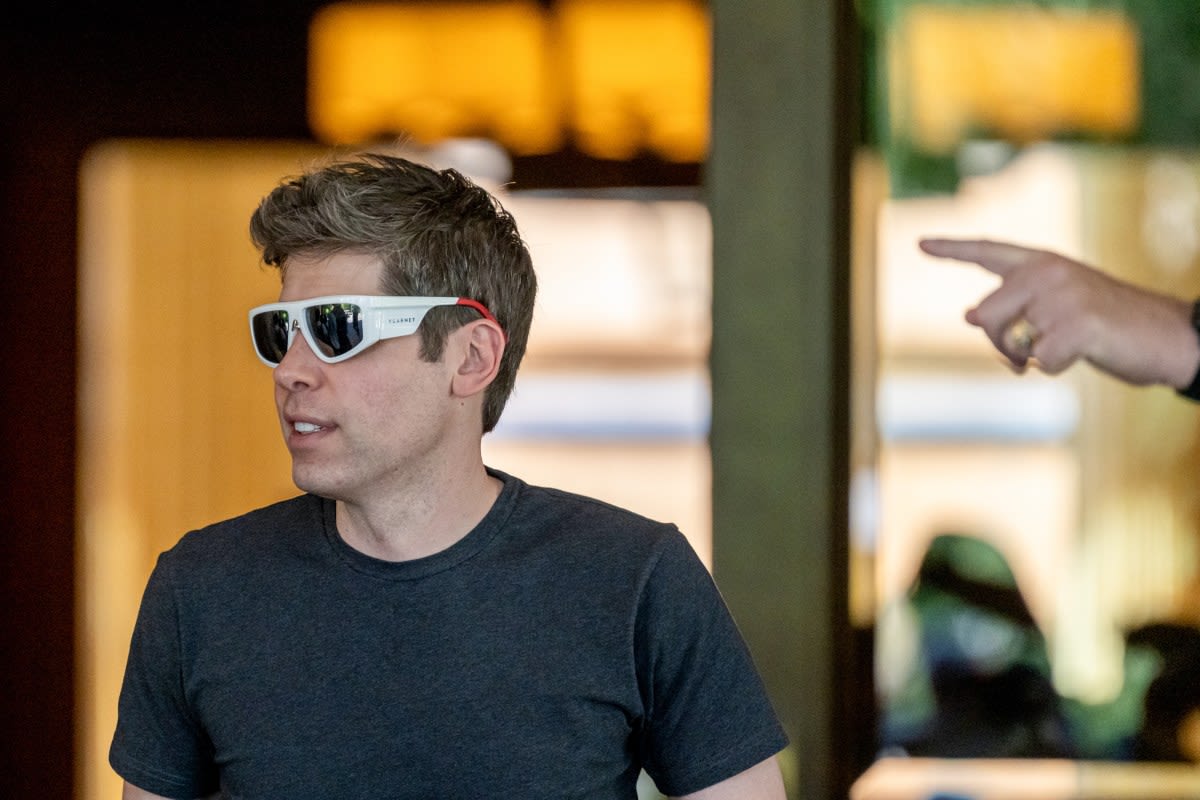
Responding to Musk accusing him of being a scammer, Altman said, "homeboy you're the one sellling [sic] public market investors on short-term space datacenters."
The Clash of Titans: Altman, Musk, and the Future of Compute
The ongoing public rivalry between OpenAI CEO Sam Altman and Tesla/SpaceX CEO Elon Musk has escalated into a debate over the fundamental infrastructure of artificial intelligence. In a recent exchange, Altman responded to Musk's accusations of being a 'scammer' by pivoting the conversation toward Musk's own assertions regarding the deployment of data centers in space. This interaction is not merely a personal spat but a reflection of a deeper ideological and technical divide between two of the most influential figures in the AI landscape.
The Infrastructure Debate: Earth vs. Orbit
At the heart of Altman's critique is the concept of "short-term space datacenters." While the idea of moving compute off-planet is a recurring theme in futuristic tech circles, the technical hurdles are immense. Data centers require massive amounts of energy and, more critically, sophisticated cooling systems to prevent hardware from overheating. In the vacuum of space, heat dissipation is significantly more difficult than on Earth, where liquid cooling and ambient air are readily available. By labeling these plans as something Musk is "selling" to investors, Altman is suggesting that the timeline for orbital compute is wildly unrealistic and potentially misleading.
Market Implications and Investor Confidence
Altman's specific mention of "public market investors" strikes a chord regarding the financial pressures facing Musk's ventures. Unlike OpenAI, which operates with significant private backing and a complex capped-profit structure, Musk's public companies are subject to the volatility of market sentiment. The implication is that Musk may be leveraging visionary, high-concept ideas—like space-based AI infrastructure—to maintain a narrative of inevitable innovation, thereby sustaining investor enthusiasm even when the immediate technical feasibility is questionable.
The Global Race for Compute
To understand the weight of this exchange, one must look at the current "compute war." AI models are growing exponentially in size, requiring an unprecedented amount of GPUs and electricity. On Earth, this has led to a scramble for energy sources, with some AI leaders even exploring nuclear fusion or small modular reactors. Musk's suggestion of space-based data centers represents a radical departure from this terrestrial struggle, proposing a solution that bypasses Earth's land and energy constraints but introduces the extreme risks of the space environment.
Historical Context of the Altman-Musk Rift
This dispute is the latest chapter in a long history of friction. Musk was a co-founder of OpenAI, intending it to be an open-source counterbalance to Google. However, as OpenAI transitioned toward a more closed, commercial model to fund its massive compute needs, Musk felt betrayed, leading to lawsuits and public condemnation. Altman's willingness to engage in "trash talk" regarding space data centers indicates a shift in the power dynamic; where Musk once held the role of the mentor/founder, Altman now positions himself as the pragmatic operator challenging Musk's speculative visions.
Future Trends in AI Hardware
Looking forward, the industry is likely to remain anchored to Earth for the foreseeable future. While "edge computing" in space—where small amounts of data are processed locally on satellites to reduce latency—is already happening, the scale of a "data center" required for LLM training is currently impossible to launch or maintain in orbit. We can expect the tension between Altman and Musk to intensify as the race toward Artificial General Intelligence (AGI) accelerates, with the battleground shifting from software algorithms to the physical hardware and energy grids that power them.
Conclusion
Sam Altman's rebuttal to Elon Musk highlights a critical tension in the tech world: the line between visionary goal-setting and market speculation. While Musk continues to push the boundaries of what is possible through SpaceX, Altman's critique serves as a grounded reminder of the physical and economic realities of AI infrastructure. This clash underscores that the path to AGI will be determined not just by code, but by who can realistically solve the massive energy and hardware challenges of the physical world.