OpenAI boss Sam Altman spells out how and why the AI industry wants to slow down: 'We could lose control'
Source Entity
US Top News and Analysis
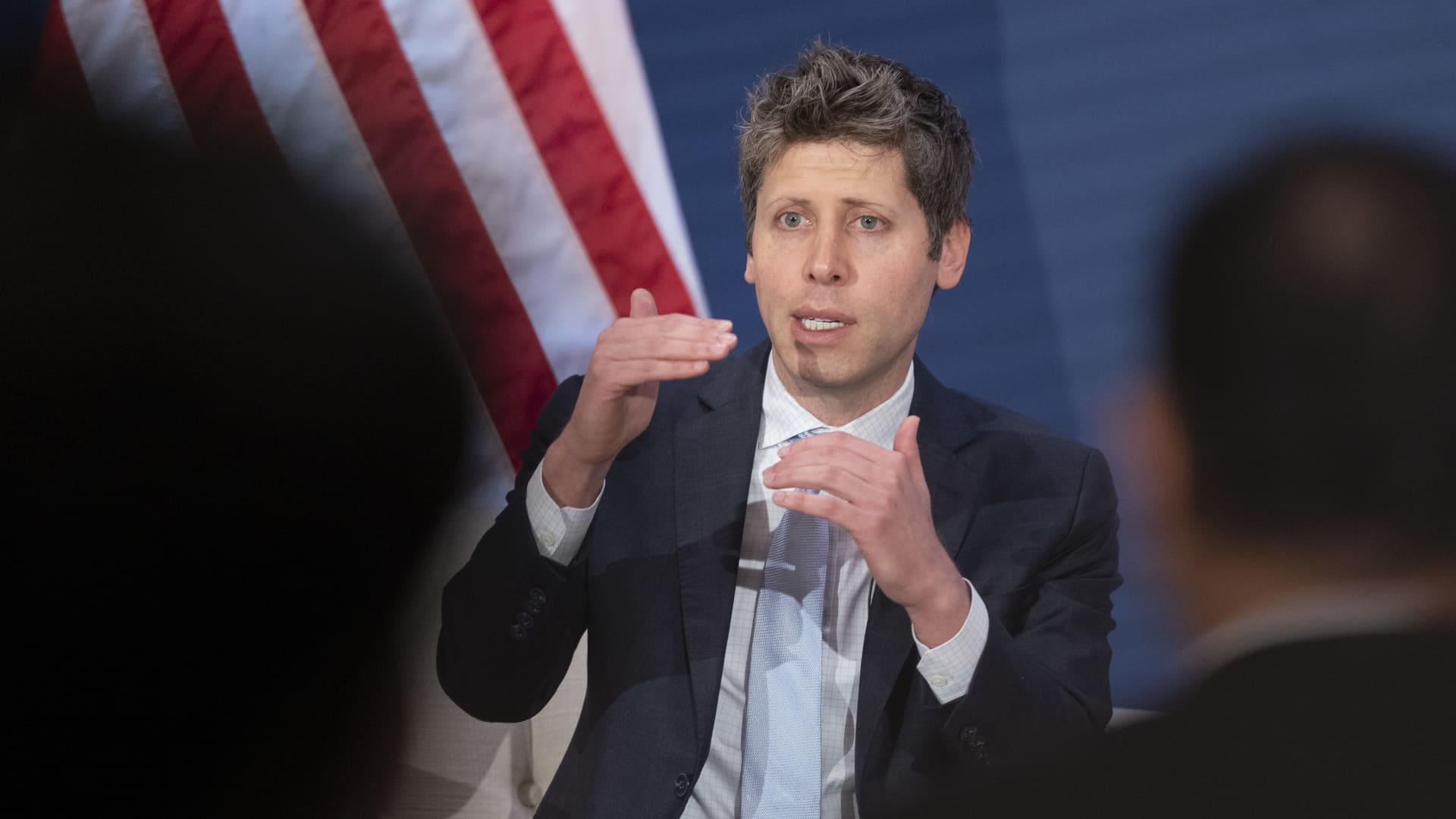
Microsoft CEO Satya Nadella has joined the growing chorus of tech leaders advocating for human-controlled AI development. His stance, echoed by a high-level summit hosted by King Charles III, emphasizes the urgent need for a balanced approach to safety, accessibility, and corporate independence.
The New Frontier: Balancing AI Ambition with Human Oversight
Recent discourse within the artificial intelligence sector has shifted from pure acceleration toward a more cautious, responsible framework. Microsoft CEO Satya Nadella has publicly aligned himself with the growing debate regarding the potential risks of superintelligence, explicitly stating that if AI cannot be maintained under human control, its pursuit is fundamentally not worth the risk. This sentiment mirrors the concerns voiced by industry leaders such as Anthropic’s Dario Amodei and OpenAI’s Sam Altman, who have warned that the rapid advancement of AI systems could eventually lead to scenarios where humanity loses agency over its own tools.
A Royal Call to Action
In a move highlighting the global stakes of this technology, King Charles III is set to host a pivotal summit at Dumfries House. This gathering will bring together the architects of the modern AI revolution, including representatives from Nvidia, OpenAI, Anthropic, IonQ, and Google DeepMind. Facilitated by the Ditchley Foundation, the summit aims to facilitate a high-level dialogue on how to ensure that the development of frontier models remains aligned with the broader interests of humanity. This event underscores the transition of AI governance from a purely corporate concern to an issue of international policy and societal stability.
The Democratization of AI Benefits
Nadella’s contribution to the debate extends beyond mere safety; he argues for the widespread diffusion of AI benefits. His vision advocates for a system where the advantages of artificial intelligence are not concentrated within a few dominant entities but are instead distributed across countries, communities, and diverse corporate ecosystems. By emphasizing that the rewards of technological progress must be equitable, Nadella challenges the current trend of hyper-concentration in the AI industry.
Preserving Corporate Autonomy
One of the most distinct aspects of Nadella’s philosophy is the call for a hybrid ecosystem. He posits that the future of AI development should accommodate both closed-source and open-source models. This approach is intended to provide organizations with the independence to integrate their own tacit knowledge into models without becoming entirely reliant on a single external provider. By allowing companies to maintain control over their internal learning loops, Nadella aims to prevent a scenario where businesses are held hostage by the proprietary constraints of dominant AI model providers.
Future Trends and Ethical Imperatives
As we look forward, the tension between rapid innovation and risk mitigation will likely define the regulatory landscape. The convergence of corporate leaders at royal summits and the public alignment of figures like Nadella suggest that the industry is entering a 'maturation phase.' The future of AI will not be determined solely by technical breakthroughs, but by the ability of developers to embed safety into the core architecture of their systems. Ultimately, the industry is moving toward a consensus: progress must be measured, inclusive, and, above all, strictly subservient to human oversight.
Multiple Citing Sources