Sawan Barwal ends India’s 44-year-old wait for Asiad marathon silver with steady race pace
Source Entity
Mihir Vasavda
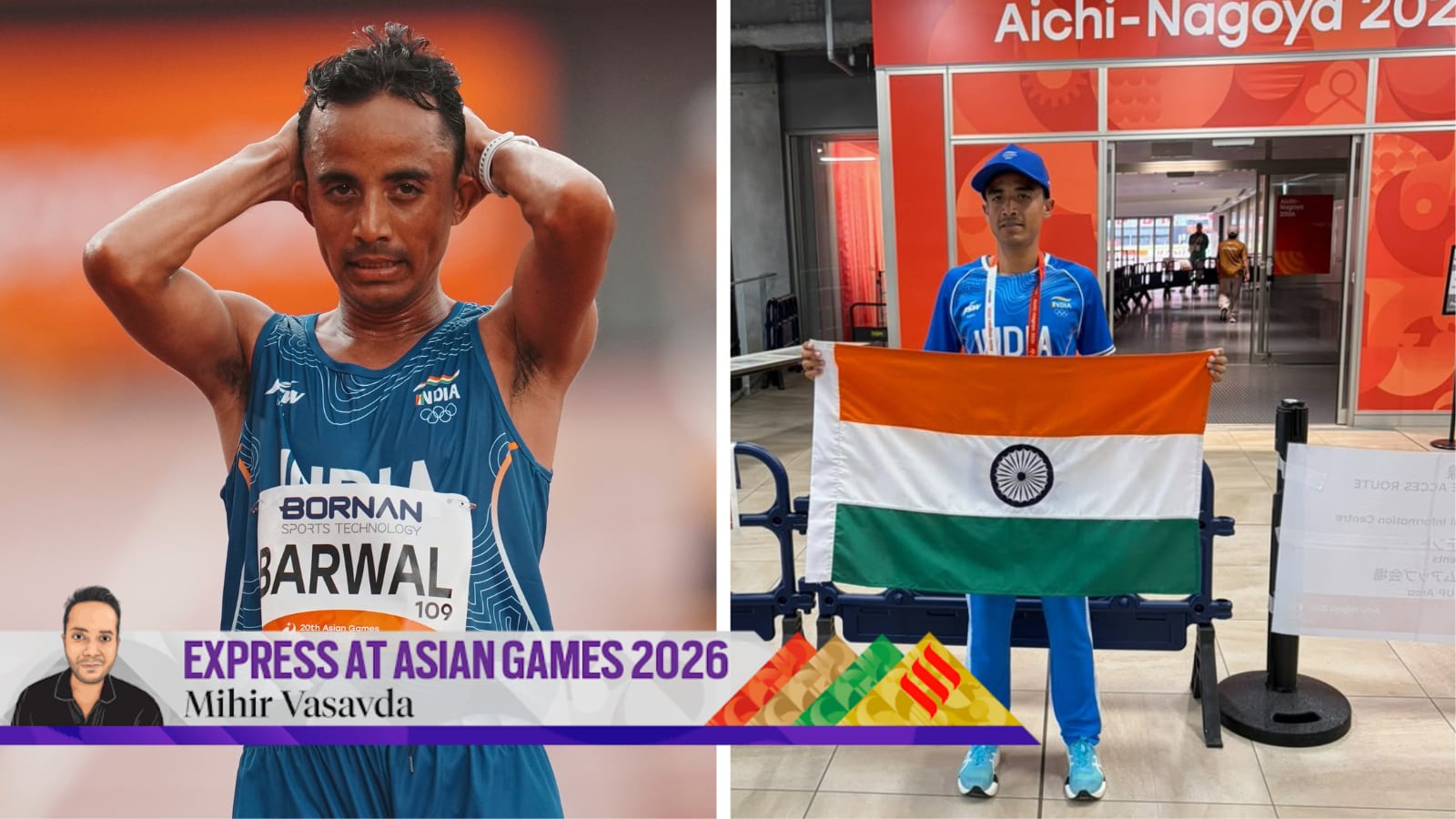
Sawan Barwal made history by winning silver in the marathon at the Asian Games, marking India's first medal in the event in 44 years. By clocking 2:11:37, the 28-year-old athlete set a new national record in only his second competitive marathon.
A Historic Triumph on the Streets of Nagoya
In a display of endurance and tactical precision, 28-year-old Sawan Barwal has etched his name into the annals of Indian athletics. Competing on the damp, rain-slicked streets of Nagoya, Japan, during the 2026 Asian Games, Barwal secured a silver medal in the marathon. This achievement is monumental, as it marks the first time an Indian athlete has stood on the podium for this event in 44 years, and notably, the first time India has earned a marathon medal outside of home soil.
Breaking the 44-Year Drought
For nearly half a century, the marathon event at the Asian Games remained an elusive mountain for Indian long-distance runners. The previous national benchmark was set by Shivnath Singh, a legendary figure in Indian athletics. Barwal’s performance, clocking in at 2:11:37, not only shattered the long-standing drought but also allowed him to break his own national record, which he had established just months prior in Rotterdam. This progression highlights a significant leap in the quality of long-distance training and competitive strategy within the Indian athletics contingent.
An Unlikely Journey to the Podium
What makes Barwal’s silver medal even more extraordinary is the brevity of his career in the marathon discipline. Having only run two competitive marathons in his life, his trajectory is unprecedented. His first foray into the distance occurred in April 2026, where he immediately signaled his potential by breaking the national record that had stood for 48 years. His journey began years prior, sparked by a mundane school trip to a local athletics meet—a journey that transitioned from youthful curiosity to elite-level international competition.
Tactical Execution Under Pressure
Running in challenging, damp conditions with a persistent light drizzle, Barwal demonstrated remarkable mental fortitude. Against a field of seasoned competitors, he maintained a steady pace that allowed him to secure second place behind Japan’s Ichitaka Yamashita, who finished with a gold-medal time of 2:10:49. Barwal’s admission that he viewed the race as a "target" to avoid wasting his long-term training efforts underscores the disciplined, goal-oriented mindset required to excel at the Asian Games level.
Future Implications for Indian Athletics
Barwal’s rapid rise suggests a shifting landscape for Indian marathon running. By lowering the national record twice in five months, he has proven that the current training methodologies are yielding world-class results. This success is likely to inspire a new generation of Indian endurance runners, potentially shifting the focus of national athletic programs toward more specialized marathon training. As he continues to gain experience, Barwal stands as a beacon for what is achievable through focused, high-intensity preparation.
Conclusion
Sawan Barwal’s performance in Nagoya is more than just a silver medal; it is a testament to the power of rapid skill acquisition and strategic dedication. By overcoming the weight of a 44-year history and performing under adverse weather conditions, he has cemented his status as a premier athlete in Asia. His story, moving from a student watching a local race to an Asian Games medalist, serves as a powerful narrative of transformation in modern Indian sports.
Multiple Citing Sources