SC asks Centre to reconsider NEET-SS qualifying percentile cut-off
Source Entity
India Latest News: Top National Headlines Today & Breaking News | The Hindu
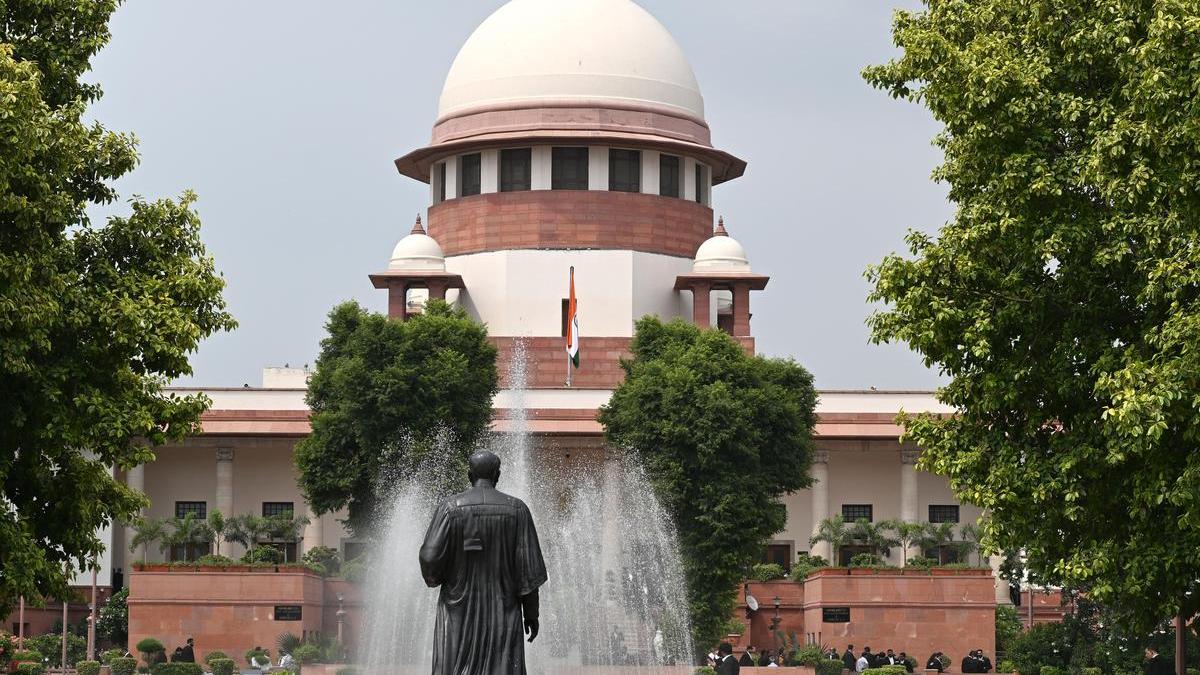
The Supreme Court has directed the Centre to reconsider its refusal to lower the NEET-SS qualifying percentile despite high vacancy rates. While the government proposed a stray round, the Court remains concerned about the impact of unfilled super-specialty seats.
Judicial Intervention in NEET-SS Admissions
The Supreme Court of India has recently intervened in the ongoing crisis regarding vacant National Eligibility-cum-Entrance Test-Super-specialty (NEET-SS) seats. During a hearing on September 10, 2026, a Bench comprising Justices P.S. Narasimha and Alok Aradhe questioned the Union government’s rigid stance on maintaining current qualifying percentile cut-offs, despite a significant number of seats remaining unfilled each academic year.
The Conflict Over Qualifying Percentiles
Representing the Union government, Additional Solicitor-General Aishwarya Bhati stated that while the Centre is prepared to facilitate a “stray round” of counseling to address seat vacancies, it remains firm in its decision not to lower the qualifying percentile. This policy creates a direct friction point with medical associations, such as the Tamil Nadu Medical Officers Association, who argue that the current criteria prevent qualified candidates from filling critical super-specialty roles.
Implications for Healthcare Infrastructure
Super-specialty seats represent the pinnacle of medical education in India, training doctors for highly complex surgical and diagnostic procedures. When these seats remain vacant, the immediate consequence is a stunted growth in the number of specialists available to the public health system. By failing to fill these positions, the healthcare sector effectively limits its capacity to provide advanced tertiary care, which is vital for a growing population with increasing medical complexities.
The Reversion to State Quotas
A significant aspect of the Centre’s strategy involves the reversion of vacant seats to individual states, such as Tamil Nadu. This mechanism is intended to ensure that seats are not entirely wasted; however, it often results in a fragmented approach to medical recruitment. The Supreme Court's concern reflects a broader judicial push to ensure that national medical education policies do not inadvertently impede the utilization of state-level resources and human capital.
Balancing Academic Standards and Accessibility
The debate over lowering cut-offs is a long-standing tension between maintaining high academic standards and ensuring the accessibility of medical education. The government’s reluctance to lower percentiles is rooted in the pursuit of meritocracy, yet the judiciary is increasingly highlighting the practical necessity of filling seats to prevent the loss of years of potential clinical service. The Court’s directive forces the Centre to justify why a policy of 'empty seats' is preferable to a marginal relaxation of entry standards.
Future Outlook and Conclusion
Looking forward, the government must balance the need for rigorous entry criteria with the reality of professional shortages. The outcome of the Centre’s reconsideration will likely set a precedent for how NEET-SS admissions are handled in future cycles. By compelling the government to re-evaluate its stance, the Supreme Court is advocating for a more pragmatic policy framework that prioritizes the operational efficiency of the medical education system while attempting to mitigate the annual wastage of high-value clinical training positions.
Verification Required?