SGPC takes out protest in support of ‘Satluj’
Source Entity
Latest News: Today's Latest News Headlines from India & World | Hindustan Times | Hindustan Times
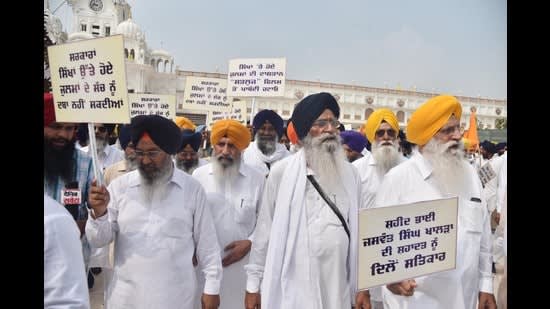
Led by SGPC president Harjinder Singh Dhami, the march was joined by SGPC members, officials and employees
Analysis of SGPC Protest in Support of 'Satluj'
Introduction to the Demonstration
In a significant display of institutional mobilization, the Shiromani Gurdwara Parbandhak Committee (SGPC) recently organized a protest march to express its support for 'Satluj'. The event was spearheaded by the SGPC President, Harjinder Singh Dhami, and saw active participation from a broad spectrum of the organization, including its official members, administrative staff, and employees. This march underscores the SGPC's willingness to move beyond purely religious administration to engage in public advocacy and social demonstrations.
The Institutional Influence of the SGPC
To understand the weight of this protest, one must look at the role of the SGPC. As the primary body responsible for the management of historical Gurdwaras and Sikh religious affairs, the SGPC wields immense socio-political influence in the Punjab region. When the SGPC leadership, particularly the President, takes a public stand on an issue, it often signals a broader community consensus or a critical grievance affecting the regional populace. The inclusion of employees and officials in the march indicates a top-down institutional endorsement of the cause, amplifying the message's reach and legitimacy.
The Significance of 'Satluj'
While the provided text refers to 'Satluj' in quotes, in the context of Punjab and the SGPC, this almost certainly refers to the Satluj River or issues directly tied to it. The Satluj is not merely a body of water but a lifeline for the region's agrarian economy and a symbol of cultural identity. Issues surrounding the Satluj—whether they pertain to water rights, pollution, ecological degradation, or interstate water disputes—are historically volatile and deeply emotional topics in Punjab. By protesting in support of 'Satluj', the SGPC is aligning itself with the environmental and economic survival of the land it serves.
Intersection of Faith and Environmental Advocacy
This event highlights a growing trend where religious organizations intersect with environmental and resource-based activism. The SGPC's involvement suggests that the protection of natural resources like the Satluj is being framed as a moral and community obligation. This approach leverages the trust the community places in religious leadership to bring attention to issues that may be overlooked by traditional political channels. By mobilizing its workforce and membership, the SGPC transforms a resource issue into a community-wide movement, increasing the pressure on governing bodies to provide solutions.
Leadership and Political Implications
President Harjinder Singh Dhami's leadership of the march is a strategic move that reinforces his position as a representative of the people's concerns. In the complex political landscape of Punjab, where water rights are often a point of contention between states and the central government, the SGPC's public stance adds a layer of religious and social legitimacy to the demand. Such protests often serve as a catalyst for further political discourse, potentially forcing policymakers to address the specific grievances associated with the Satluj region to avoid widespread social unrest.
Future Trends in Regional Activism
Looking forward, this protest likely signals an era of increased synergy between religious institutions and ecological preservation efforts in Northern India. As climate change and water scarcity become more acute, it is probable that the SGPC and similar bodies will more frequently lead marches and advocacy campaigns. We can expect these movements to evolve from simple protests into structured policy demands, potentially leading to new collaborations between religious leaders, environmentalists, and farmers to protect the regional ecosystem.
Conclusive Summary
The protest led by Harjinder Singh Dhami is more than a simple march; it is a manifestation of the SGPC's role as a socio-political guardian of the Punjab region. By mobilizing its officials and employees in support of 'Satluj', the organization has bridged the gap between spiritual leadership and civic activism. This event emphasizes the critical importance of the Satluj River to the community and warns that any threat to this resource will be met with organized, institutional resistance.
Verification Required?