'Sharma ji ka beta toh': Why some Indian careers are judged before they are chosen
Source Entity
PRIYANKA JAISWAL
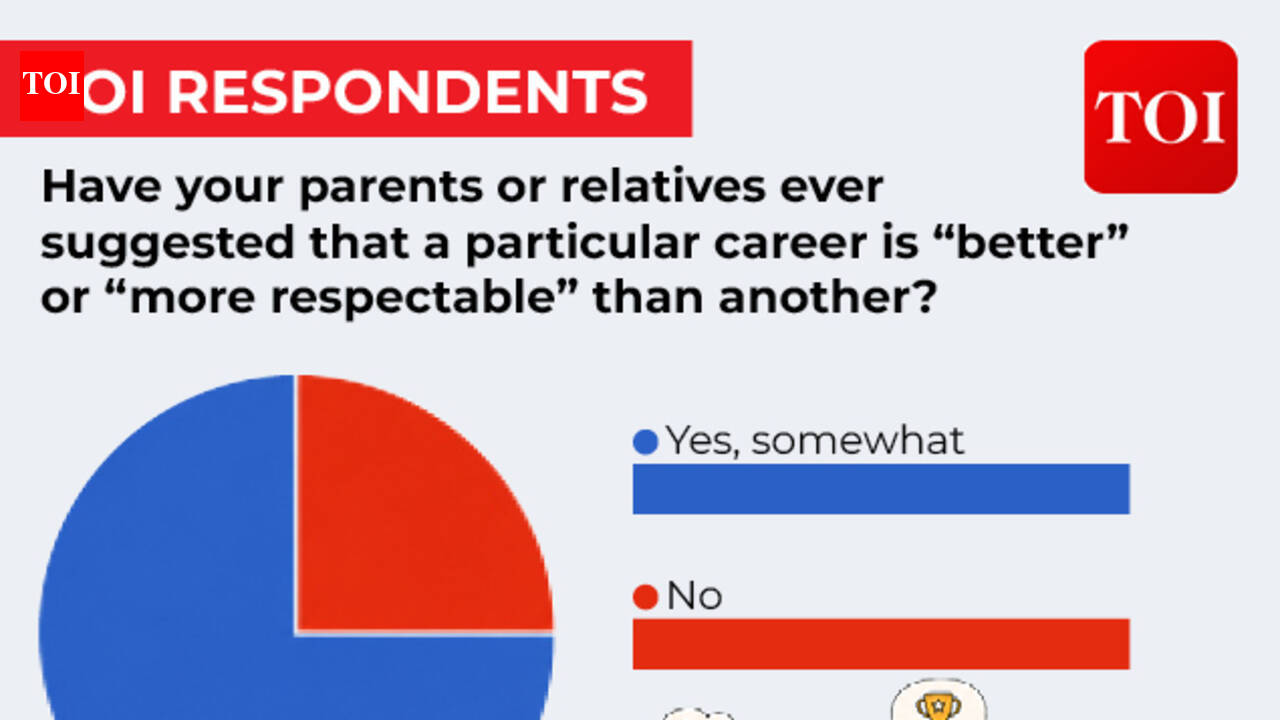
A recent public survey highlights the pervasive influence of Indian societal expectations on career choices, often prioritizing status over personal passion. The findings suggest a significant correlation between external pressure and mental health concerns among the youth.
The 'Sharma ji ka beta' Phenomenon: Societal Pressure in Indian Career Paths
In the landscape of Indian professional life, the phrase 'Sharma ji ka beta' serves as a cultural shorthand for the pervasive societal pressure placed on youth to conform to conventional career paths. A recent survey reveals that 75% of respondents have faced unsolicited advice from relatives regarding 'better' career choices, underscoring a systemic issue where individual ambition is frequently secondary to family and societal expectations. This dynamic creates a challenging environment where the pursuit of personal passion often clashes with the rigid frameworks of traditional success.
The Weight of Expectation vs. Reality
The survey highlights a stark tension between what society deems a 'respectable' career and the realities of the modern job market. With 56% of respondents citing low salary and a lack of job security as significant pain points, it becomes clear that the traditional metrics of success—often focused on prestige—are failing to align with the economic realities faced by the youth. When parental decisions are driven by social status rather than objective market trends, the resulting mismatch often leads to disillusionment and professional stagnation.
The Mental Health Implications
One of the most concerning aspects of this societal pressure is the potential impact on mental health. By steering youth away from their inherent interests and toward paths they find unfulfilling, the pressure to conform can lead to burnout, anxiety, and a profound sense of aimlessness. The data suggests that when the internal drive for 'job satisfaction' is suppressed by the external demand for 'social status,' the resulting psychological toll is significant, necessitating a broader conversation about mental well-being in the Indian professional sphere.
Factors Influencing the Generational Divide
Parents and relatives often act as conduits for traditional values, prioritizing financial stability and perceived prestige as a safeguard for their children’s futures. However, this protective instinct often ignores the evolving nature of the global economy, where innovation and passion are increasingly rewarded. The survey underscores that while parents seek stability for their offspring, the methods they employ often ignore the changing landscape of 'top careers' in India, leading to a disconnect between generations.
Moving Toward a Balanced Future
To bridge this gap, a shift in perspective is required—one that values individual agency and holistic well-being over rigid social approval. As thousands of users engage with these polls, the conversation indicates a growing desire for change. Moving forward, the challenge for Indian society will be to reconcile the need for financial security with the necessity of job satisfaction, ensuring that the next generation can pursue careers that are both economically viable and personally fulfilling.