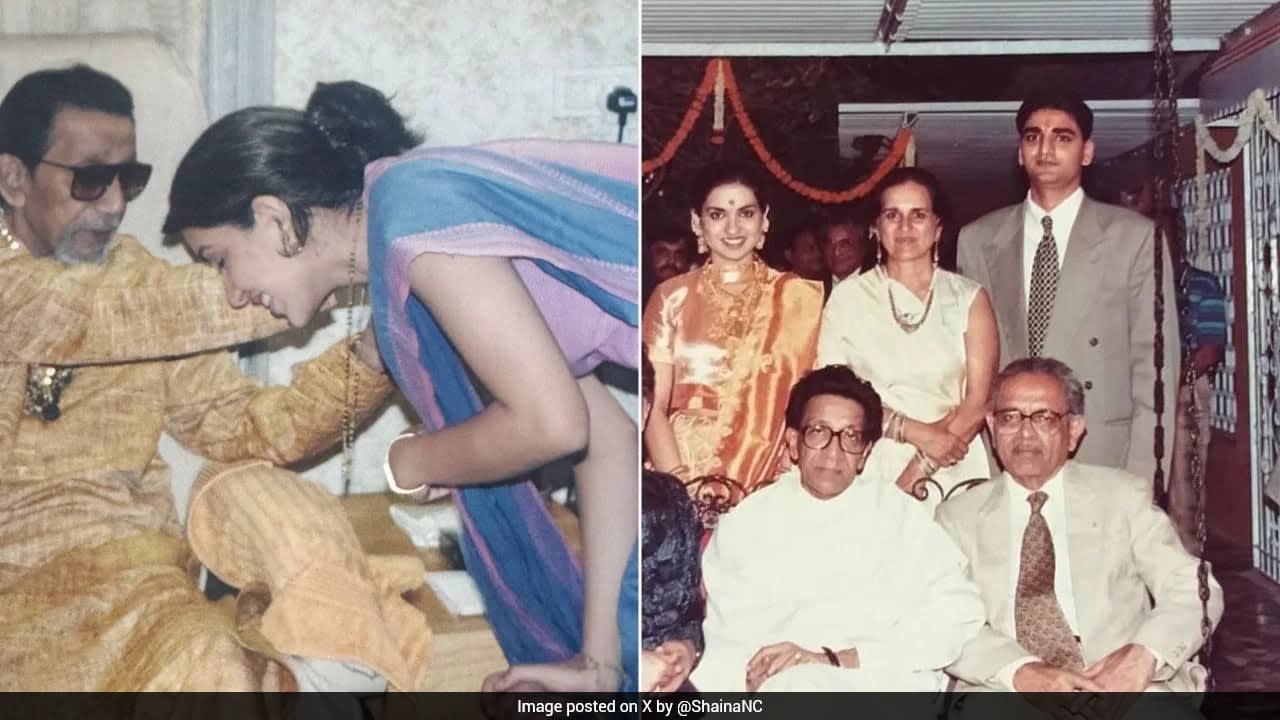
"Never Intended To Disrespect Balasaheb": Sena Leader's Apology Amid Photo Row
Source Entity
NDTV News Search Records Found 1000
Members of the Eknath Shinde-led Shiv Sena staged a protest in Mumbai by tearing pages from Sonia Gandhi’s memoir, 'Belonging,' over alleged derogatory references to V.D. Savarkar. The party has demanded a state-wide ban on the book and the withdrawal of the controversial pages by the publisher.
Political Turmoil in Maharashtra: The Savarkar Memoir Controversy
On November 18, 2026, the political landscape in Maharashtra witnessed a volatile escalation as members of the Eknath Shinde-led Shiv Sena publicly protested against Congress leader Sonia Gandhi’s recently released memoir, Belonging: A Journey of Love. The demonstration, which involved the physical tearing of book pages during a press conference in Mumbai, was ignited by allegations that the text contains derogatory references to the Hindutva ideologue Vinayak Damodar Savarkar. This act of public destruction has underscored the deep-seated ideological fractures within the state’s political discourse.
The Demand for Censorship and Public Protest
Six prominent spokespersons for the Shinde-led Shiv Sena, including Sanjay Nirupam and Shaina NC, spearheaded the protest. Their primary demand is twofold: they are calling for the publisher, HarperCollins, to scrap the specific pages containing the controversial remarks and are petitioning the Maharashtra government to impose a state-wide ban on the sale of the book. By framing the memoir’s content as an insult not only to Savarkar but to Marathi identity and writers at large, the party is effectively leveraging cultural pride as a tool to mobilize its base.
Escalation and Collateral Controversy
The protests took an even more complex turn when a photograph featured in the book—depicting Bal Thackeray—became a point of contention. During the act of tearing the pages, a photograph showing Bal Thackeray hitting an effigy was damaged, leading to sharp criticism from the Shiv Sena (UBT) faction. While Shaina NC and Eknath Shinde defended the action by claiming the intended focus of the protest was on the face of Congress leader Mani Shankar Aiyar, the incident has highlighted the blurred lines between political theater and the desecration of historical icons.
Historical Context and Political Polarization
Vinayak Damodar Savarkar remains a polarizing figure in Indian political history, often serving as a litmus test for nationalist credentials in Maharashtra. The Shiv Sena, despite its internal divisions, remains acutely sensitive to any perceived slight against Savarkar’s legacy. This incident is symptomatic of a broader trend in Indian politics where literary works and historical narratives are increasingly subjected to immediate, performative backlash rather than academic or discourse-based critique.
Broader Implications and Future Trends
The ongoing row illustrates the growing trend of political parties using demands for book bans as a mechanism to demonstrate ideological purity. By pressuring the government to restrict the circulation of a memoir, the Shinde-led faction is positioning itself as the primary defender of Savarkar’s legacy against perceived external narratives. As the Congress party and the Uddhav Thackeray-led Shiv Sena (UBT) continue to push back against these tactics, arguing that censorship cannot alter historical reality, the debate is likely to intensify, potentially impacting upcoming political campaigns in the state.
Conclusion
The tearing of Sonia Gandhi’s memoir marks a significant moment of tension in Maharashtra’s political sphere. Whether this leads to a formal government intervention remains to be seen, but the event has successfully placed the narrative surrounding Savarkar back at the center of public discourse. As both sides dig in, the incident serves as a stark reminder of the combustible nature of historical memory in modern Indian politics.
Verification Required?