Signal School Bus not just a vehicle, but a strong bridge connecting kids to mainstream of society: SC judge
Source Entity
The Indian Express
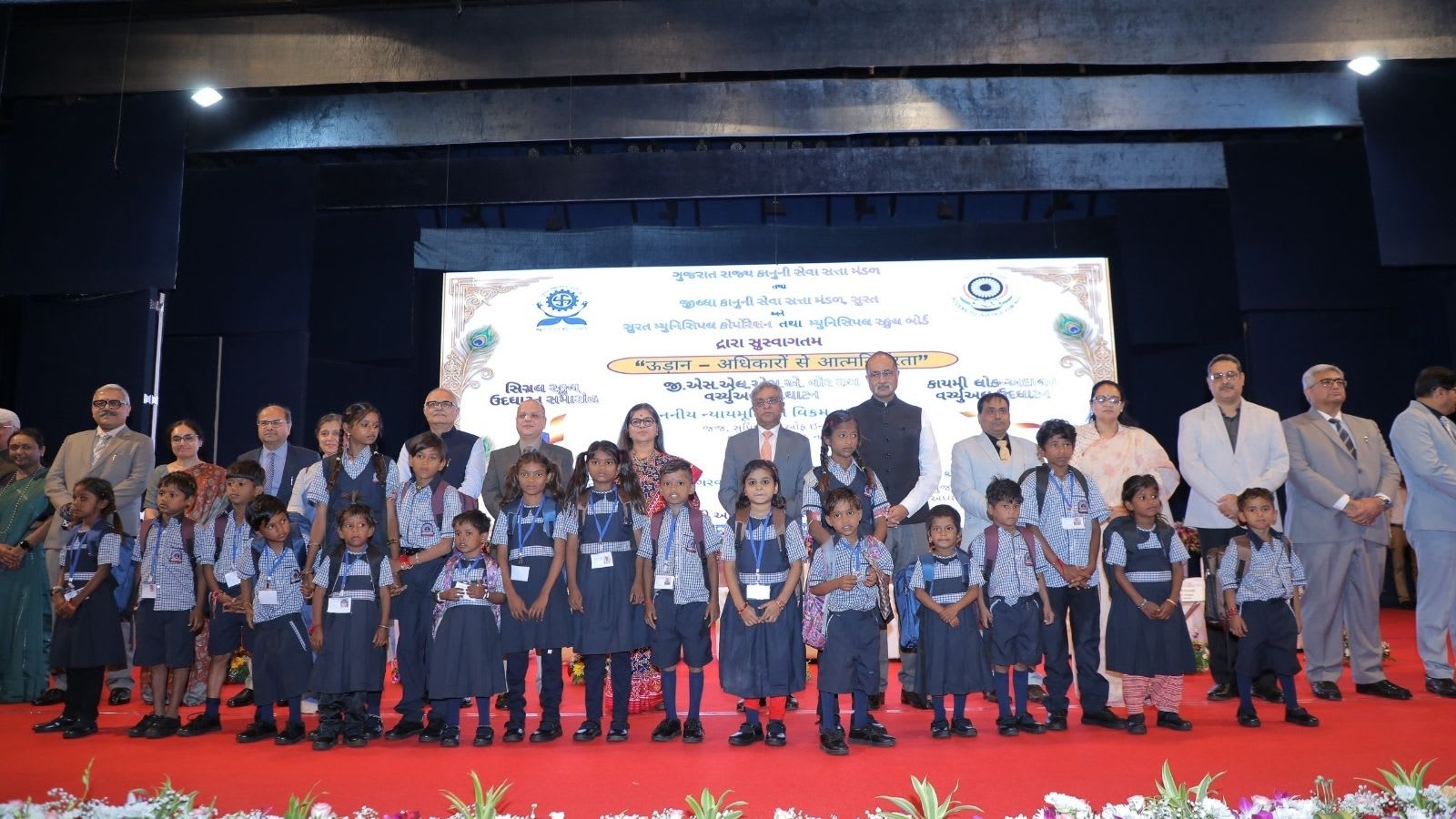
Supreme Court Justice Vikram Nath has praised the Signal School initiative for bridging the gap between street children and mainstream education. The program proactively delivers schooling to children living at traffic intersections, fostering their potential for a brighter future.
Bridging the Educational Divide: The Signal School Initiative
The 'Signal School' initiative represents a paradigm shift in how society approaches the education of marginalized children living in urban environments. As highlighted by Supreme Court judge and NALSA Executive Chairman Justice Vikram Nath, these children, often found at busy traffic intersections, are frequently overlooked as traffic signals turn green and the city moves on. By reframing the narrative, this program challenges the public to view these children not merely as individuals in need of immediate assistance, but as students with inherent potential for academic and personal growth.
Education as a Proactive Right
Traditionally, educational systems rely on children and their families to seek out enrollment. The Signal School model flips this logic by taking the classroom directly to the child's environment. Justice Nath noted that the project does not wait for the child to navigate the complexities of the formal education system; instead, it brings the school to the child's home—the traffic signal. This proactive outreach is essential for children who lack permanent addresses or the documentation often required for standard school entry.
Beyond Academics: Cultural Integration
Beyond simple literacy and numeracy, the initiative focuses on imparting culture and social skills. By engaging with these families, the program aims to integrate children into the mainstream of society. This holistic approach ensures that education serves as a bridge, helping children transition from the instability of street life to a structured learning environment where they can build friendships, pursue dreams, and develop a sense of identity that extends beyond the intersection.
The Role of Legal and Social Responsibility
Justice Nath’s endorsement, delivered in his capacity as NALSA Executive Chairman, underscores the constitutional imperative of providing education to all children, regardless of their socio-economic status. This initiative serves as a practical implementation of the Right to Education, ensuring that the state reaches the most vulnerable citizens. It highlights the importance of legal institutions in advocating for social welfare schemes that directly impact the lives of children living on the margins.
Future Implications and Societal Impact
Looking forward, the success of the Signal School model suggests a scalable path for urban development where social welfare is integrated into the city’s daily rhythm. If replicated across major metropolitan areas, this model could significantly reduce the cycle of poverty by providing a foundation for future employment and social mobility. The initiative challenges the status quo, forcing urban planners and policymakers to consider how public spaces can be utilized to foster inclusion rather than just facilitating transit.
Conclusion: A Shift in Perspective
Ultimately, the Signal School initiative is a testament to the idea that education is a powerful equalizer. By changing the public perception of children at traffic signals, the project fosters a culture of empathy and responsibility. As Justice Nath emphasized, every child possesses the ability to study and dream, and the Signal School serves as the vital link that turns those aspirations into a tangible, achievable reality.