Bankim descendant seeks Sonia apology over ‘Vande Mataram’ row
Source Entity
MANASH PRATIM GOHAIN
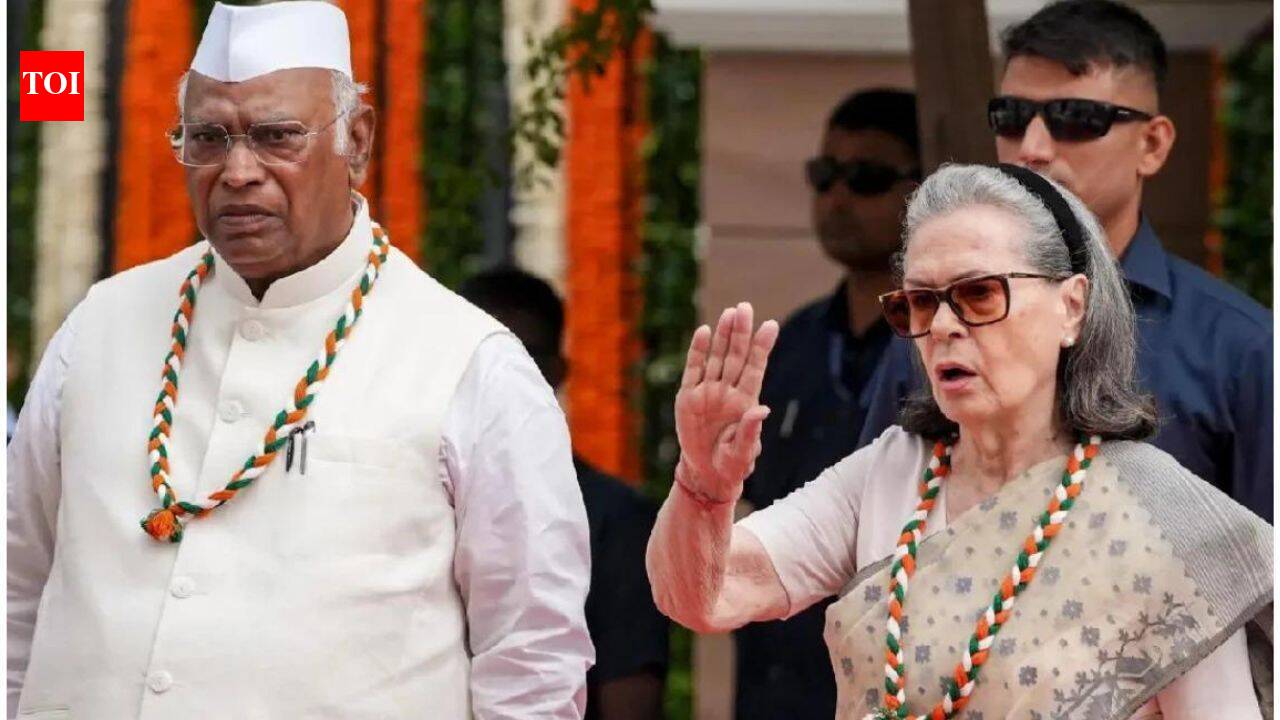
A political controversy has emerged after the BJP accused Sonia Gandhi of interrupting the national song Vande Mataram at an Independence Day event. The Congress party has categorically denied these claims, stating that Gandhi was simply requesting a chair for party president Mallikarjun Kharge.
The Vande Mataram Controversy: A Political Clash
A fresh political confrontation has erupted following an Independence Day event at the Congress party's headquarters, Indira Bhawan. The Bharatiya Janata Party (BJP) has leveled serious allegations against former Congress president Sonia Gandhi, claiming she objected to the rendition of the full version of Vande Mataram. This accusation, amplified by BJP national general secretary B L Santhosh on social media, suggests a deeper ideological friction regarding national symbols and historical sentiment.
BJP's Allegations and Ideological Framing
The BJP’s critique centers on the video footage shared by party leadership, which they interpret as a clear attempt by the Congress leadership to stifle the national song. By framing the incident as a display of a mindset that has supposedly remained unchanged since before 1947, the BJP is attempting to contrast its own nationalist platform with that of the Congress. This narrative is designed to challenge the opposition's patriotic credentials in the public domain, a common tactic in the ongoing ideological battle between the two major national parties.
The Congress Rebuttal and Contextual Clarification
In response, the Congress party has firmly rejected the BJP’s characterization of the events. The party maintains that there was no intent to disrespect the national song or interrupt its performance. Instead, they assert that Sonia Gandhi’s actions were entirely benign, stemming from a concern for the physical comfort of party president Mallikarjun Kharge. According to their account, Gandhi was simply inquiring about a chair for Kharge, who had been standing for a significant duration during the ceremony.
The Role of Digital Narratives in Modern Politics
This incident highlights how modern political discourse is increasingly driven by short video clips and social media commentary. In this case, the interpretation of a single moment—a woman speaking to party workers while a song plays in the background—has been transformed into a polarizing national debate. The speed at which such clips circulate allows political entities to craft competing narratives, often leaving the public to rely on partisan interpretations rather than a verified sequence of events.
Broader Implications for National Discourse
The controversy underscores the high stakes associated with national symbols in India. Vande Mataram, which holds historical significance as a rallying cry during the freedom struggle, remains a flashpoint for political signaling. When such symbols become the subject of partisan debate, it often reflects a broader struggle over the definition of national identity and the historical legacy of the parties involved. As both sides dig in their heels, the incident serves as a reminder of the volatility of political optics in an era of constant digital scrutiny.
Future Trends and Political Polarization
Looking ahead, it is likely that such incidents will continue to serve as conduits for larger ideological conflicts. As political parties prepare for future electoral cycles, the utilization of cultural and historical symbols will remain a central pillar of their communication strategies. The divide between the BJP’s emphasis on nationalistic display and the Congress’s focus on its organizational internal management highlights the deepening polarization that characterizes the current Indian political landscape.
Multiple Citing Sources