When will humans actually fly on Starship?
Source Entity
Eric Berger
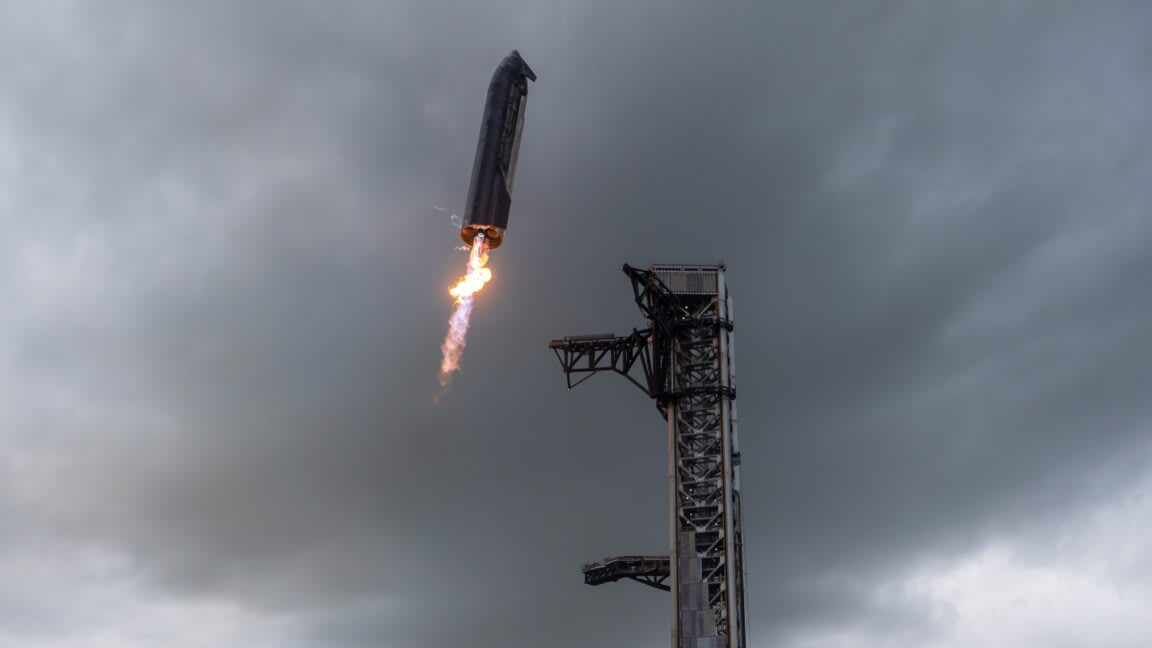
SpaceX's recent successful Starship recovery marks a major milestone toward rapid reusability. Human spaceflight timelines remain speculative, with lunar missions likely preceding Earth-based crewed launches.
The Evolution of Starship: Reusability and the Human Frontier
The recent successful return of SpaceX’s Starship to its launch tower in South Texas represents a watershed moment in aerospace engineering. By demonstrating the capability to recover the massive booster directly at the launch site, SpaceX has validated its core vision: the creation of a fully and rapidly reusable launch system. This technological breakthrough is not merely an incremental improvement; it is the fundamental prerequisite for making orbital spaceflight routine rather than exceptional, fundamentally changing the economics of access to space.
The Human Spaceflight Paradox
Despite the technical success of the recent flight test, the prospect of human passengers aboard Starship remains a subject of intense speculation. While the hardware is maturing rapidly, the transition from uncrewed test flights to human-rated missions is governed by stringent safety protocols and regulatory scrutiny. The industry consensus, underscored by the volatile nature of experimental rocket development, suggests that all current timelines for human spaceflight on Starship must be treated with significant caution.
Prioritizing Lunar Missions Over Earth Launches
An interesting divergence has emerged regarding the operational roadmap for Starship. It is increasingly likely that the first humans to inhabit the vehicle will not be launching from Earth, but rather participating in NASA’s lunar exploration initiatives. This strategy allows SpaceX to utilize Starship within the vacuum of space for lunar landing operations, potentially bypassing some of the immediate complexities associated with Earth-based crewed liftoffs during the early phases of human certification.
The Definition of 'Human Spaceflight'
When analyzing the timeline for Starship, one must distinguish between different types of missions. 'Human spaceflight' can encompass everything from short-duration orbital hops to long-range deep space exploration. The development trajectory suggests that SpaceX may prioritize mission profiles that align with existing NASA contracts, effectively layering human safety certification on top of a vehicle that has already proven its reliability in cargo and lunar landing configurations.
Future Trends and Strategic Implications
Looking ahead, the speed of human integration depends heavily on the cadence of successful flight tests and the prioritization of resources within SpaceX. If the company maintains its current momentum, the leap to crewed missions could occur sooner than traditional aerospace standards might dictate. However, the complexity of life-support systems and escape mechanisms means that the path to carrying humans on Earth-to-Earth or Earth-to-Orbit missions remains the most challenging hurdle in the program's future.
Conclusion
The trajectory of the Starship program is shifting from a focus on experimental proof-of-concept toward an operational future. While the successful return of the booster is a massive victory, the timeline for human passengers is dictated by a careful balancing act between rapid innovation and rigorous safety standards. As the program continues to mature, the focus will likely remain on lunar objectives, serving as the proving ground before Starship carries humanity into a new era of space exploration.