Sumit Nagal collapses as South Korea end India’s Davis Cup campaign
Source Entity
Bhuvan Gupta
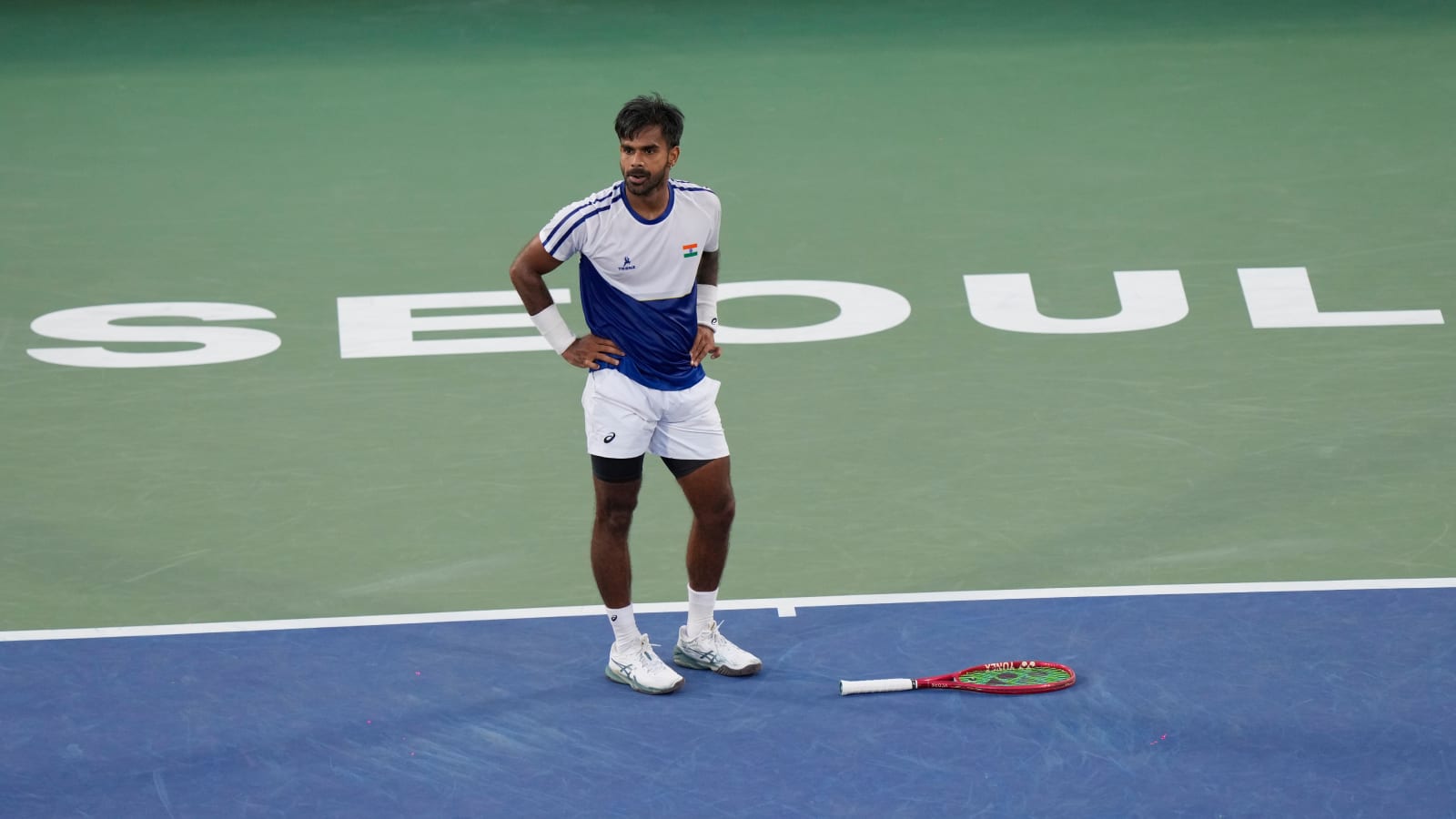
India's Davis Cup campaign ended following a 3-1 loss to South Korea in Seoul. Sumit Nagal's defeat in the reverse singles against Soonwoo Kwon confirmed South Korea's historic entry into the Final 8.
A Shift in Fortunes: India’s Davis Cup Exit
The recent conclusion of India’s Davis Cup campaign against South Korea marks a significant turning point in the nation's tennis trajectory. While India historically leveraged home-court advantages—most notably the 2016 encounter in Chandigarh where extreme heat conditions led to the retirement of two Korean players—the dynamics shifted dramatically during this latest tie at Seoul’s Olympic Park Tennis Center. The 3-1 series victory for South Korea serves as a testament to their growing prowess on the international stage.
The Nagal Narrative
Sumit Nagal, India’s top-ranked singles player, found himself unable to replicate the grit required to overcome the home side. In a reverse singles rubber that ultimately decided the tie, Nagal struggled to find his rhythm, falling 1-6, 2-6 to Soonwoo Kwon. This performance was a stark departure from previous expectations, highlighting the physical and mental fatigue that can plague athletes in high-stakes team competitions, even when environmental conditions are less punishing than the infamous 'trial by heat' of 2016.
Historical Context of the Rivalry
To understand the magnitude of this result, one must look back at the 2016 Chandigarh tie. In that instance, the oppressive Indian heat became a tactical factor, causing not only the retirement of Korean players Yong Kyu Lim and Seong Chan Hong but also the collapse of a ball boy. India’s 4-1 victory then solidified a reputation for using local conditions as a strategic weapon. Ten years later, the tables have turned; South Korea’s tactical selection of the Olympic Park venue provided them the stability needed to secure their first-ever advancement to the Final 8.
Implications for Indian Tennis
This loss at the Qualifiers stage forces a period of introspection for the Indian Davis Cup team. Relying on past successes or specific home-court advantages is no longer a viable long-term strategy in a globalized tennis landscape where opponents are increasingly prepared for diverse conditions. For Nagal, a player who carries the weight of national expectations, this defeat underscores the fragility of the current Indian squad’s depth and the urgent need for a more consistent development pipeline.
Future Trends and Outlook
South Korea’s advancement into the Final 8 signals their emergence as a formidable force in the Asia-Oceania region and beyond. For India, the road ahead involves rebuilding and identifying new talent capable of stepping up when the top-ranked players face exhaustion or tactical stalemates. As the Davis Cup format continues to evolve, India must adapt its preparation to ensure that its players can perform at their peak regardless of the geographic location or the intensity of the opposition.