Madhya Pradesh Bhojshala complex: Supreme Court suggests temporary prayer space for Muslims until case decided
Source Entity
India Latest News: Top National Headlines Today & Breaking News | The Hindu
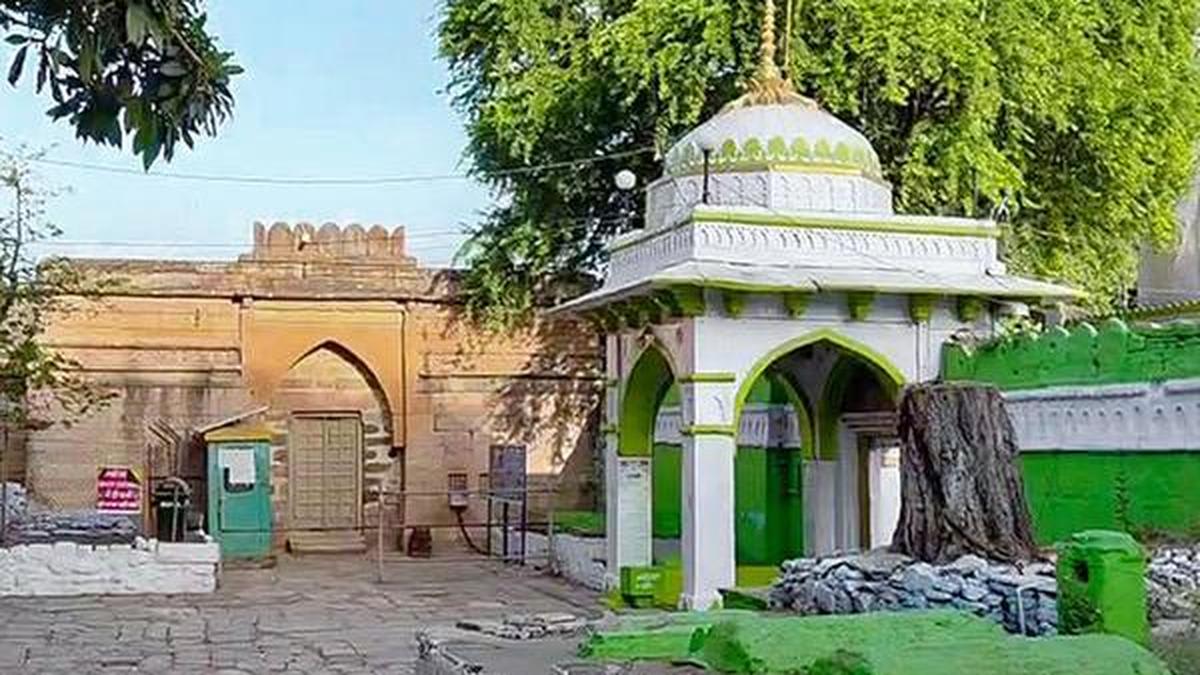
Supreme Court directed that the Archaeological Survey of India would not make any structural alterations to the disputed structure without leave of the apex court
Judicial Intervention in the Bhojshala Complex Dispute
The Supreme Court of India has stepped in to manage one of the most sensitive heritage disputes in Madhya Pradesh: the Bhojshala complex. In a recent directive, the apex court suggested the creation of temporary prayer space for Muslims at the site, aiming to balance the religious sentiments of both communities while the primary legal battle over the structure's ownership and identity continues. This move highlights the court's attempt to maintain communal harmony and ensure that the status quo is managed with equity until a final judicial determination is reached.
Balancing Religious Rights and Legal Process
The suggestion of a temporary prayer space is a strategic judicial maneuver designed to prevent immediate volatility on the ground. The Bhojshala complex has long been a flashpoint for communal tension, with competing claims that the site is either a temple dedicated to Lord Shiva or a mosque. By suggesting a temporary arrangement, the Supreme Court is not ruling on the final ownership of the site but is instead providing a pragmatic solution to ensure that the right to worship is not entirely extinguished for one party while the legal process—which can often take years—unfolds.
The Critical Role of the Archaeological Survey of India (ASI)
A pivotal aspect of the court's order is the restriction placed on the Archaeological Survey of India (ASI). The court explicitly directed that the ASI must not carry out any structural alterations to the disputed building without the leave of the apex court. This is a critical safeguard; in disputes involving ancient monuments, any physical modification can be interpreted as an attempt to erase historical evidence or 'create' a new architectural narrative. By freezing structural changes, the court ensures that the site remains an authentic piece of evidence for archaeological experts to analyze without interference.
Historical Context and the Paramara Legacy
To understand the depth of this conflict, one must look back to the 11th century and the reign of Raja Bhoj of the Paramara dynasty. The Bhojshala is widely believed to have been part of Raja Bhoj's vision for a center of learning and spirituality. Over centuries, the site's usage evolved, leading to the current overlapping claims. The transition of the site from a center of scholarship to a disputed religious space reflects the broader historical complexities of the Indian subcontinent, where structures often underwent transformations during different dynastic rules.
Broader Socio-Political Implications
This case is not merely a local property dispute but a reflection of the larger socio-political landscape in India regarding the reclamation of heritage sites. The court's cautious approach indicates a desire to decouple judicial findings from political rhetoric. By insisting on a controlled environment—where the ASI is restricted and prayer is managed—the judiciary is attempting to insulate the legal process from external pressures and street-level protests that often accompany such high-profile religious disputes.
Future Trajectory and Legal Expectations
Looking forward, the resolution of the Bhojshala case will likely hinge on scientific and archaeological evidence rather than oral testimonies. The court will likely rely on the ASI's reports regarding the original architecture and carbon dating of materials. The trend in recent Indian jurisprudence suggests that the court will seek a solution that minimizes social unrest while upholding the legal title. We can expect a prolonged period of 'managed access' where the temporary prayer arrangements remain until a definitive verdict is delivered.
Conclusion
In summary, the Supreme Court's recent directives serve as a stabilizing force in the volatile Bhojshala dispute. By suggesting temporary prayer facilities and locking the structural state of the monument, the court has prioritized peace and evidentiary integrity over an immediate, potentially divisive resolution. The outcome of this case will likely set another significant precedent for how India handles the intersection of archaeology, faith, and law.
Verification Required?