Supreme Court declines plea for separate hearing on recall of split verdict in ECs’ appointment case
Source Entity
India Latest News: Top National Headlines Today & Breaking News | The Hindu
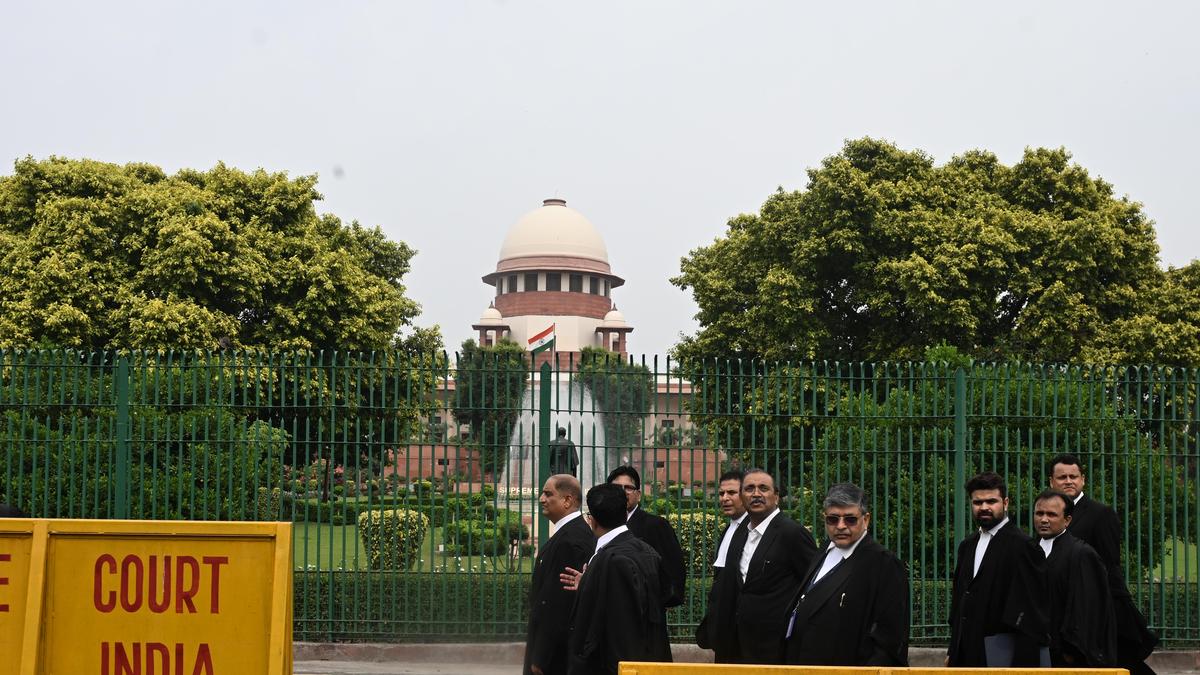
The Supreme Court has directed petitioners to present their recall application regarding the EC appointment case before the designated five-judge Constitution Bench. The Court clarified that the bench may consider the plea even following the retirement of a judge involved in the original split verdict.
Procedural Developments in the Election Commissioner Appointment Case
The Supreme Court of India recently addressed a procedural impasse concerning the legal challenges against the 2023 law governing the appointment of the Chief Election Commissioner (CEC) and other Election Commissioners. A three-judge bench, presided over by Chief Justice of India (CJI) Sanjiv Khanna—noting the correction regarding the bench composition—declined a request to have a recall application heard by the original two-judge bench that issued the September 23 split verdict. Instead, the Court directed the applicants to move their plea before the five-judge Constitution Bench currently seized of the matter.
The Nature of the Recall Application
The core of the legal dispute revolves around the 2023 legislation that altered the selection process for the top officials of the Election Commission of India. The initial referral to a larger Constitution Bench was spurred by a split verdict from a two-judge bench. By seeking a 'recall' of that referral order, the applicants are essentially attempting to revert the legal proceedings to a different judicial path, arguing that the procedural history of the case warrants a specific bench composition or a reconsideration of the referral itself.
Judicial Efficiency and Bench Integrity
By directing the matter to the five-judge Constitution Bench, the Supreme Court is upholding the principle of judicial hierarchy and administrative consistency. When a matter is referred to a larger bench, that bench gains full authority over the case's trajectory. Requiring the recall application to be heard by the larger bench prevents fragmented litigation and ensures that the judges tasked with the final interpretation of the 2023 law are also the ones deciding the procedural framework under which that interpretation will occur.
Impact of Judicial Retirement on Pending Pleas
An important legal clarification emerged from the CJI’s remarks: the five-judge bench retains the authority to consider the recall application even if a judge who participated in the original split verdict retires. This addresses potential anxieties regarding the continuity of justice. Under established procedural norms, the 'court' as an institution remains constant, and the departure of an individual judge does not extinguish the jurisdiction of a properly constituted Constitution Bench to address pending interlocutory applications.
Broader Implications for Election Law
The appointment of Election Commissioners is a cornerstone of Indian democratic integrity. The ongoing litigation highlights the tension between legislative authority and judicial oversight in defining the autonomy of constitutional bodies. By funneling these procedural requests through the Constitution Bench, the Supreme Court is signaling a preference for a singular, authoritative resolution to the challenges posed by the 2023 law, rather than allowing peripheral legal skirmishes to delay the substantive hearing.
Future Outlook
As the case moves forward, the decision of the five-judge bench on the recall application will be a pivotal indicator of how the Court intends to balance the nuances of the 2023 law against established constitutional precedents. The legal community will be watching closely to see if the Constitution Bench maintains the referral or provides a new direction, which will ultimately shape the future of how India’s election watchdogs are selected and empowered.
Verification Required?