‘Court must protect liberty of accused if trial may be delayed’, says Supreme Court
Source Entity
AMIT ANAND CHOUDHARY
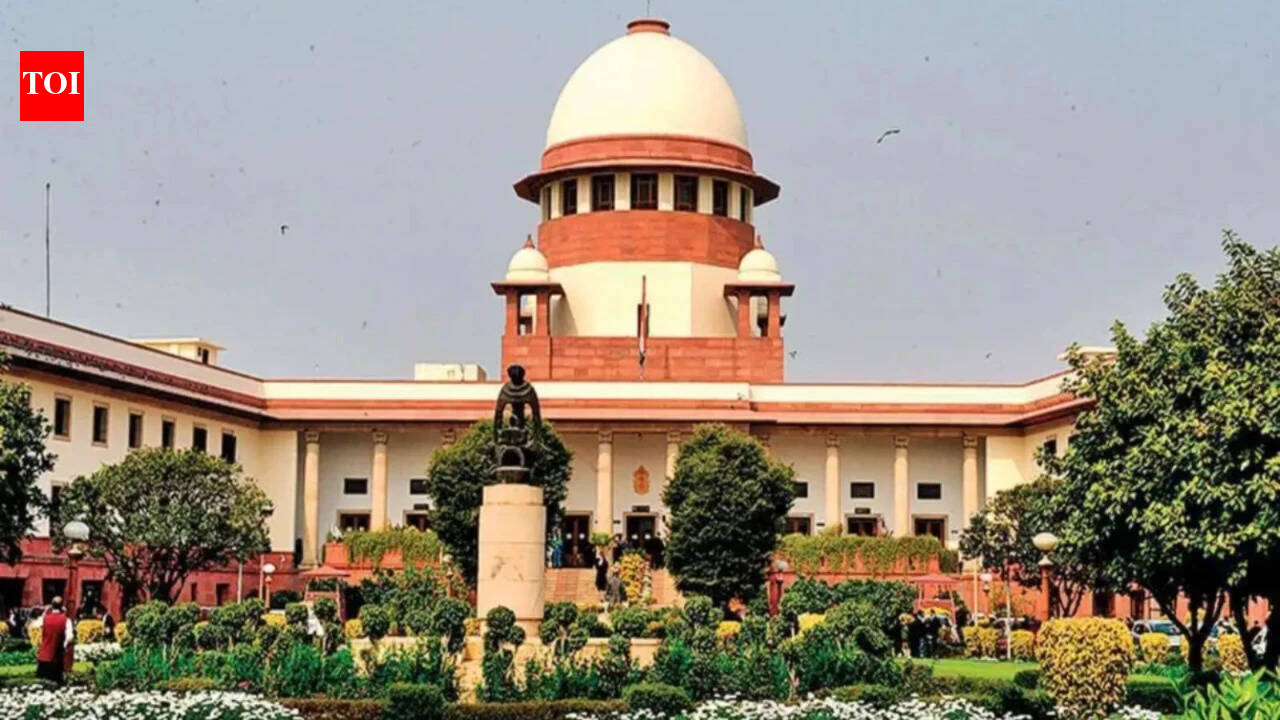
The Supreme Court has emphasized that personal liberty must take precedence if trials are indefinitely delayed. This ruling follows the arrest of individuals linked to financial irregularities in the Jal Jeevan Mission, a major government water supply project.
Supreme Court Prioritizes Liberty Amidst Trial Delays
In a significant legal development, the Supreme Court of India has reaffirmed the fundamental right to personal liberty, asserting that bail should be granted when a trial is unlikely to reach a conclusion in the near future. This observation comes against the backdrop of an ongoing investigation into massive financial irregularities involving the 'Jal Jeevan Mission,' a high-profile initiative designed to provide functional household tap connections for safe drinking water across the nation.
The Intersection of Liberty and Judicial Efficiency
The court’s stance highlights the growing concern over the systemic issue of prolonged pre-trial detention. By emphasizing that liberty becomes 'paramount' when judicial timelines are stalled, the bench is reinforcing the principle that an accused individual should not suffer indefinite incarceration while the state prepares its case. This balance between the state's interest in prosecuting financial crimes and the individual's constitutional rights remains a cornerstone of Indian jurisprudence.
Contextualizing the Jal Jeevan Mission Scandal
The 'Jal Jeevan Mission' represents one of the most ambitious collaborative efforts between central and state governments to ensure universal access to potable water. However, the discovery of alleged financial irregularities has cast a shadow over its implementation. The legal proceedings involving those arrested in connection with these irregularities serve as a litmus test for how the judiciary handles cases of alleged large-scale corruption in public welfare schemes.
Broader Implications for Anti-Corruption Efforts
This ruling suggests that even in cases involving serious allegations of financial misconduct or public fund mismanagement, the judicial process cannot be used as a tool for punitive detention. For investigative agencies, this serves as a reminder that the strength of a case must be matched by the efficiency of the trial process. If the state cannot ensure a swift trial, the court's recent directive indicates that the accused’s right to liberty will be favored over extended custody.
Future Trends in Bail Jurisprudence
Looking ahead, this precedent is likely to influence how lower courts handle bail applications in complex white-collar crime cases. As the judiciary continues to grapple with massive backlogs, we can expect a more rigorous application of the 'speedy trial' doctrine. Future legal challenges will likely focus on defining what constitutes an 'unreasonable' delay, potentially forcing the government to streamline its investigative and prosecutorial procedures to ensure that justice is both fair and timely.