Stalin urges Tamil Nadu government to act against Kallakurichi TVK MLA over messages to Collector
Source Entity
India Latest News: Top National Headlines Today & Breaking News | The Hindu
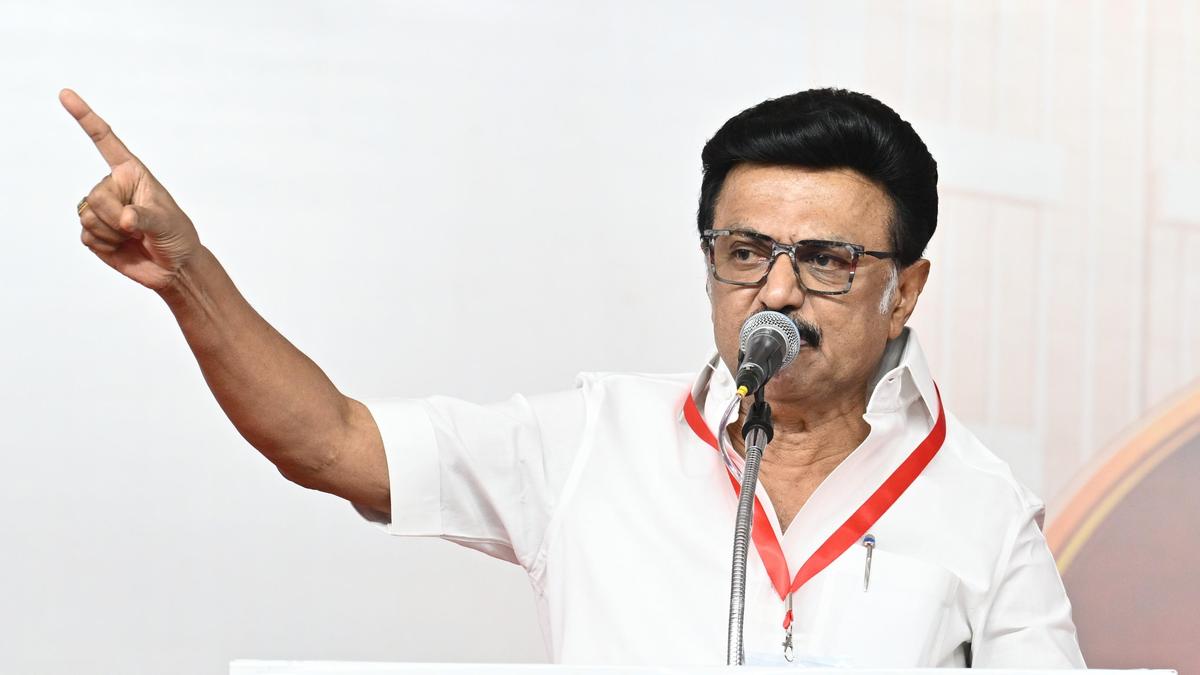
Tamil Nadu politics is embroiled in controversy as DMK president M.K. Stalin demands action against TVK MLA Arul Vignesh for allegedly sending inappropriate messages to a District Collector. The state government has informed the Madras High Court that no formal complaint has been received, prompting judicial intervention.
The Kallakurichi Controversy: Allegations and Official Responses
A Clash of Narratives
The political landscape in Tamil Nadu has been stirred by allegations involving Kallakurichi TVK MLA C. Arun Vignesh, who stands accused of sending inappropriate and obscene messages to the district Collector. The situation reached a boiling point when DMK president M.K. Stalin publicly urged the state government to take decisive action against the legislator. Stalin’s intervention highlights the friction between the opposition and the ruling administration, as he argues that the government’s failure to act promptly reflects a lack of commitment to the safety and dignity of women in administrative positions.
The Legal and Administrative Stance
In a significant legal development, the Madras High Court became the focal point of this controversy. During proceedings before Justice V. Lakshminarayanan, State Public Prosecutor R. John Sathyan asserted that neither the Chief Secretary, M. Sai Kumar, nor the police department had received any formal complaint or representation from the woman IAS officer in question. This official denial directly contradicts media reports that had suggested a complaint had already been filed, shifting the core of the issue toward the accuracy of documentation and the procedural handling of the alleged harassment.
The Opposition's Critique of Governance
Mr. Stalin’s critique goes beyond the individual conduct of the MLA, touching upon the broader responsibilities of the Chief Minister and the Chief Secretary. By suggesting that the government prioritized the protection of a party MLA over the dignity of a senior civil servant, Stalin has framed this as a test of the administration's integrity. He posited that if a high-ranking official like a Collector faces such challenges without immediate state support, the situation for ordinary women becomes increasingly precarious, thereby weaponizing the event as a litmus test for the current government's gender-welfare policies.
The Role of the Judiciary
Justice V. Lakshminarayanan’s intervention represents a critical procedural step. By explicitly ordering the State Public Prosecutor to obtain instructions directly from the woman officer and report back by November 24, 2026, the court is cutting through the bureaucratic ambiguity. This judicial oversight is essential to determine whether the lack of a complaint is a result of the officer choosing not to pursue the matter, or if there has been systemic suppression of a grievance at higher levels of government.
Broader Implications and Future Trends
This incident serves as a significant case study in the intersection of digital etiquette, political accountability, and the protection of civil servants. The case highlights a growing trend where allegations of misconduct involving public figures are increasingly scrutinized through the lens of institutional safety. As the court investigation proceeds, the outcome will likely set a precedent for how the Tamil Nadu government handles future allegations of workplace harassment involving elected representatives and bureaucratic personnel, potentially leading to stricter internal protocols regarding communication between MLAs and district officials.
Verification Required?