1.44kg gold, 12kg silver: Raid on Hyderabad civic official uncovers Rs 9.24cr assets
Source Entity
TOI CITY DESK
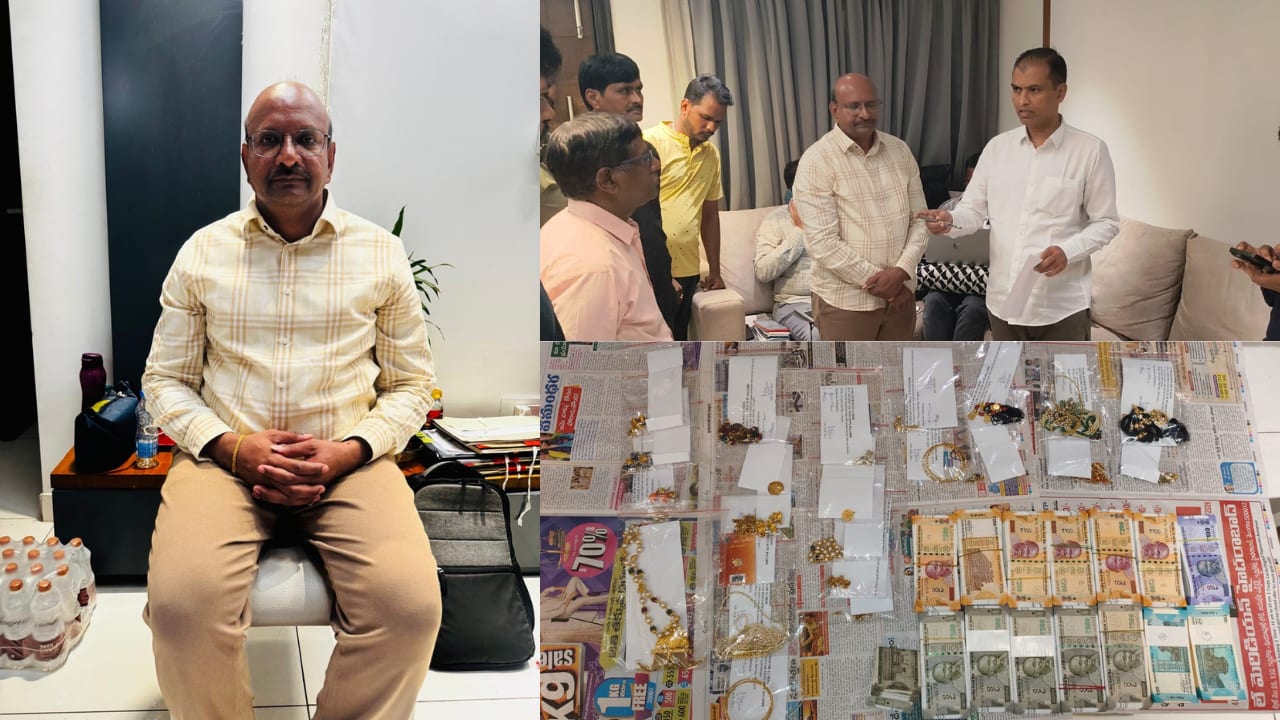
The Telangana Anti-Corruption Bureau (ACB) has uncovered assets worth ₹9.24 crore during raids on B Ravinder, the Chief Engineer of the Hyderabad Metropolitan Development Authority (HMDA). The seizure includes 1.44kg of gold, 12kg of silver, significant cash, and various real estate holdings.
High-Profile Corruption Probe: ACB Uncovers ₹9.24 Crore in Assets of HMDA Official
In a significant crackdown on bureaucratic corruption, the Telangana Anti-Corruption Bureau (ACB) has executed a series of raids targeting B Ravinder, the Chief Engineer of the Hyderabad Metropolitan Development Authority (HMDA). The operation resulted in the discovery of assets valued at approximately ₹9.24 crore, a figure that starkly contrasts with the official income expected of a government servant. The scale of the recovery—ranging from precious metals to extensive real estate—underscores a systemic failure in asset monitoring and suggests a long-term accumulation of illicit wealth.
Breakdown of Seized Assets and Financial Disparity
The sheer volume of the recovered assets provides a window into the extent of the alleged corruption. The ACB reported the seizure of 1.44kg of gold and 12kg of silver, alongside substantial cash and bank deposits. Beyond liquid assets, the investigation unearthed a diverse portfolio of immovable properties, including residential flats, commercial plots, agricultural land, and various buildings. In legal terms, this creates a strong foundation for a 'Disproportionate Assets' (DA) case, where the burden of proof often shifts to the accused to explain the legitimate source of wealth that exceeds their known legal earnings.
The Strategic Influence of the HMDA
To understand the context of this raid, one must look at the role of the Hyderabad Metropolitan Development Authority (HMDA). As the primary agency responsible for urban planning and infrastructure development in the Hyderabad region, the HMDA wields immense power over land-use conversions, building approvals, and the allocation of government contracts. A Chief Engineer within this organization occupies a critical junction of technical approval and administrative power. The potential for rent-seeking behavior in such a high-stakes environment is significant, as the ability to expedite or stall development projects can create immense financial incentives for corrupt officials.
Legal Framework and the ACB's Mandate
The Telangana ACB's actions are rooted in the Prevention of Corruption Act, which aims to penalize public servants for taking bribes or possessing assets beyond their means. By conducting these searches, the ACB is not merely seizing assets but is building a forensic financial trail. The discovery of documents linking B Ravinder to multiple plots and buildings suggests a sophisticated method of asset acquisition, possibly involving 'benami' transactions (properties held in the name of others), which the ACB is likely to investigate further as the case progresses.
Implications for State Governance and Public Trust
This raid serves as a critical signal to the state's bureaucracy. High-profile arrests and seizures are often used by administrations to project a 'zero-tolerance' policy toward corruption. However, the fact that such a high-ranking official could accumulate nearly ₹10 crore in assets suggests that internal oversight mechanisms within the HMDA may have been bypassed or ignored for years. For the general public, such revelations often evoke a mixture of cynicism regarding systemic graft and hope that the current administration is serious about cleaning up urban governance.
Future Trajectory of the Investigation
As the investigation remains ongoing, the next phase will likely involve a detailed audit of B Ravinder's financial history and the interrogation of associates. The ACB will seek to determine if the recovered assets were the result of direct bribes, kickbacks from contractors, or land speculation fueled by insider information. It is expected that the official will face immediate suspension to prevent the tampering of evidence, followed by a prolonged legal battle in the special courts designated for corruption cases.
Conclusion
The case of B Ravinder is a stark reminder of the vulnerabilities inherent in urban development authorities. The recovery of ₹9.24 crore in assets highlights the intersection of administrative power and financial greed. While the seizure of gold and real estate is a tangible victory for the ACB, the long-term success of this operation will depend on whether it leads to broader institutional reforms within the HMDA to prevent future occurrences of such massive financial irregularities.