High growth and demographic efficiency turned into fiscal penalty for Telangana?
Source Entity
India Latest News: Top National Headlines Today & Breaking News | The Hindu
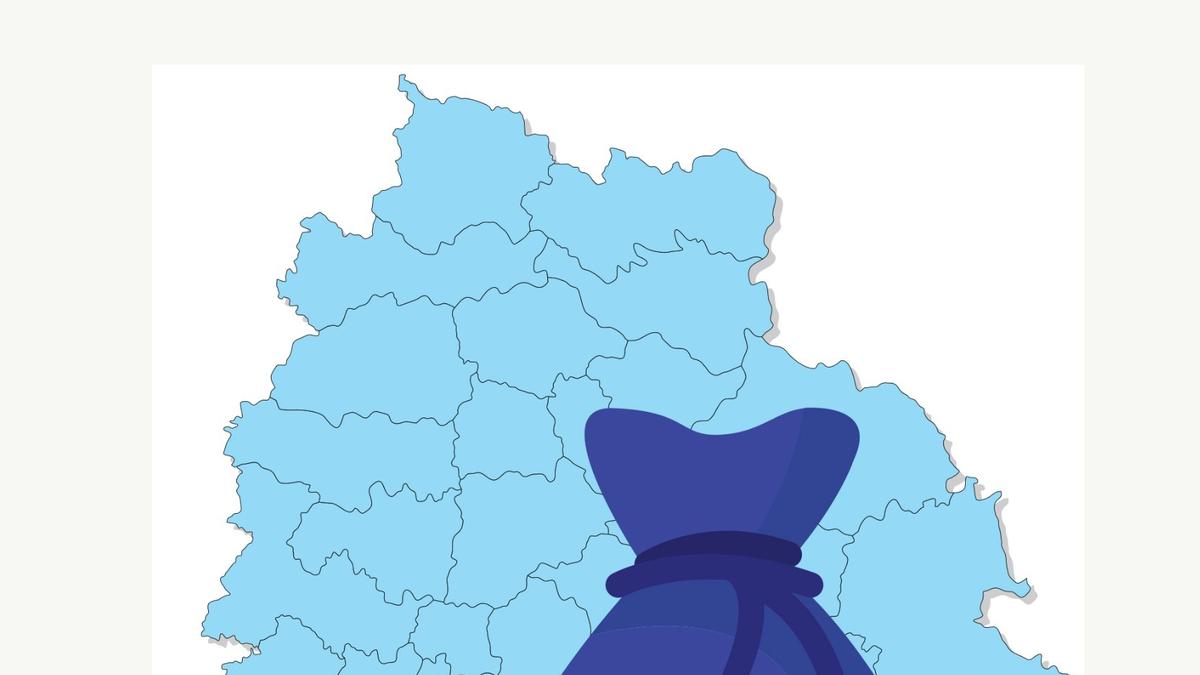
A recent CESS report suggests Telangana faces a fiscal penalty due to its own growth and demographic success. Changes in Finance Commission criteria, specifically regarding income distance and forest cover, have led to a decline in the state's share of central taxes.
The Fiscal Paradox: Telangana's Growth vs. Central Devolution
Recent findings from the Centre for Economic and Social Studies (CESS) in their report, “Public finances of Telangana: Trends, challenges and policy priorities,” have brought to light a growing concern among high-performing Indian states: the potential for fiscal penalization due to successful economic and demographic management. Telangana, often lauded for its robust development trajectory, appears to be grappling with a systemic contradiction where its own progress inversely affects its share of central financial resources.
The Impact of Finance Commission Criteria
The core of this issue lies in the transition between the 14th and 15th Finance Commissions. Finance Commissions are tasked with the equitable horizontal devolution of central taxes among states. However, as the criteria for this distribution evolve, states that have achieved higher per capita Gross State Domestic Product (GSDP) often find themselves at a disadvantage. The CESS report highlights that Telangana’s share has seen a notable decline, driven largely by shifts in how 'income distance'—the gap between a state's per capita GSDP and a benchmark—is weighted.
Demographic Efficiency as a Double-Edged Sword
Telangana’s demographic efficiency, which typically signals a maturing economy and effective governance, has inadvertently contributed to this fiscal squeeze. When the central government adjusts formulas to prioritize states with higher poverty rates or slower growth, high-performing states like Telangana face a reduction in their percentage share. This creates a challenging fiscal environment where the state must continue to fund infrastructure and welfare programs while receiving a proportionally smaller slice of the central tax pool than in previous cycles.
The Role of Environmental Metrics
Beyond economic indicators, the report points to the significance of 'forest cover' as a metric for devolution. The CESS study notes that Telangana’s forest cover declined by 21%, a factor that influenced the state’s reduced allocation in the 15th Finance Commission compared to the 14th. This highlights the complex intersection of environmental policy and fiscal federalism, where states are increasingly judged on ecological performance as much as economic output.
Broader Implications and Future Trends
This situation underscores a broader, ongoing debate regarding the 'fiscal penalty' of development in India’s federal structure. If states are effectively 'taxed' for their success through reduced central support, it may dampen the incentive for aggressive state-level growth policies. Future policy discussions will likely need to balance the necessity of supporting economically weaker states with the imperative of rewarding high-performing states to ensure national economic momentum remains strong.
Conclusion: A Call for Policy Reform
The CESS report serves as a critical diagnostic tool for policymakers. As Telangana continues to navigate these fiscal constraints, the findings suggest a need for a more nuanced approach to horizontal devolution. Moving forward, the state will likely need to advocate for a framework that recognizes the cost of maintaining high-growth infrastructure, ensuring that demographic and economic efficiency remains a catalyst for progress rather than a burden on the state treasury.
Verification Required?