Telangana set to emerge as high-speed rail hub: Ashwini Vaishnaw
Source Entity
India Latest News: Top National Headlines Today & Breaking News | The Hindu
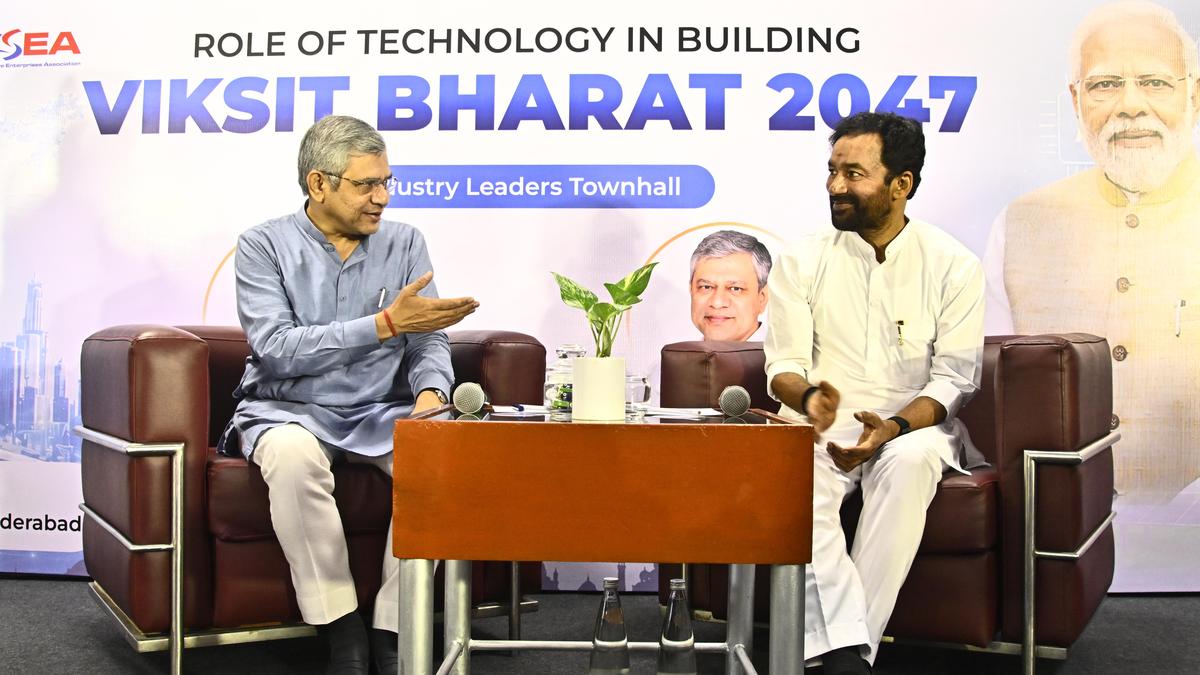
Union Minister for Railways, Electronics and Information Technology Ashwini Vaishnaw on Saturday said Telangana is poised to emerge as a major high-speed rail hub with the Centre proposing three bulle...
Telangana's Ascent as a High-Speed Rail Nexus
Union Minister for Railways, Electronics, and Information Technology Ashwini Vaishnaw's recent announcement regarding Telangana's emergence as a high-speed rail hub marks a strategic shift in India's infrastructure priorities. By proposing three bullet train corridors, the central government is signaling a move toward a more decentralized yet highly connected transportation network. This initiative is not merely about speed but about integrating the southern region into a high-efficiency transit grid that aligns with the overarching goals of the PM Gati Shakti National Master Plan for multi-modal connectivity.
Strategic Urban Integration and the Hub Model
The vision of transforming Telangana into a "hub" suggests that Hyderabad will likely serve as the central node for these proposed corridors. A hub-and-spoke model in high-speed rail allows for the rapid movement of professionals, business travelers, and tourists between major urban centers and satellite towns. This connectivity is expected to alleviate the pressure on existing rail and road networks, which have struggled to keep pace with the state's rapid urbanization and population growth. By reducing travel time significantly, the government aims to create a "mega-region" effect where economic activities are no longer confined to the city core but spread along the rail corridors.
Economic Catalysts and Transit-Oriented Development
From an economic perspective, the introduction of high-speed rail is a powerful catalyst for Transit-Oriented Development (TOD). The areas surrounding the proposed bullet train stations are likely to see a surge in real estate value and the emergence of new commercial hubs. For Telangana, which already possesses a strong foundation in the pharmaceutical and information technology sectors, these corridors could facilitate a more seamless flow of human capital. The ability to move experts and executives across the state in a fraction of the current time will likely attract further Foreign Direct Investment (FDI) and encourage the establishment of new industrial clusters outside the primary metropolitan area.
The Convergence of Rail and Digital Infrastructure
It is particularly noteworthy that this announcement comes from Ashwini Vaishnaw, who holds portfolios in both Railways and Electronics & IT. This suggests a synergistic approach where the physical infrastructure of high-speed rail will be integrated with advanced digital systems. We can anticipate the implementation of AI-driven traffic management, smart ticketing systems, and high-speed data connectivity within the trains and stations. This blending of "hard" and "soft" infrastructure ensures that the rail hub is not just a transport terminal but a digitally enabled ecosystem that supports the needs of a modern, tech-savvy workforce.
Historical Context and the Shinkansen Precedent
This move follows the blueprint established by the Mumbai-Ahmedabad High-Speed Rail (MAHSR) project. While the MAHSR project served as the primary testing ground for the adoption of Japanese Shinkansen technology in India, the expansion into Telangana indicates a transition from a single experimental line to a systemic national strategy. The lessons learned in land acquisition and technical engineering from the Gujarat-Maharashtra corridor will be critical in ensuring that the Telangana corridors are implemented with greater efficiency and fewer delays.
Implementation Challenges and Future Outlook
Despite the optimistic outlook, the project faces significant headwinds. Land acquisition remains the most volatile variable in Indian infrastructure projects, often leading to legal disputes and delays. Furthermore, the immense capital expenditure required for bullet train technology necessitates a sustainable financing model, likely involving a combination of low-interest sovereign loans and public-private partnerships. The success of this project will depend on the central government's ability to coordinate with state authorities to streamline clearances and manage environmental impacts.
Conclusion
In summary, the proposal to establish Telangana as a high-speed rail hub is a bold leap toward modernizing India's internal mobility. If successfully executed, the three proposed corridors will redefine the socio-economic landscape of the state, fostering unprecedented regional integration and economic dynamism. This project stands as a testament to the government's ambition to position India as a global leader in infrastructure and technology, turning Telangana into a cornerstone of the nation's future transit network.
Verification Required?