Tesla reports 486,532 vehicle deliveries for third quarter, topping expectation
Source Entity
US Top News and Analysis
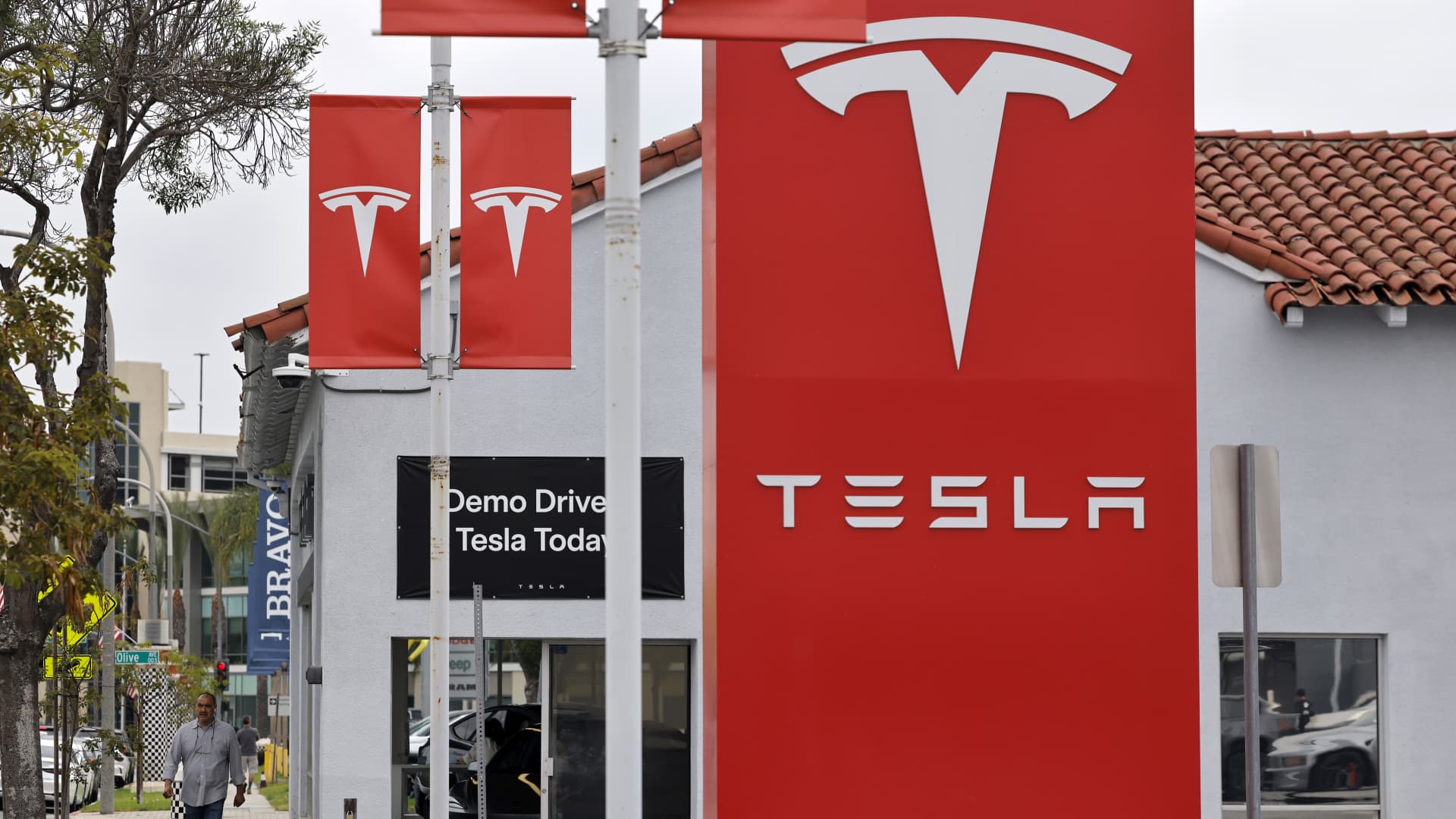
Tesla and Rivian both exceeded third-quarter delivery expectations despite a competitive EV market. Tesla reported 486,532 deliveries, while Rivian saw a 46% year-over-year increase, signaling robust demand for electric vehicles.
Q3 EV Market Performance: Tesla and Rivian Beat Expectations
The electric vehicle (EV) sector has entered a critical phase of maturation, defined by intense competition and shifting consumer demand. Recent data for the third quarter reveals that both market leader Tesla and challenger Rivian have managed to outperform Wall Street expectations, providing a rare moment of optimism in an otherwise challenging economic climate for automotive manufacturers.
Tesla's Resilience in a Competitive Landscape
Tesla reported a total of 486,532 vehicle deliveries for the third quarter, a figure that comfortably surpassed the consensus estimates of approximately 461,100 to 461,974. While this represents a slight 2% decline compared to the same period last year—a decrease partially attributed to the expiration of federal tax credits that previously drove a surge in demand—the sequential growth from the second quarter’s 480,126 deliveries underscores a steady recovery. The majority of this volume, roughly 98%, was driven by the Model 3 and Model Y, highlighting the continued reliance on these core, entry-level platforms.
The Pressure of Global Competition
Despite the positive delivery numbers, Tesla’s core business faces significant headwinds. The company is operating under increased pressure as Chinese and European automakers ramp up production of affordable and innovative electric vehicles. This global shift has forced Tesla to navigate a landscape where it must constantly balance production efficiency with the need for technological differentiation, as evidenced by their production of 464,391 vehicles this quarter, which included niche segments like the Cybertruck and the Semi.
Rivian’s Growth Trajectory
Parallel to Tesla’s performance, Rivian showcased significant momentum with a 46% year-over-year increase in deliveries, reaching 19,248 units. By outperforming the FactSet consensus of 18,000 units, Rivian has reinforced investor confidence in its operational scaling. The company has officially reconfirmed its 2026 delivery guidance of 65,000 to 70,000 vehicles, a target that necessitates a strategic ramp-up in the fourth quarter to meet the required growth benchmarks.
Strategic Implications for the EV Sector
The ability of both companies to exceed analyst expectations suggests that despite macroeconomic pressures and high interest rates, consumer appetite for EVs remains resilient. For Tesla, the focus remains on maintaining its dominant market share while defending its margins against aggressive international rivals. For Rivian, the challenge lies in executing its production roadmap to meet ambitious long-term guidance, specifically by scaling its midsize offerings like the R2.
Future Outlook
As we look toward the end of the fiscal year, the industry is entering a high-stakes period. Tesla’s ability to sustain its recovery despite a year-over-year dip suggests that the worst of the post-tax-credit slump may be behind it. Meanwhile, Rivian’s growth trajectory highlights that the EV market is expanding beyond legacy players. Investors will be watching closely to see if these companies can maintain these delivery velocities in an increasingly crowded and cost-sensitive global marketplace.