The Transvoxel Algorithm
Source Entity
Hacker News
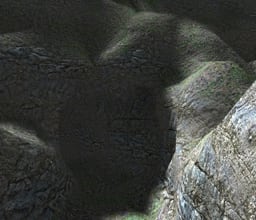
The Transvoxel Algorithm, invented by Eric Lengyel in 2009, provides a critical solution for rendering seamless, multi-resolution voxel terrain. It enables high-performance, complex environments in modern video games by bridging the gap between differing levels of detail.
Understanding the Transvoxel Algorithm
The Transvoxel Algorithm represents a foundational milestone in computer graphics, specifically designed to address the challenges of rendering large-scale, volumetric datasets. Invented by Eric Lengyel in 2009, this method was engineered to solve the persistent issue of 'cracks' or seams that appear when joining triangle meshes of varying resolutions. By allowing for dynamic Level of Detail (LOD) management, the algorithm ensures that developers can render vast, voxel-based terrains without sacrificing visual integrity or performance.
The Problem of Voxel Continuity
Traditional terrain systems often rely on heightmaps, which are inherently limited by their two-dimensional nature. Voxel-based systems, by contrast, offer true three-dimensional freedom, allowing for complex structures such as caves, arches, and overhangs. However, the computational cost of rendering high-resolution voxels across an entire game world is prohibitive. The Transvoxel Algorithm solves this by enabling a system where distant terrain is rendered at a lower resolution while nearby terrain remains highly detailed, all while maintaining a perfectly sealed geometric transition between these differing levels.
Implementation and Technical Legacy
First implemented in the C4 Engine, the Transvoxel Algorithm has served as a benchmark for engine developers grappling with volumetric data. The algorithm functions by creating transition cells that act as a bridge between two adjacent regions of different resolutions. By utilizing lookup tables to determine how to stitch these triangles together, the algorithm avoids the visual artifacts that would otherwise ruin the immersion of a seamless open world.
Broader Implications for Gaming
As the gaming industry moves toward more destructible and interactive environments, the necessity for efficient voxel rendering has only increased. The Transvoxel Algorithm provided the mathematical framework that allowed developers to transition away from static, height-map-based terrain toward dynamic, modifiable worlds. Its influence is seen in the evolution of procedural generation techniques that define many modern exploration-based titles.
Future Trends in Volumetric Rendering
While newer techniques have emerged in the decade since its inception, the principles established by the Transvoxel Algorithm remain highly relevant. Future trends in real-time rendering, such as hardware-accelerated ray tracing and more advanced mesh shaders, continue to build upon the foundation of efficient LOD management. The ability to handle massive volumetric datasets remains a key differentiator for game engines aiming to deliver high-fidelity, infinite-scale virtual worlds.