Trump says US to scale back military drills with South Korea after it stayed out of Iran war
Source Entity
BBC News
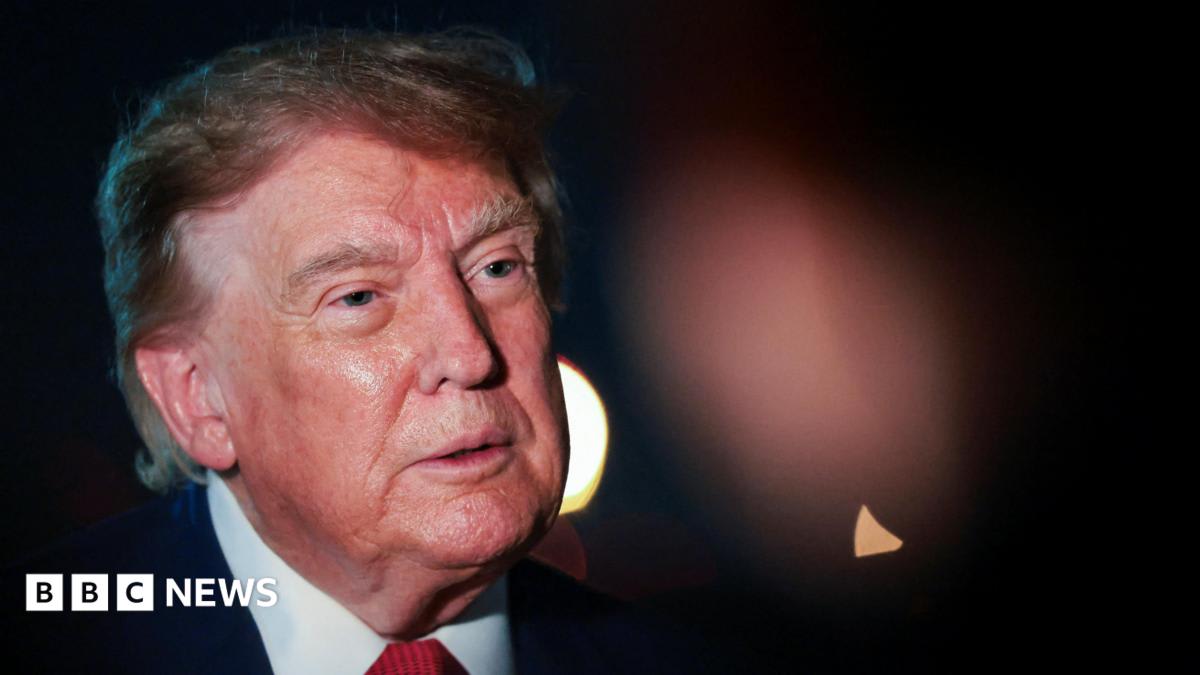
President Trump has ordered a substantial reduction in joint military exercises with South Korea. This decision follows Seoul's refusal to support U.S. denuclearization efforts regarding Iran and Trump's stated desire to maintain positive relations with North Korea.
Strategic Realignment in East Asia
President Donald Trump has announced a significant shift in U.S. military posture in the Indo-Pacific, ordering the Pentagon to "substantially reduce" joint military exercises with South Korea. The decision, communicated via social media, marks a departure from traditional defense cooperation and is framed by the President as a necessary adjustment to avoid sending "inappropriate and hostile" signals to North Korea. This move underscores a broader, transactional approach to international security alliances.
The Nexus of Iran and South Korea
The rationale behind this reduction is explicitly linked by President Trump to South Korea’s recent refusal to support U.S. initiatives aimed at the "denuclearisation" of Iran. By conditioning military partnership on alignment with broader U.S. foreign policy objectives in the Middle East, the administration is signaling a shift toward requiring greater geopolitical reciprocity from its allies. This linkage suggests that U.S. military presence and support are increasingly viewed through the lens of global policy alignment rather than isolated regional security commitments.
Diplomatic Calculus with Pyongyang
Central to this policy shift is President Trump’s stated emphasis on his "very good relationship" with North Korean leader Kim Jong Un. By characterizing North Korea as "unthreatening and respectful" during his tenure, the President is prioritizing personal diplomacy over the traditional deterrent model of large-scale military readiness. This strategy seeks to lower tensions on the Korean Peninsula by minimizing exercises that Pyongyang has historically viewed as provocative rehearsals for invasion.
Financial and Strategic Implications
President Trump also highlighted the financial burden of these exercises, noting that the United States bears a significant portion of the costs. His rhetoric suggests an intent to reduce the fiscal footprint of the U.S. military abroad, aligning with his long-standing "America First" platform. By framing the exercises as both costly and strategically counterproductive, the administration is justifying a scaling back that may lead to long-term changes in how the U.S. manages its defense commitments in the Pacific.
Security Challenges and Future Trends
The timing of this order is particularly notable given that North Korea has recently conducted ballistic missile tests that contravene United Nations mandates. Despite these provocations, the U.S. administration is moving forward with the reduction, signaling a willingness to bypass traditional security protocols in favor of maintaining diplomatic channels with Pyongyang. Future trends suggest a potential weakening of the integrated defense architecture between Washington and Seoul as the U.S. continues to prioritize bilateral diplomatic outcomes over conventional military preparedness.
Conclusion
This decision represents a profound pivot in U.S. foreign policy, intertwining regional security in East Asia with global objectives in the Middle East. As the administration moves to reduce the scale of the upcoming joint exercises, the international community will be watching closely to see how this impacts the security balance on the Korean Peninsula and the future of the U.S.-South Korea alliance in an era of shifting geopolitical priorities.