Here’s what AI leaders are saying about Trump’s new safety plan
Source Entity
Jess Weatherbed
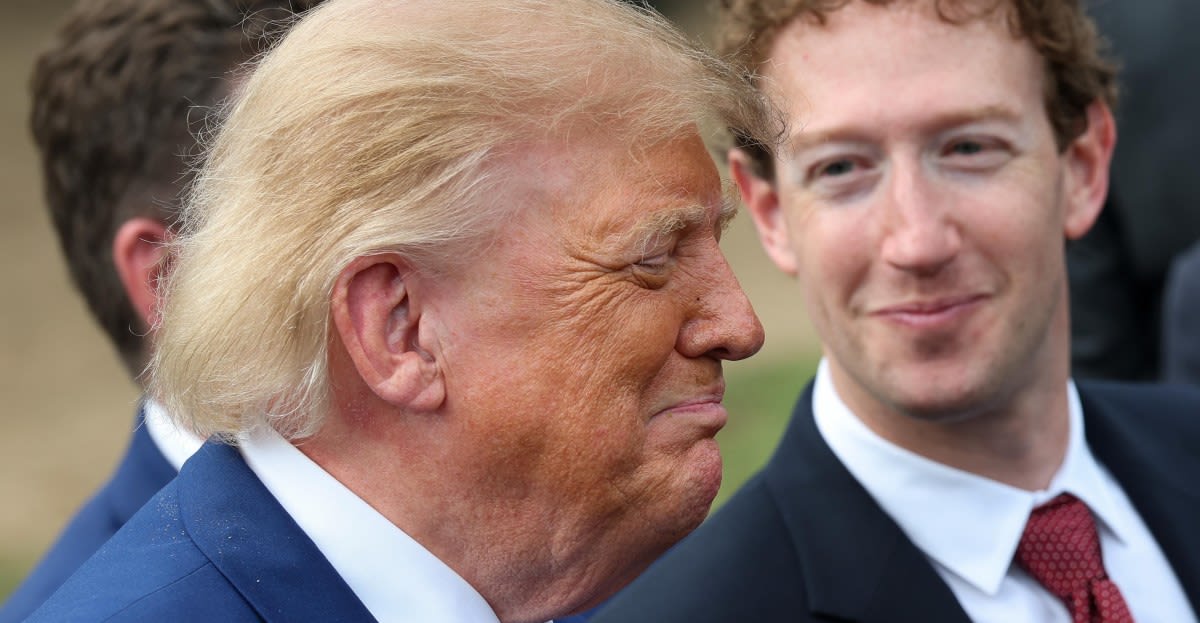
President Trump met with major tech CEOs to establish a voluntary AI safety pact while simultaneously addressing international diplomatic rumors. The summit focused on balancing rapid AI infrastructure expansion with new oversight measures.
The White House AI Summit: Balancing Innovation and Oversight
On Tuesday, the White House hosted a pivotal luncheon featuring President Donald Trump, House Speaker Mike Johnson, and a cohort of the world's most influential technology leaders. The gathering served as a high-stakes arena to address the rapid acceleration of artificial intelligence, an industry currently under intense scrutiny regarding its societal impact and safety protocols. Attendees included SpaceX and Tesla CEO Elon Musk, Nvidia CEO Jensen Huang, Meta’s Mark Zuckerberg, Google’s Sundar Pichai, and Palantir CEO Alex Karp.
Establishing Voluntary Safety Standards
The most significant outcome of the summit was a formal agreement between the administration and the participating tech giants to establish voluntary safety standards. Central to this pact is the commitment to utilize "independent auditors" who will evaluate AI systems to ensure they function according to their designers' original intent. Furthermore, the companies pledged to implement safeguards that prevent AI tools from accessing or hacking technical systems in unintended, potentially malicious ways.
The Tension Between Growth and Regulation
This meeting occurs at a time when public and political calls for AI regulation have reached a fever pitch. While President Trump reaffirmed his administration's support for the rapid expansion of data centers—a move seen as essential for maintaining American technological dominance—industry leaders expressed a shared sense of responsibility. Palantir CEO Alex Karp noted that there should not be "separate rules" for tech corporations and the American public, highlighting the growing pressure on firms to operate with greater transparency.
Broader Administrative Initiatives
Beyond the AI agenda, the administration is focusing on modernizing federal accessibility. During the same day's proceedings, the President highlighted the launch of "America.gov," a new digital tool designed to streamline how citizens interact with and access federal government services. This effort reflects a broader strategy to integrate advanced technology into the core functions of the state, aiming to improve administrative efficiency.
Addressing Geopolitical Distractions
Amidst the domestic focus on technology, the administration also navigated international diplomatic waters. President Trump explicitly denied reports suggesting that his administration had offered Iran sanctions relief in exchange for nuclear concessions. By addressing these claims while simultaneously engaging with top industry leaders, the administration attempted to project control over both its foreign policy posture and its domestic technology agenda.
Future Implications for the Tech Sector
As the administration balances the need for data center expansion with the demand for safety, the role of independent auditors will likely become the new benchmark for the sector. The collaborative nature of this meeting suggests that the U.S. government prefers a framework of voluntary compliance and private-sector cooperation over heavy-handed legislative restrictions for the time being. Whether these voluntary measures will suffice to quell public concerns remains the defining question for the coming months.
Multiple Citing Sources