Claim Hindu law is based on 'Manusmriti' wrong, says SG Tushar Mehta
Source Entity
DHANANJAY MAHAPATRA
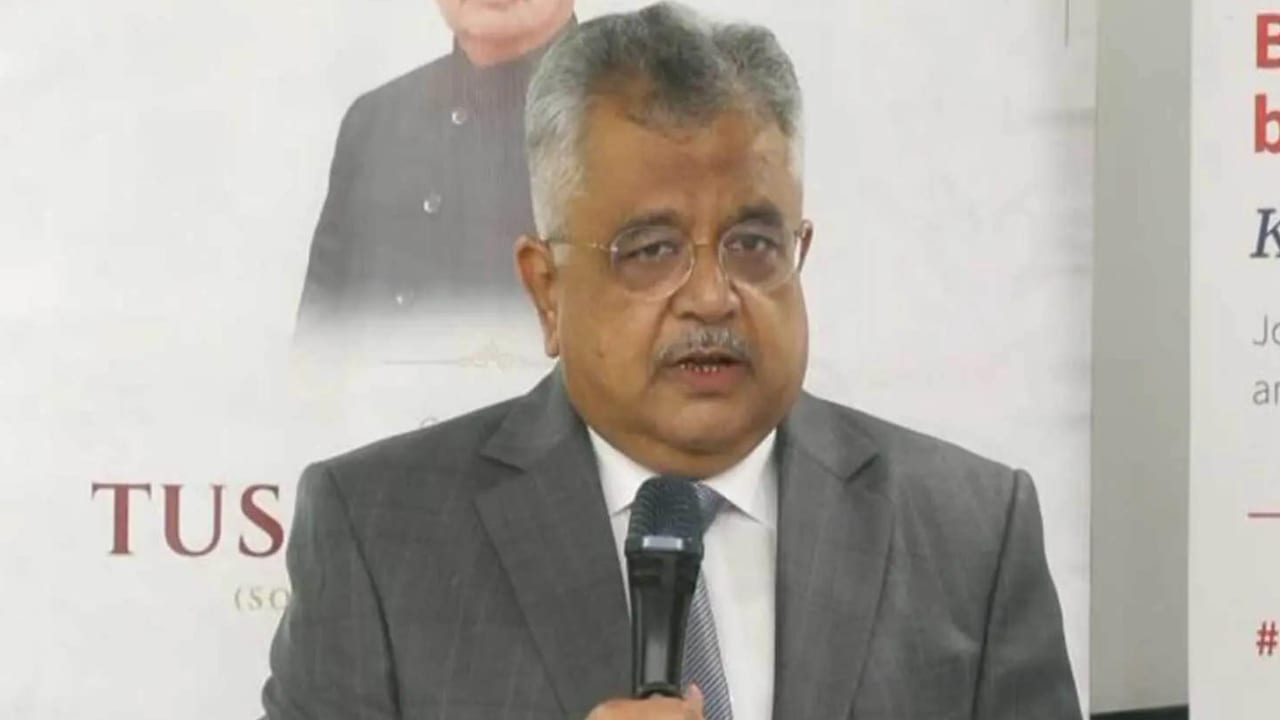
Solicitor General Tushar Mehta stated Hindu law is not based on Manusmriti. Most of India follows the Mitakshara school, which is based on Yajnavalkya Smriti. This school, prevalent since before 700 AD, grants inheritance rights by birth. The Dayabhaga school, prevalent in Bengal and Assam, was more restrictive. Ancient wisdom devised prohibited degrees of relationships, approved by Parliament.
Clarifying the Legal Foundations of Hindu Law
In a significant legal clarification, Solicitor General Tushar Mehta has addressed widespread misconceptions regarding the textual origins of Hindu law. He explicitly stated that Hindu law is not based on the Manusmriti, a common point of confusion in public and legal discourse. Instead, Mehta highlighted that the legal frameworks governing much of India are rooted in much older and more nuanced traditions, specifically the Mitakshara and Dayabhaga schools of jurisprudence.
The Mitakshara School and the Yajnavalkya Smriti
According to the Solicitor General, the majority of India follows the Mitakshara school, which finds its basis in the Yajnavalkya Smriti. This school of thought has been prevalent since before 700 AD, representing a long-standing legal tradition. A defining feature of the Mitakshara school is its approach to property and succession, specifically granting inheritance rights by birth. This principle has historically shaped familial structures and economic stability across various Indian states, providing a predictable framework for lineage-based rights.
Regional Variations: The Dayabhaga School
Mehta's analysis also underscored the importance of regional legal diversity by noting the existence of the Dayabhaga school. While the Mitakshara school dominates most of the country, the Dayabhaga school is the primary legal standard in Bengal and Assam. Unlike the Mitakshara system, the Dayabhaga school is characterized as being more restrictive in its application. This distinction is vital for understanding that Hindu law is not a monolithic entity but a sophisticated collection of regional interpretations that have evolved over centuries to suit local social contexts.
Integration of Ancient Wisdom and Parliamentary Law
The Solicitor General also touched upon the intersection of ancient tradition and modern governance. He noted that certain concepts, such as the 'prohibited degrees of relationships'—which govern kinship and marriage laws—are derived from ancient wisdom. However, these are not merely ancient customs left to chance; they have been formally recognized and approved by the Parliament of India. This demonstrates a seamless integration where historical social norms are codified into the modern democratic legal framework, ensuring they meet contemporary standards of legitimacy.
Implications for Legal Discourse
By providing this clarification, the Solicitor General aims to correct historical inaccuracies that often simplify or misrepresent the complexity of Indian jurisprudence. The distinction between the Manusmriti and the Yajnavalkya Smriti is crucial for legal scholars and the public alike, as it shifts the focus from a single, often controversial text to a more diverse and historically accurate set of legal principles. This correction ensures that the legal evolution of the country is understood through its actual documented schools of law rather than through popular myths.
Conclusion
In summary, Tushar Mehta's statements serve as a corrective measure to ensure that the foundations of Hindu law are understood with precision. By emphasizing the roles of the Mitakshara and Dayabhaga schools and their respective historical origins, he has highlighted a legal system that is both ancient in its wisdom and modern in its parliamentary validation. This nuanced understanding is essential for maintaining the integrity of India's legal and historical narrative.