25 years on, academics, alumni recall struggle to save UAS-B land from biotech park
Source Entity
India Latest News: Top National Headlines Today & Breaking News | The Hindu
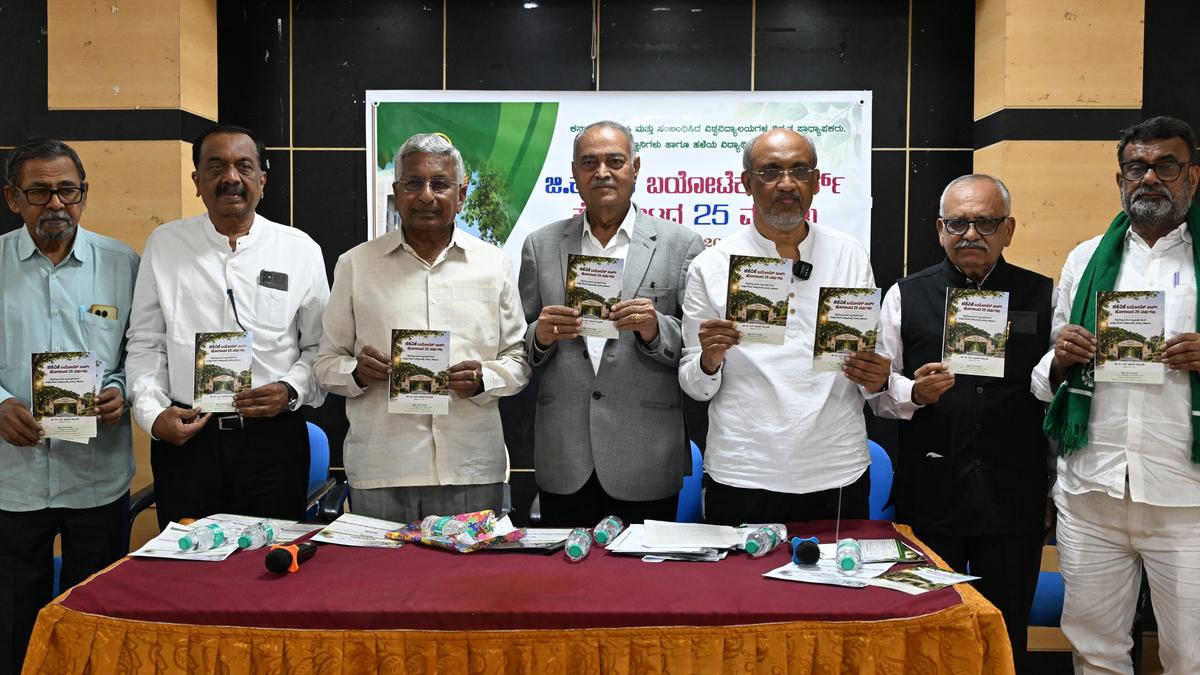
Academics and alumni of UAS-Bengaluru have released a handbook documenting their 2001 struggle to protect university land from commercial development. The movement serves as a historical case study for land conservation and institutional autonomy in India.
The 2001 UAS-B Land Struggle: A Legacy of Resistance
On September 27, 2001, the University of Agricultural Sciences - Bengaluru (UAS-B) became the site of a significant confrontation between the state and the academic community. The peaceful, research-oriented environment of the campus was disrupted by police action against students and faculty members who were protesting the government’s decision to reallocate 100 acres of prime university land. This land was earmarked for the establishment of a biotech park, a move that threatened the integrity of one of the city's most vital agricultural research hubs.
The Importance of Germplasm Conservation
The contested land was not merely vacant space; it housed a rare collection of germplasm, representing years of meticulous botanical research and biodiversity conservation. For the academic community, the destruction of these trees was equivalent to burning a library. The act of students and faculty physically embracing the trees to prevent excavators from clearing the site became a powerful symbol of resistance, echoing global environmental movements and underscoring the deep connection between researchers and their living laboratory.
Institutional Autonomy and Urban Expansion
This incident highlights the perennial tension between urban development and the preservation of academic and ecological spaces. The UAS-B campus, noted for its immense size—surpassing the collective area of Bengaluru’s iconic Cubbon Park and Lalbagh—was seen by the government as an underutilized asset in a rapidly growing city. However, for the university, this land was essential for long-term agricultural research and food security efforts. The struggle raised critical questions about the extent to which a government can intervene in the land holdings of autonomous educational institutions.
Documentation and Future Inspiration
Twenty-five years later, the participants of this struggle have compiled a handbook detailing their experiences. This document is intended to serve as a resource for future generations of activists and students facing similar land-use challenges. By chronicling the strategies, the emotional toll, and the logistical challenges of their protest, the alumni and faculty aim to provide a roadmap for institutional protection in an era of increasing commercial pressure on public lands.
Broader Implications and Historical Context
The 2001 movement remains a touchstone for civic engagement in Bengaluru. It serves as a reminder that the preservation of public, educational, and environmental space requires constant vigilance. As urban centers continue to expand, the UAS-B struggle provides a critical case study on the importance of institutional memory and the role of stakeholders in safeguarding the assets that sustain public knowledge and ecological health.
Conclusion
The publication of the handbook marks a transition from a lived experience to a historical narrative. By preserving the memory of the 2001 protests, those involved are ensuring that the lessons learned from their confrontation with the state are not lost to time. This effort reinforces the idea that university campuses are more than just classrooms; they are custodians of scientific heritage that must be protected against the encroachment of commercial interests.
Verification Required?