Ukrainian drone attack sets fire to oil tanker carrying 23 Indians off Russia
Source Entity
YASHASVI VASISTHA
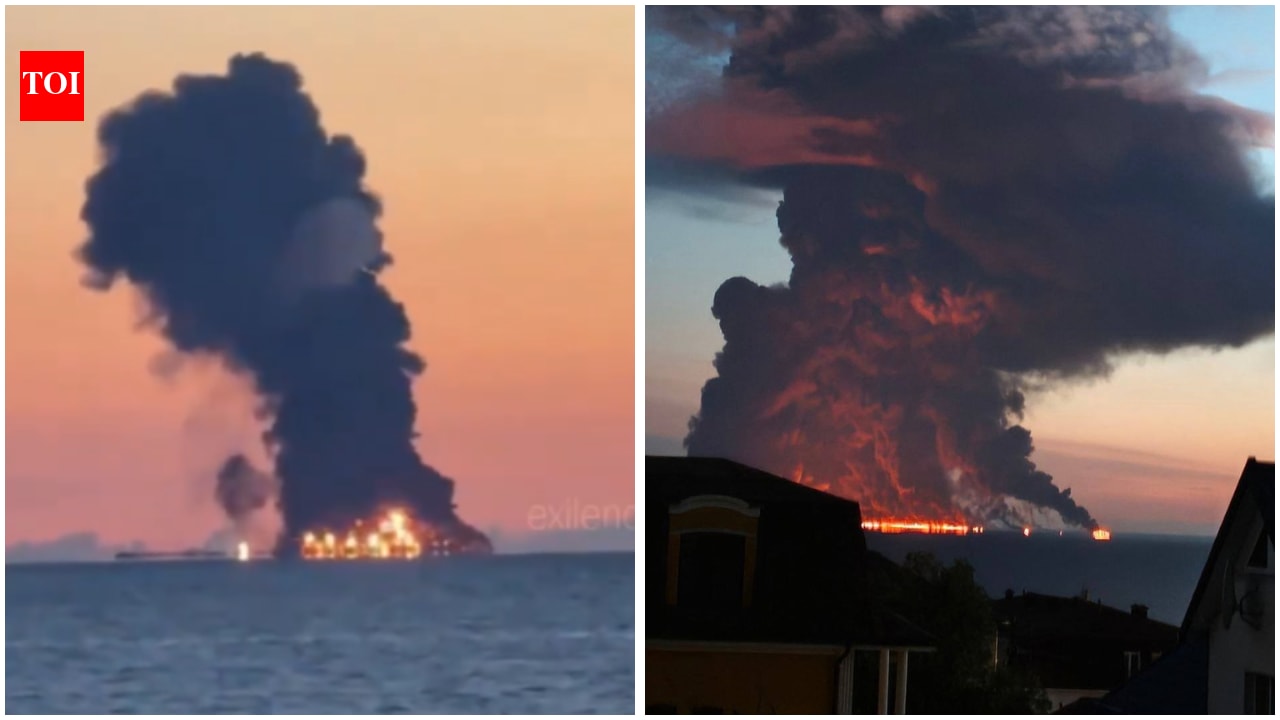
A Ukrainian naval drone strike set fire to a Liberian-flagged oil tanker near Sochi, endangering its 23-member Indian crew. All crew members were safely rescued, though the incident highlights the escalating dangers to commercial shipping in the Black Sea.
The Escalation of Black Sea Maritime Warfare
The recent attack on the Liberian-flagged oil tanker Aframax Rio off the coast of Sochi marks a significant escalation in the ongoing conflict between Russia and Ukraine. By targeting a commercial vessel in the Black Sea, the use of naval drones has transitioned from purely military assets to threats that directly impact international commercial shipping corridors. This incident, which occurred near the Russian resort city of Sochi in Krasnodar Krai, resulted in a massive fire that local emergency services struggled to contain, underscoring the volatility of maritime transit in the region.
Impact on the Indian Crew
One of the most critical aspects of this event is the involvement of 23 Indian nationals who comprised the ship's entire crew. The safety of these mariners became an immediate priority for both local authorities and international observers. Fortunately, Russian transport ministry reports confirmed that all 23 crew members were successfully rescued without reported injuries. This event has prompted India to raise formal concerns regarding the safety of shipping lanes, highlighting the precarious position of neutral sailors caught in the crossfire of regional geopolitical disputes.
Strategic Implications for the Black Sea
This strike is not an isolated event but rather part of a broader trend where both Russia and Ukraine have vowed to intensify their strikes in recent weeks. The Black Sea has become a primary theater for asymmetric warfare, where smaller, cost-effective naval drones are utilized to challenge larger, traditional maritime assets. The attack near Sochi serves as a tactical reminder that regional infrastructure, such as ports and coastal resort areas, is no longer immune to the reach of drone technology.
Environmental and Public Health Concerns
The resulting fire, described as intense with crude oil burning openly in the Black Sea, necessitated immediate environmental and public health interventions. Local authorities in Sochi were forced to implement restrictions and close beaches to protect the public from potential contamination. Monitoring of air and water quality became a priority, reflecting the secondary, yet equally devastating, consequences that kinetic warfare inflicts on civilian environments and natural ecosystems.
Future Trends and Regional Stability
Looking ahead, this incident signals a heightened risk profile for global shipping companies operating in or near the Black Sea. The ability of naval drones to disrupt trade routes and force the closure of coastal areas suggests that maritime insurance premiums and security protocols will likely undergo significant revisions. As both nations continue to escalate their offensive capabilities, the international community, including nations with significant maritime personnel like India, will likely exert more pressure to ensure the protection of commercial vessels and the freedom of navigation in contested waters.
Multiple Citing Sources