I spent $4,000 on a robot dog from China
Source Entity
Timothy B. Lee
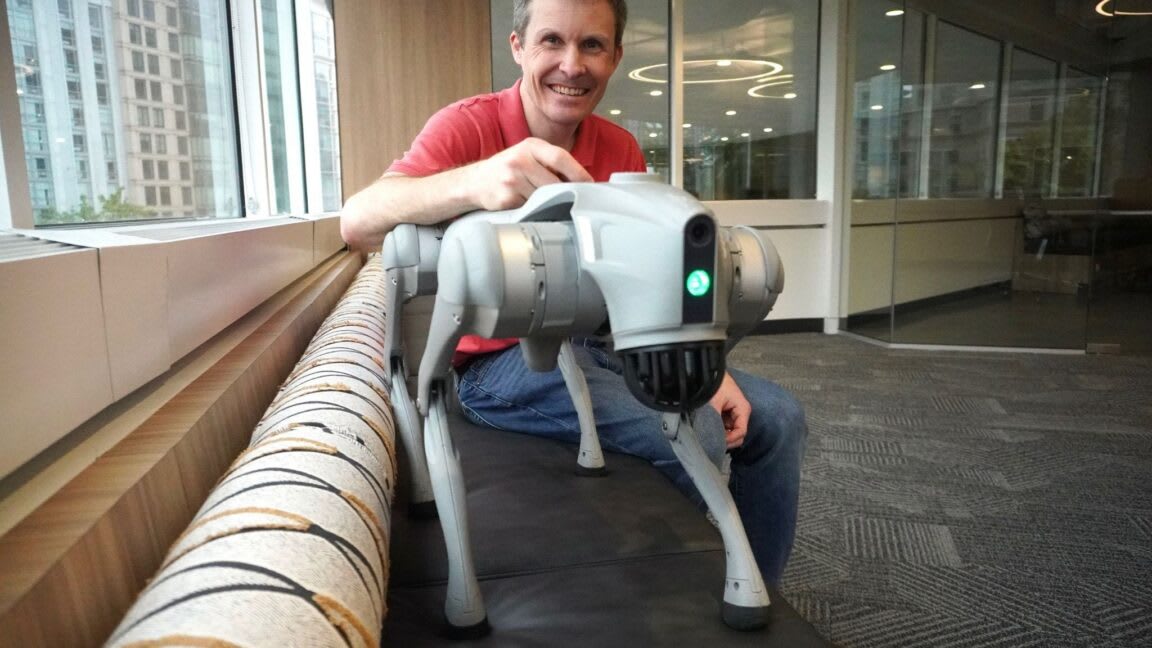
A Washington, DC resident successfully tested a $4,000 Unitree quadruped robot during a two-mile commute. The experiment highlights the increasing accessibility of advanced robotics and the public's fascination with these mechanical companions.
The Rise of Consumer-Grade Quadruped Robotics
In a striking demonstration of how rapidly the robotics landscape is shifting, a resident of Washington, DC recently integrated a $4,000 quadruped robot, manufactured by the Chinese firm Unitree, into their daily routine. By commuting two miles from the Mount Pleasant neighborhood to an office near the White House, the user provided a real-world stress test for consumer-level robotics in an urban environment. This event underscores the transition of four-legged robots from restricted laboratory settings or industrial applications into the public consciousness.
The Public Perception and Social Dynamics
The presence of the robot sparked immediate interest, drawing attention from passersby who inquired about its origins and functionality. The curiosity surrounding whether the device was used for surveillance reflects current societal anxieties regarding the integration of autonomous machines in public spaces. The fact that the robot successfully navigated an urban commute demonstrates significant advancements in mobility, stability, and battery efficiency, which are essential for consumer adoption.
Interaction with the Biological World
Interestingly, the interaction between the mechanical dog and biological counterparts revealed a distinct behavioral disconnect. Real dogs exhibited caution, growling or barking at the machine, suggesting that while the robot mimics the form of a canine, it lacks the olfactory or behavioral cues that animals use to identify one another. This discrepancy highlights a fundamental hurdle for the widespread normalization of robotic companions: they remain distinct, alien entities to the natural world.
The Role of Unitree in Global Robotics
Unitree’s emergence as a significant player in the robotics sector is evidenced by their ability to manufacture high-performing quadrupeds at a $4,000 price point. By making these units accessible to individual consumers, they are democratizing technology that was previously reserved for research institutions or government agencies. This shift mirrors the early days of personal computing, where the focus moves from utility in specialized sectors to personal experimentation and hobbyist engagement.
Future Implications and Urban Integration
As these robots become more common, urban infrastructure will eventually need to adapt to their presence. The ability of the device to perform tricks, such as handstands and leaps, for neighborhood children indicates that these machines are currently viewed as novelties. However, the underlying technology—sophisticated sensors, balance control, and autonomous navigation—suggests a future where such robots could assist with delivery, accessibility, or security tasks in dense city centers like Washington, DC.
Conclusion
The successful two-mile commute of a Unitree robot serves as a milestone in consumer robotics. While currently functioning as a curiosity, the accessibility of this technology signals that the integration of mobile, autonomous machines into our daily lives is no longer a distant sci-fi concept, but a tangible, unfolding reality.