Advocates, traders protest in Vaniyambadi for additional district court
Source Entity
India Latest News: Top National Headlines Today & Breaking News | The Hindu
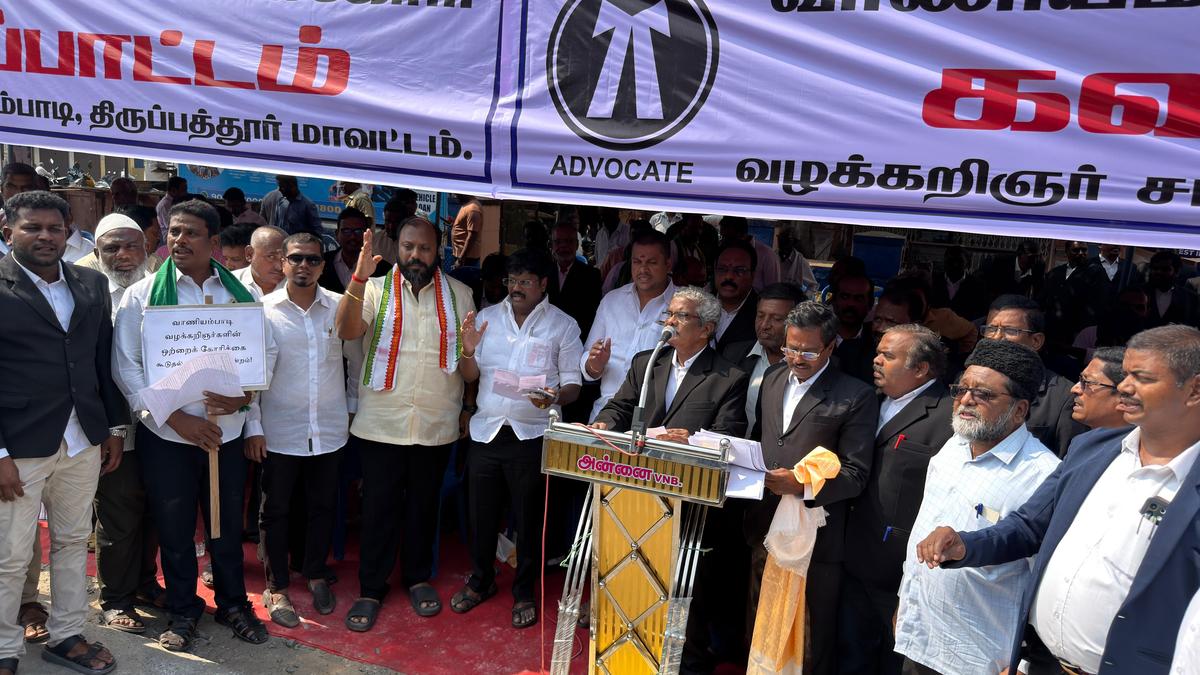
Advocates, traders, and residents in Vaniyambadi are protesting for the construction of a permanent court complex and an additional district court. They cite safety concerns due to the monsoon and the logistical burden of the current fragmented court system.
Vaniyambadi Protests: The Urgent Need for Judicial Infrastructure
The Catalyst for Public Unrest
On Thursday, a coalition of advocates, local traders, and concerned residents gathered near the Vaniyambadi bus terminus to voice a growing frustration regarding the town’s judicial infrastructure. The protest highlights a critical failure in public service delivery, specifically concerning the safety and accessibility of the legal system. As the Northeast monsoon season begins, the structural integrity of the existing Judicial Magistrate court has become a focal point of concern, with protesters labeling the facility as 'dilapidated' and potentially hazardous for those conducting daily legal business.
Fragmentation of the Legal System
The current arrangement of judicial services in Vaniyambadi is inherently inefficient. According to A.C. Devakumar, president of the local Bar Association, the town currently operates three separate lower courts, which are scattered across different areas. These facilities are located roughly 1.5 kilometers apart from one another, creating a logistical nightmare for litigants and legal professionals. This physical fragmentation forces stakeholders to traverse the town repeatedly, wasting time and resources that should otherwise be dedicated to the administration of justice.
The Economic and Social Impact
The demand for a centralized, permanent court complex is not merely about administrative convenience; it is an economic necessity for the Vaniyambadi region. When court proceedings are spread across disparate locations, the burden falls heavily on the common citizen. Litigants, who often travel from rural or peripheral areas, face increased transportation costs and physical exhaustion. Furthermore, the local trading community has joined the protest, signaling that the inefficiency of the judicial system is seen as a bottleneck that hampers the broader economic stability of the town.
Safety and Infrastructure Risks
The timing of the protest is deeply linked to the onset of the Northeast monsoon. Public buildings in many regional towns often suffer from deferred maintenance, and the Judicial Magistrate court in Vaniyambadi appears to be a prime example of this neglect. By calling for an expedited construction of a permanent building, the protesters are essentially demanding the state prioritize human safety over bureaucratic inertia. The risk of operating in a dilapidated structure during heavy rains poses a direct threat to the lives of court staff, judges, and the general public.
Demands for Structural Reform
Beyond the need for a new building, the protesters have explicitly requested an additional district court. The expansion of judicial infrastructure is essential to accommodate the rising volume of litigation and to ensure that justice is accessible to all residents of Vaniyambadi. An additional district court would alleviate the caseload of the existing, scattered lower courts and provide a more streamlined, professional environment for legal proceedings. This request reflects a broader trend in India where rapidly developing towns are outgrowing their colonial-era or early-post-independence infrastructure, necessitating significant state investment in public institutions.
Conclusion and Future Outlook
The agitation in Vaniyambadi serves as a stark reminder of the infrastructure gaps that persist in India's tier-three towns. If local authorities fail to address these concerns, the legal system risks further degradation, both in terms of physical safety and operational efficiency. Moving forward, the state government must treat the construction of a centralized, permanent court complex as a priority to ensure that the rule of law is upheld in a facility that is both safe and accessible for all citizens.
Verification Required?