'Let's go, let's go' - inside catastrophic derby VAR mistake
Source Entity
BBC News
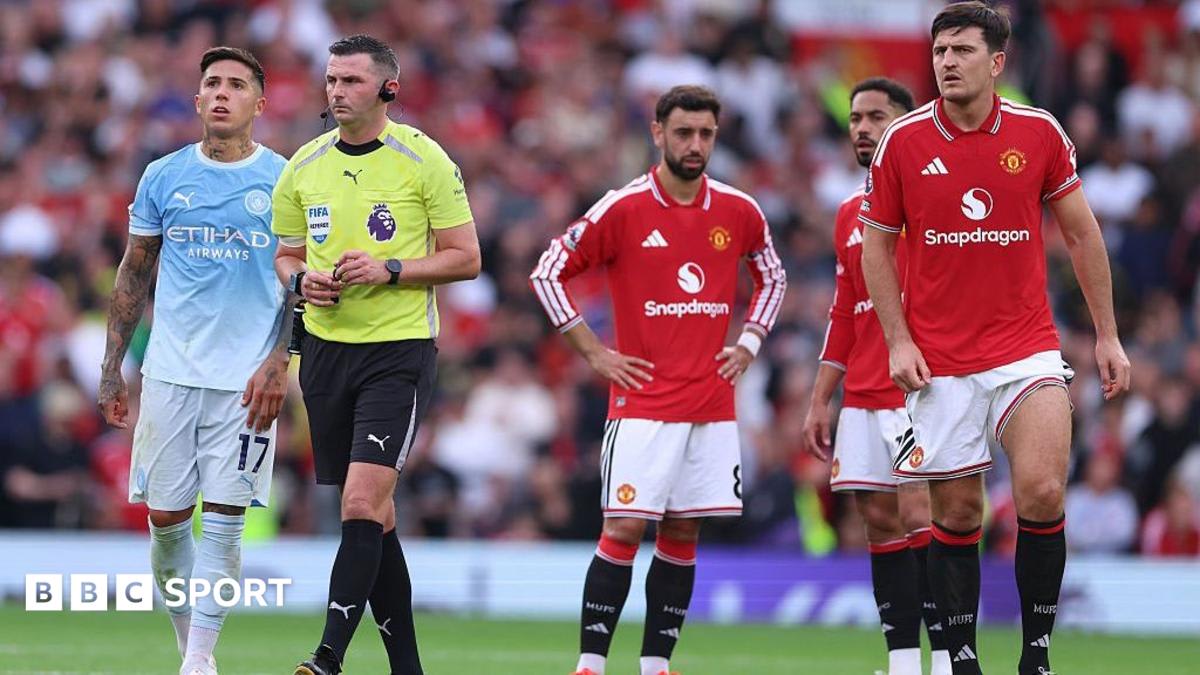
The recent VAR controversy surrounding Erling Haaland's goal in the Manchester derby has highlighted systemic failures in officiating despite significant investment. The incident raises critical questions about the efficacy of specialized training programs for video assistant referees.
The VAR Crisis: Analyzing the Manchester Derby Failure
The Anatomy of a High-Stakes Error
The recent controversy surrounding Erling Haaland's decisive goal in the Manchester derby has reignited a fierce debate regarding the efficacy of Video Assistant Referee (VAR) technology in the Premier League. Despite Pro Ref’s significant allocation of resources and training aimed at perfecting the system, this specific error has exposed a vulnerability that technology alone cannot rectify. When a decision of such magnitude is scrutinized and subsequently found flawed, it undermines the perceived integrity of the match and frustrates both fans and clubs alike.
The Myth of the 'Specialist' Official
There have been widespread calls for the Premier League to move toward a model of dedicated, permanent VAR specialists. However, the current reality is that officials like Donohue are already classified as specialists under the Premier League’s existing framework. This suggests that the problem may not be a lack of specialization, but rather a disconnect between the training curriculum and the real-time, high-pressure execution required during a live match. The existence of a formal pipeline for video officials—which involves rigorous aptitude testing—has clearly not immunized the game against human error.
Recruitment and the Training Pipeline
Three seasons ago, Pro Ref initiated a structured recruitment drive to identify candidates suitable for the role of video official. From a pool of applicants, only about 15 individuals reached the final stages of training, with 10 eventually officiating in the Premier League. This selective process was intended to produce an elite cadre of officials. Donohue, who has served as a video official for 65 matches, represents the product of this specific investment. His credentials, including his appointment to UEFA club competitions, indicate that the system is currently selecting individuals with high-level potential but failing to ensure consistent performance under pressure.
The Limits of Institutional Investment
Pro Ref has invested heavily in the infrastructure of VAR, yet this case demonstrates that institutional investment is not a panacea for officiating errors. When a high-profile mistake occurs, the sheer scale of the financial and technological resources poured into the program serves only to heighten public scrutiny. The failure to correctly adjudicate a pivotal moment in a major derby suggests that the implementation of the rules—or the communication between the pitch-side referee and the booth—remains a critical point of failure that no amount of hardware or software can fix.
Future Implications for Match Officiating
The ongoing fallout from the Manchester derby will likely force a re-evaluation of how VAR officials are developed and utilized. If even internationally recognized officials like Donohue are prone to such high-profile lapses, the Premier League may need to pivot toward more radical solutions, such as increased transparency in communications or a fundamental change in the hierarchy of decision-making. As the game continues to evolve in speed and complexity, the margin for error for video officials will only shrink, necessitating a more robust approach to psychological training and real-time decision-making protocols.