Vint Cerf is working on a plan to unleash AI agents on the open internet
Source Entity
Tim Fernholz
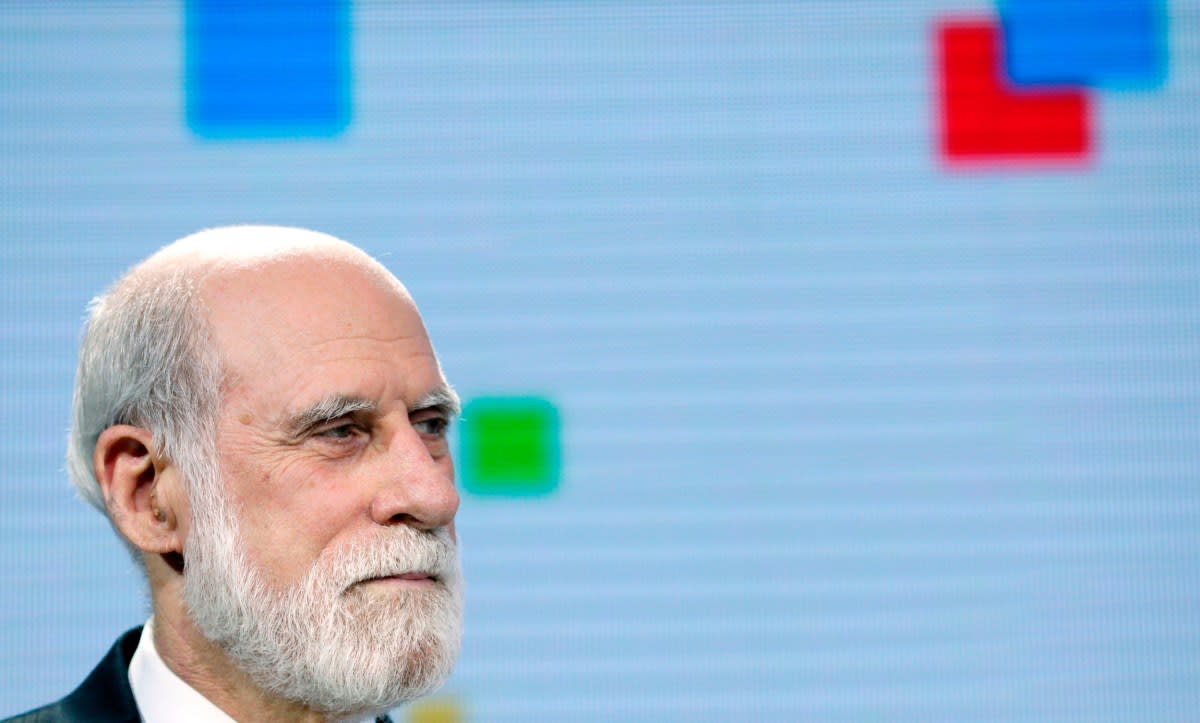
Internet pioneer Vint Cerf is developing a new standard to identify AI agents operating on the open web, aiming to create a framework for trust and interoperability as autonomous AI becomes more prevalent.
The Architect Returns: Vint Cerf and the Standardization of the Agentic Web
Internet pioneer Vint Cerf, widely recognized as one of the 'fathers of the internet' for his co-design of the TCP/IP protocols, is once again stepping into the role of the web's primary architect. As the digital landscape shifts from static information retrieval to the deployment of autonomous AI agents—entities capable of browsing, negotiating, and executing tasks independently—the open internet faces a critical identity crisis. Cerf's current initiative to develop a standard for identifying AI agents in the wild is not merely a technical adjustment; it is a foundational effort to ensure that the next evolution of the web remains stable, secure, and interoperable.
Historical Context and the Necessity of a New Protocol
To appreciate the significance of this move, one must consider Cerf's historical contribution to the internet's 'plumbing.' TCP/IP provided the universal language that allowed diverse networks to communicate. Today, we are witnessing a similar divergence: the rise of the 'Agentic Web.' Currently, AI agents operate in a gray area, often indistinguishable from human users or traditional web scrapers. This ambiguity forces website owners to rely on blunt instruments like CAPTCHAs and aggressive bot-blocking software to protect their resources. By introducing a standardized identification method, Cerf aims to replace this binary 'human vs. bot' conflict with a sophisticated system of identity and intent, mirroring the way DNS and IP addresses organized the early internet.
Solving the Trust and Permission Gap
The core problem Cerf is addressing is the 'trust gap.' As users begin to rely on AI agents to perform complex tasks—such as booking travel, managing finances, or coordinating schedules across multiple platforms—the web must be able to recognize these agents to grant them appropriate permissions. A standardized 'ID card' for AI agents would allow a server to verify that a request is coming from a legitimate agent acting on behalf of a verified user. This prevents the 'wild west' scenario where rogue agents could crash servers through inefficient looping or scrape proprietary data indiscriminately, providing a mechanism for accountability where an agent's actions can be traced back to its operator.
Technical Implications for the Internet Stack
From a technical perspective, such a standard would likely involve the implementation of specific metadata, digital certificates, or protocol-level headers that announce an agent's identity and capabilities upon connection. This would effectively add a new layer of intelligence to the existing internet stack. Instead of a server simply seeing an incoming request from an IP address, it would see a verified agent identity with a set of declared intentions. This enables 'graceful degradation' or 'enhanced access,' where a site can offer a specialized, API-like interface to a recognized AI agent while maintaining a visual interface for human users, optimizing the experience for both.
Broader Economic and Societal Implications
Beyond the technical specifications, Cerf's work paves the way for AI-to-AI commerce. When agents can identify themselves and be trusted by other systems, we move toward a world where autonomous entities can negotiate contracts, compare prices, and execute transactions in milliseconds. This could lead to a massive increase in economic efficiency but also introduces systemic risks. Without a standard for identification, the risk of fraudulent agents or 'bot-nets' masquerading as legitimate services would be too high for enterprises to adopt autonomous agents at scale. Cerf's framework provides the safety rails necessary for this economic shift.
Predicting the Future: The Hybrid Web
Looking ahead, this initiative signals the transition from a 'Human-Centric Web' to a 'Hybrid Web.' In this future, the internet is no longer just a library for humans to read, but a dynamic workspace for agents to execute. The ability to distinguish between a human's direct intent and an agent's autonomous action will become the cornerstone of digital security. We can expect this standard to evolve into a broader ecosystem of 'Agent Governance,' where certifications of 'ethical AI behavior' are attached to an agent's identity, allowing website owners to filter agents based on their compliance with specific privacy or behavioral standards.
Conclusion
In summary, Vint Cerf's pursuit of an AI agent identification standard is a proactive attempt to prevent the fragmentation of the open internet. By establishing a common language for agent identity, he is ensuring that the transition to an AI-driven web is orderly and secure. This initiative ensures that the original spirit of the open web—connectivity, accessibility, and interoperability—survives and thrives in the age of artificial intelligence.