Voyager 1 at one light-day: Historian revisits Golden Record's forgotten details
Source Entity
Robert Pearlman
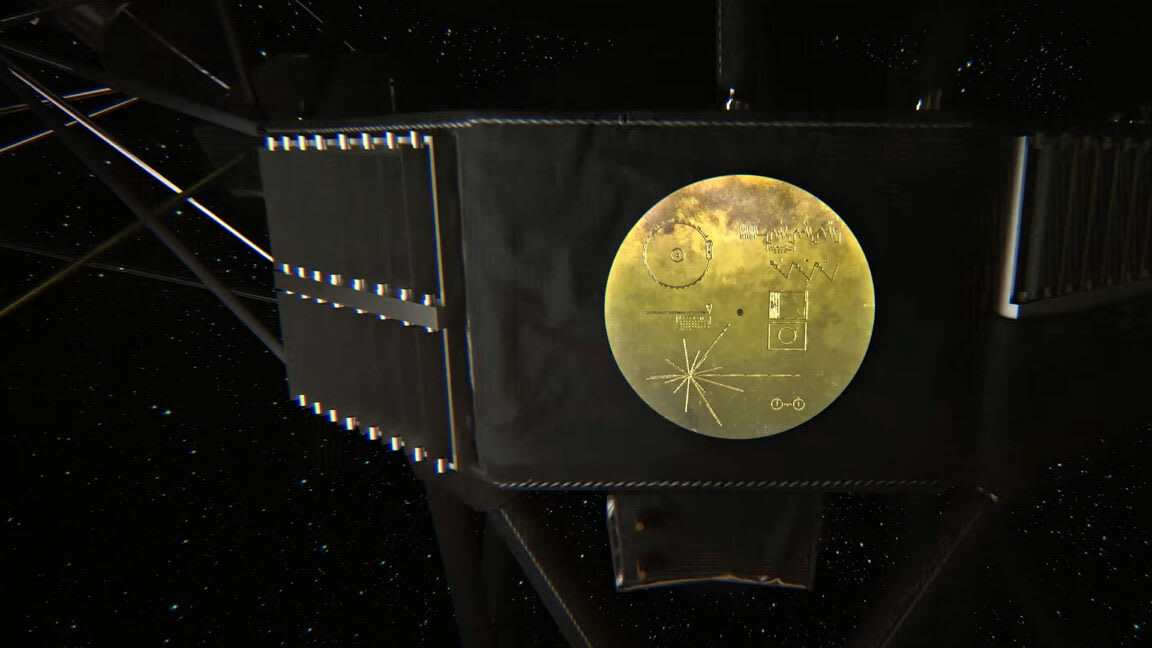
NASA's Voyager 1 spacecraft has achieved a historic milestone, reaching a distance of one light-day from Earth after nearly 50 years in space. This achievement highlights the probe's ongoing journey into interstellar space and its role in carrying humanity's legacy via the Golden Record.
A Historic Milestone in Deep Space
NASA’s Voyager 1 spacecraft has officially reached the monumental distance of one light-day from Earth, approximately 26 billion kilometres away. This achievement marks the first time a human-made object has traveled the distance that a particle of light covers in a 24-hour period. Launched in 1977, Voyager 1 has spent nearly five decades traversing the vastness of our solar system and beyond, continuing to transmit invaluable scientific data across the cosmic void.
The Voyager Interstellar Mission Context
Launched on September 5, 1977, shortly after its twin, Voyager 2, Voyager 1 was originally designed for a fly-by mission to study Jupiter and Saturn. These missions were pivotal in the characterization of the outer solar system. By utilizing specific flight paths, NASA engineers were able to maximize the collection of scientific data, ultimately setting the stage for the spacecraft to cross the heliopause into interstellar space in 2012, where it continues to operate today.
Scientific Significance of the Light-Day Mark
Reaching the one light-day milestone is more than just a measurement of distance; it serves as a stark reminder of the immense scale of the universe. With signals now taking 24 hours to travel to and from the probe, communication with Voyager 1 requires significant latency management. This distance is critical for understanding the heliopause—the outer boundary of the sun's influence—and for studying the conditions of the interstellar medium, which remains a primary objective of the ongoing mission.
The Legacy of the Golden Record
Beyond its scientific instruments, Voyager 1 carries the "Golden Record," a commemorative phonograph record designed to endure for eons. This artifact serves as a message from humanity to any potential extraterrestrial intelligence that might encounter the craft. Recent historical research, such as that by Glen Swanson, has highlighted the intricate details of the record's creation, including overlooked operating instructions, reinforcing its status as a time capsule of human civilization.
Future Trends and Longevity
As Voyager 1 travels further into the unknown, the focus shifts to the longevity of its onboard systems. While the craft is aging, its ability to continue sending data after nearly 50 years is a testament to the robust engineering of the 1970s. The mission continues to provide a unique perspective on the outer reaches of our cosmic neighborhood, ensuring that the legacy of these twin explorers remains at the forefront of space exploration for years to come.
Multiple Citing Sources