Voyager 1 becomes first human-made object to reach one light-day from Earth
Source Entity
Latest News: Todays Latest News Headlines from India & World | Hindustan Times
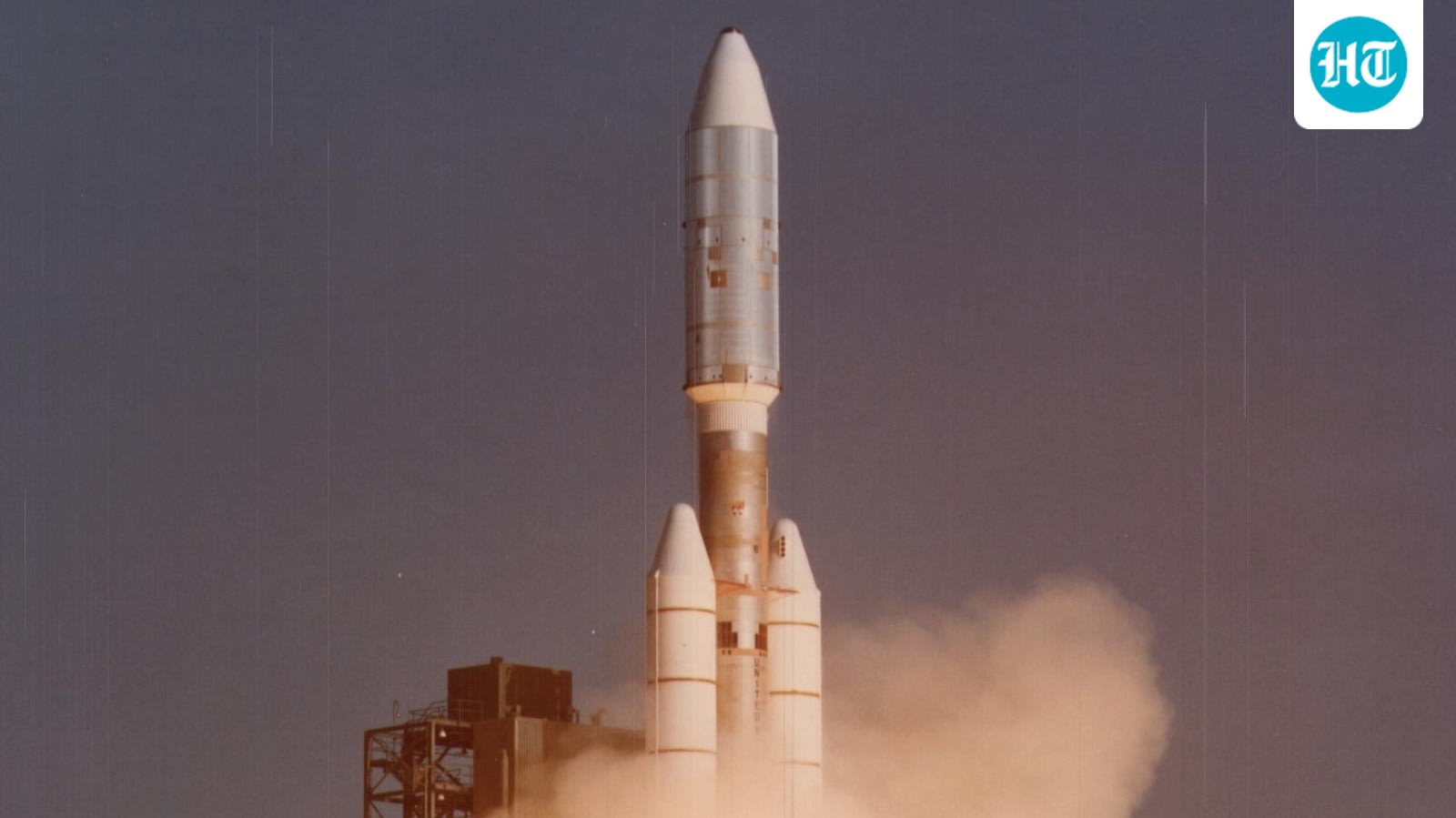
NASA's Voyager 1 has become the first human-made object to reach the milestone of one light-day from Earth, approximately 26 billion kilometers away. Launched in 1977, the probe continues to provide unprecedented scientific data from interstellar space.
Voyager 1: A Journey into the Deep Frontier
NASA’s Voyager 1 spacecraft has officially etched its name into the history books by becoming the first human-made object to reach the milestone of one light-day from Earth. This staggering distance, approximately 26 billion kilometers, represents the span that a particle of light travels in a 24-hour period. As the probe pushes deeper into the near-emptiness of interstellar space, it continues to serve as our longest-running and most distant ambassador to the cosmos.
Origins of the Voyager Program
Launched on September 5, 1977, Voyager 1 was part of a dual-mission initiative alongside Voyager 2. Originally conceived as fly-by interplanetary missions, their primary directive was to conduct a comprehensive survey of the outer solar system. These craft were designed to collect critical scientific data that would fundamentally reshape our understanding of planetary environments, atmospheric compositions, and the complex magnetospheres of the outer gas giants.
The Search for the Heliopause
Beyond the primary planetary objectives, the Voyager missions were chartered to explore the boundary of our solar system. The spacecraft have been instrumental in our search for and characterization of the heliopause—the theoretical boundary where the solar wind from our sun is stopped by the interstellar medium. By successfully traversing this region, Voyager 1 has provided scientists with direct, in-situ data regarding the transition from solar-dominated space to the vast, uncharted interstellar environment.
Technical Challenges and Communication
Reaching the one light-day threshold introduces significant operational challenges. At this distance, radio signals—which travel at the speed of light—require a full 24 hours to traverse the gap between Earth and the spacecraft. This extreme latency necessitates highly autonomous systems and careful power management, especially considering the probe has been operational for nearly 49 years. Despite these constraints, Voyager 1 continues to transmit valuable data, proving the resilience of 1970s engineering.
The Legacy of the Golden Record
Voyager 1 carries with it the 'Golden Record,' a phonograph record containing sounds and images selected to portray the diversity of life and culture on Earth. This artifact represents humanity’s attempt to communicate with potential extraterrestrial intelligence, turning the mission from a purely scientific endeavor into a profound cultural statement. As the probe travels further into the deep, it carries this record as a testament to human curiosity.
Future Implications and Conclusion
As we look forward, the data returned by Voyager 1 will remain essential for understanding the conditions of the interstellar medium. While the probe’s power reserves will eventually dwindle, the milestone of one light-day serves as a reminder of the extraordinary reach of human ingenuity. This achievement is not merely a measurement of distance, but a celebration of five decades of continuous exploration that has pushed the boundaries of what humankind can achieve in space.
Multiple Citing Sources
Verification Required?