Tech leaders arrive at White House for AI luncheon with Trump
Source Entity
US Top News and Analysis
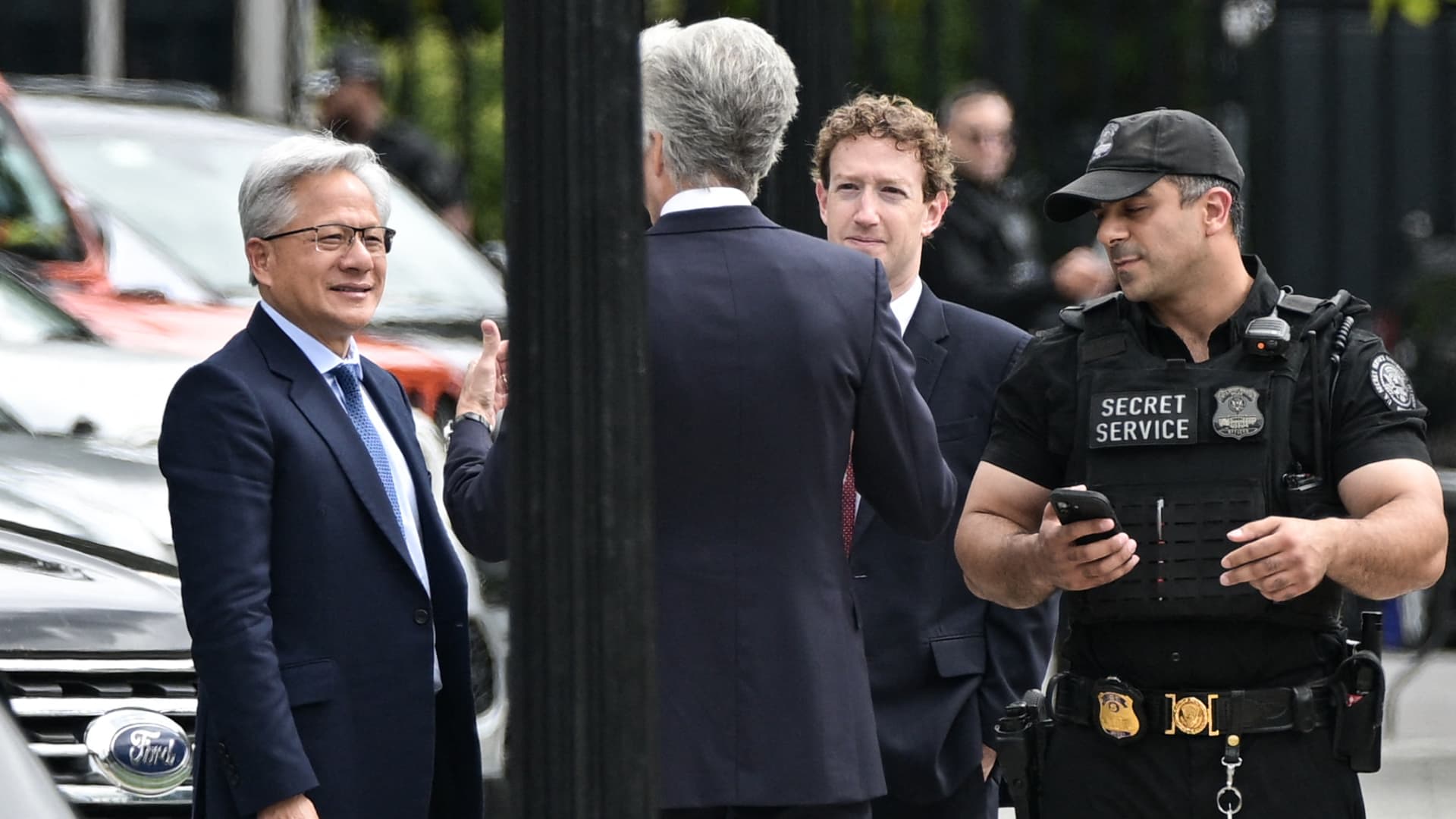
President Trump convened a high-profile luncheon at the White House with top AI industry leaders and House Speaker Mike Johnson. The meeting focused on the urgent need for AI regulation, with Speaker Johnson advocating for a voluntary approach to industry guardrails.
White House Convenes Tech Leaders for High-Stakes AI Summit
On Tuesday, a significant gathering of the nation's most influential technology executives convened at the White House for a luncheon with President Donald Trump and House Speaker Mike Johnson. The meeting, which included leaders from companies like Nvidia, Tesla, SpaceX, Meta, and Google, reflects the growing urgency surrounding the rapid development and deployment of artificial intelligence. The presence of key figures such as Jensen Huang, Elon Musk, Mark Zuckerberg, and Sundar Pichai underscores the administration's focus on aligning private sector innovation with national policy.
The Debate Over Mandatory vs. Voluntary Regulation
Central to the discussions is the tension between legislative oversight and industry self-regulation. House Speaker Mike Johnson has publicly signaled a preference for "voluntary" guardrails, suggesting that the industry recognizes the "handwriting on the wall" regarding public safety and investor confidence. By favoring a collaborative, non-coercive framework, the Speaker aims to balance the need for safety with the desire to maintain American technological dominance without stifling growth through heavy-handed legislative mandates.
Industry Responsibility and Public Perception
Palantir CEO Alex Karp provided a critical perspective on the necessity of accountability, noting that tech leaders must take responsibility for the dangers associated with AI. His remarks highlighted a broader sentiment that the American public is increasingly wary of a regulatory environment that might offer disparate rules for tech entities compared to the general population. This sentiment echoes a wider societal demand for transparency as artificial intelligence becomes more integrated into daily life and government operations.
Broader Administrative Agendas
Beyond the specific discussions regarding AI, the luncheon took place within a busy administrative schedule. The event was held concurrently with broader diplomatic and domestic policy discussions, including President Trump’s recent clarifications on foreign policy regarding Iran. Furthermore, the meeting served as a platform for the administration to discuss the launch of "America.gov," a new tool designed to streamline citizen access to federal government services, indicating a multi-faceted approach to modernizing the relationship between the state and the digital landscape.
A New Era of Government-Tech Collaboration
Looking toward the future, the composition of the meeting participants—which included high-ranking officials like Secretary of State Marco Rubio and Energy Secretary Chris Wright—suggests that the administration views AI as a cross-departmental priority. As the government continues to weigh the risks of AI against its potential for economic and administrative advancement, this meeting likely serves as the foundational step in a long-term strategy to define the regulatory boundaries of the 21st century's most transformative technology.