Beauty and the beast: China brought its own wheels, a red flag, to Washington
Source Entity
CHIDANAND RAJGHATTA
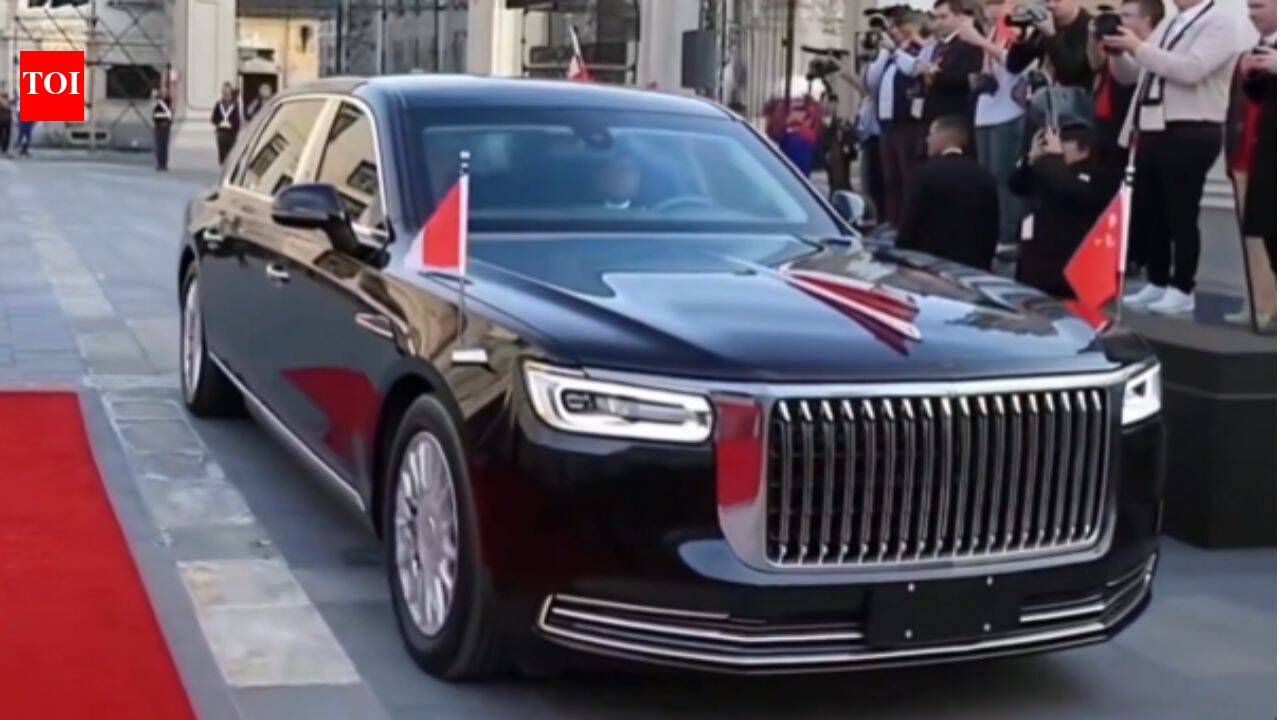
President Xi Jinping utilized a heavily armored Hongqi N701 limousine during his state visit to Washington. This practice reflects China's emphasis on national security and the projection of its domestic automotive industry.
The Symbolism of Statecraft: Xi Jinping’s Hongqi N701 in Washington
During President Xi Jinping’s high-stakes state visit to Washington, the presence of the Hongqi N701, a bespoke, heavily armored limousine, served as a potent symbol of China’s evolving geopolitical posture. Rather than utilizing locally provided transport, the decision to transport the Chinese-manufactured vehicle highlights a meticulous approach to head-of-state security and protocol. The Hongqi, which translates to 'Red Flag,' carries deep historical weight, having served as the primary transport for China's leadership for decades.
Security Protocols and Strategic Autonomy
For global superpowers, state visits are exercises in risk management. By deploying the Hongqi N701, Beijing ensures that its leader remains within a familiar, hardened environment that meets specific Chinese security standards. This practice is not unique to China; the United States frequently transports the 'Beast'—the presidential Cadillac—globally for similar reasons. However, the use of the N701 in the heart of Washington serves as an overt demonstration of technical self-reliance, signaling that China is no longer reliant on foreign-made luxury vehicles for its top-tier security needs.
The Hongqi Brand: A National Icon
Historically, the Hongqi brand has been synonymous with Chinese industrial ambition. From the mid-20th century, these vehicles were reserved for the elite and visiting dignitaries, representing the pinnacle of domestic automotive engineering. By showcasing the N701 on the international stage, China is effectively using the car as a rolling billboard for its manufacturing capabilities. This move bridges the gap between state security and national pride, projecting an image of a China that is technologically sophisticated and capable of matching Western industrial prowess.
Broader Geopolitical Implications
Beyond the logistical necessity, the choice of vehicle reflects the broader trend of 'strategic decoupling' and the assertion of national sovereignty. In an era where supply chain security and cybersecurity are paramount, maintaining control over the head-of-state’s transport is a matter of national prestige. The sight of the Red Flag crest moving through the streets of Washington provides a visual narrative of China’s rise, suggesting that the nation’s technological and security infrastructure is designed to operate independently of foreign influence.
Future Trends in Diplomatic Protocol
As global tensions fluctuate, the optics of diplomatic visits will likely continue to emphasize national identity. We can expect that as China continues to invest in high-end automotive technology, its diplomatic fleet will become even more refined and integrated into its soft power strategy. The Hongqi N701 is not merely a car; it is a manifestation of China’s desire to be seen as a peer competitor on the world stage, ensuring that even in the logistical details of a state visit, the narrative of a 'Great Power' remains consistent and unbroken.