Is x86 ready to ACE it?
Source Entity
Hacker News
<a href="https://news.ycombinator.com/item?id=48901235">Comments</a>
Analysis of x86 and ACE Readiness
The headline "Is x86 ready to ACE it?" posits a critical question regarding the future of the x86 instruction set architecture (ISA). As the bedrock of modern personal computing and server infrastructure for decades, x86—championed by Intel and AMD—now faces a pivotal moment as AI-driven workloads redefine the requirements for computational efficiency and throughput.
The x86 Architectural Challenge
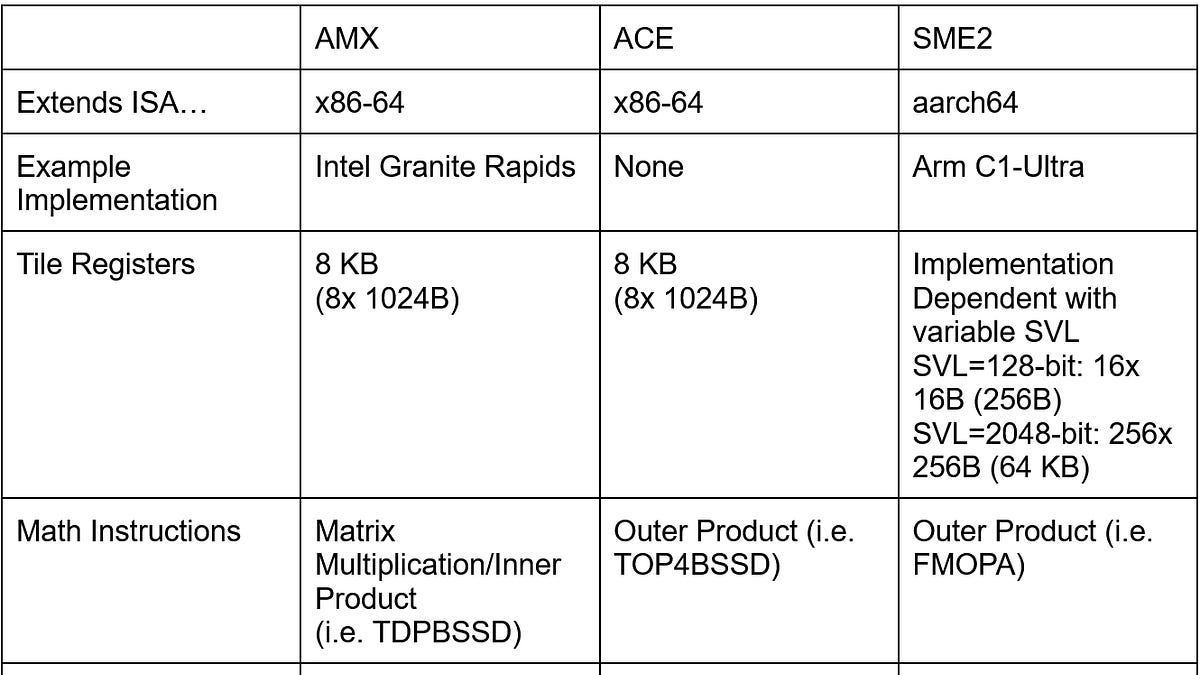
Historically, x86 has thrived as a Complex Instruction Set Computer (CISC) architecture, optimized for a wide variety of general-purpose tasks. However, the current era of Artificial Intelligence requires massive parallel processing and high-efficiency matrix multiplication, areas where GPUs and specialized NPUs (Neural Processing Units) excel. The term "ACE" in this context likely refers to AI Compute Engines or specific acceleration extensions designed to bring these capabilities directly into the CPU die.
Strategic Implications for the Hardware Market
If x86 can successfully integrate "ACE" capabilities without incurring unsustainable power overhead or architectural bloat, it can maintain its dominance in the data center and workstation markets. The goal is to reduce the latency associated with moving data between the CPU and a discrete GPU, allowing for "on-chip" AI inference that is fast and energy-efficient. This evolution is crucial for the survival of the x86 ecosystem against the rising tide of ARM-based processors, which have historically boasted better performance-per-watt.
Summary of Outlook
The ability of x86 to "ACE it" depends on the successful implementation of new instruction sets (such as AMX - Advanced Matrix Extensions) and the integration of hybrid architectures. While x86 remains the standard for compatibility and legacy software, its future depends on its transition from a general-purpose processor to an AI-augmented compute hub.