
Conventional wisdom suggests that AI data centers are moving to the Arctic simply because the air is cold. That is a superficial take. If the only goal were lower temperatures, we would see a gradual shift in cooling efficiency, not a frantic migration of capital and infrastructure. The reality is far more visceral: the industry has hit a thermal and electrical wall in the world's primary data hubs. We are witnessing a forced exodus driven by the fact that our current power grids cannot keep pace with the exponential hunger of Large Language Models.
Look at the numbers from the last twelve months and the delta is staggering. Data center electricity consumption jumped from approximately 415 terawatt-hours (TWh) in 2024 to 485 TWh in 2025, a 17% increase in a single year (Source: Nasdaq/IEA, 2025). This is not a linear growth curve; it is a spike. While data centers represent about 1.7% of global electricity demand, the pace of growth is more than four times faster than overall electricity demand (Source: Nasdaq/IEA, 2025). When the demand grows that much faster than the infrastructure, the only solution is to move the demand to where the infrastructure is not already suffocating.
The Grid Saturation Crisis
In traditional hubs, the friction is no longer about finding land; it is about finding a plug. In the United Kingdom, data centers accounted for roughly 2.5% of national electricity demand by early 2025, with projections suggesting a fourfold increase by 2030 (Source: Nasdaq/IEA, 2025). The result is a bottleneck of epic proportions. During the first half of 2025, the grid-connection queue in the UK expanded by a massive 460% (Source: Nasdaq/IEA, 2025). When a company has to wait years just to connect to the power grid, the 'convenience' of being near a city center evaporates.
The United States is facing a similar geographic concentration crisis, with approximately 45% of global data-center electricity consumption concentrated there in 2024 (Source: Nasdaq/IEA, 2025). Specifically, in the PJM Interconnection market, the Dominion zone has become a cautionary tale of over-concentration. Real-time prices in the Dominion zone averaged $60.65/MWh in 2025, but by the first few months of 2026, they spiked to $98.47/MWh—a 40.9% premium driven almost entirely by data center load and transmission constraints (Source: Amperon, 2026).
"The concern is driven less by the current scale of demand than by its pace of growth and geographic concentration."— International Energy Agency (IEA), 2025 Report
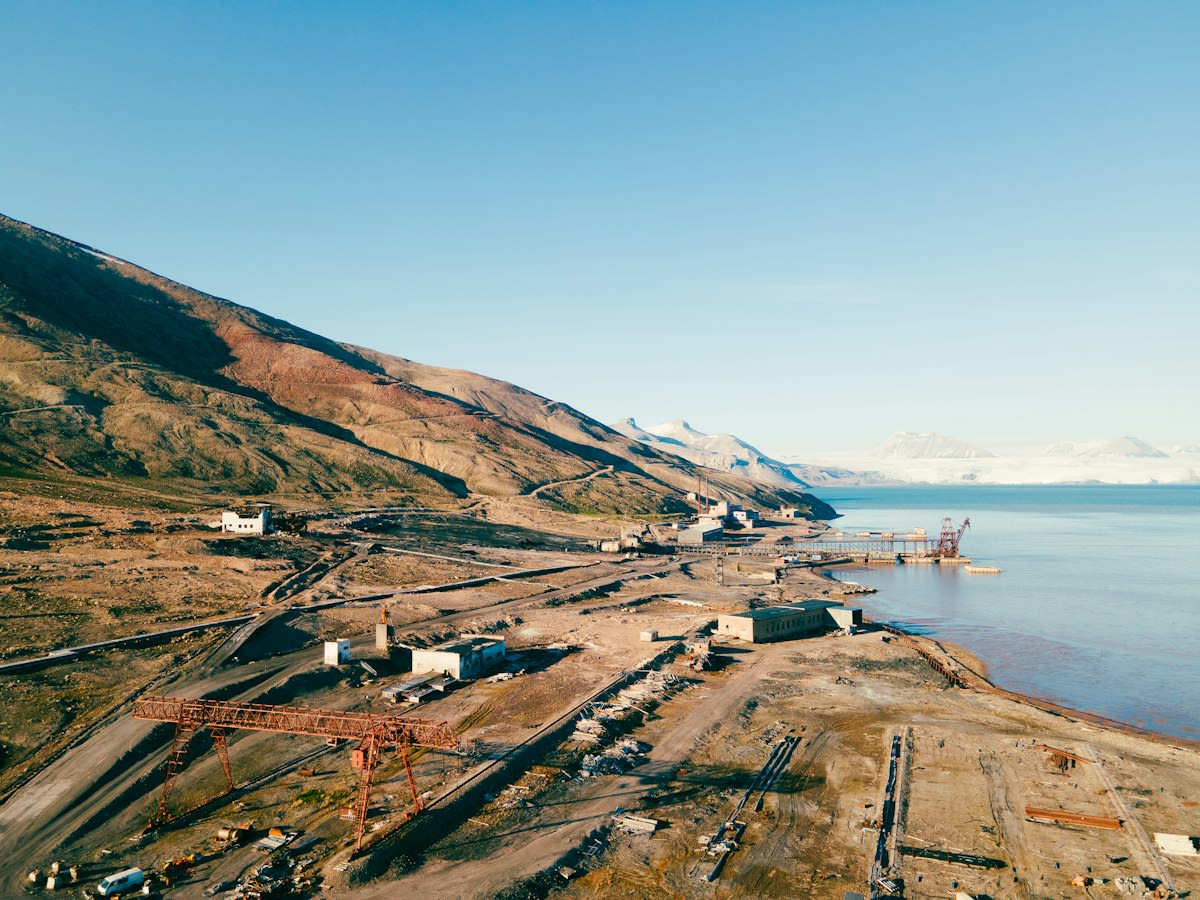
This economic pressure creates a powerful incentive to move North. By relocating to the Arctic or sub-Arctic regions, operators can bypass the congested queues of Northern Virginia or London. They trade the proximity of the city for the availability of raw power and the ability to scale without fighting a million other entities for the same megawatt.
The Thermal Wall and the Liquid Shift
Beyond the power grid, there is the heat. AI training clusters operate at rack densities that would melt traditional air-cooled facilities. This has triggered a violent pivot toward liquid cooling. The immersion cooling fluids market is projected to hit $1.06 billion by 2033, as operators move toward mineral oils, synthetic fluids, and fluorocarbon-based solutions to manage these thermal loads (Source: MarketsandMarkets, 2026).
The investment data reveals the urgency of this shift. In 2023, funding for immersion cooling fluids was a mere $25.3 million from a single deal. By 2024, that number rebounded sharply to $687.7 million across four deals (Source: MarketsandMarkets, 2026). This is not a gradual adoption; it is an emergency deployment. The industry realized that air cooling is fundamentally incapable of supporting the next generation of AI chips.
| Metric | 2023/2024 State | 2025/2026 Shift |
|---|---|---|
| Immersion Cooling Funding | $25.3 Million (2023) | $687.7 Million (2024) |
| Global DC Power Demand | 415 TWh (2024) | 485 TWh (2025) |
| UK Grid Connection Queue | Baseline | +460% Growth (H1 2025) |
| Dominion Zone Power Price | $60.65/MWh (2025) | $98.47/MWh (Early 2026) |
When you combine these thermal requirements with the Arctic environment, you get a synergy that goes beyond simple air conditioning. The cold ambient temperatures reduce the energy required for the primary cooling loop, while the shift to liquid immersion allows for much higher rack density. This means an operator can pack more compute power into a smaller physical footprint, reducing the overall construction cost and the energy overhead of the facility.
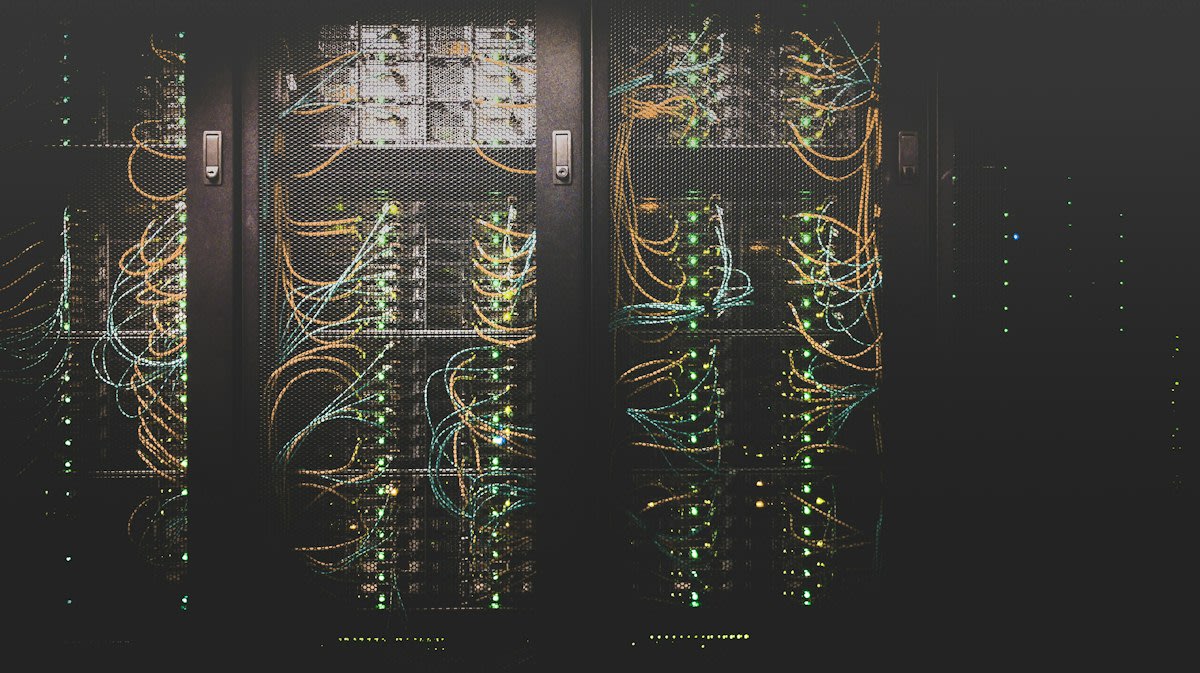
From a practitioner's perspective, the internal debates in the C-suite have shifted from 'How do we optimize our PUE (Power Usage Effectiveness)?' to 'Where on earth can we actually get 100 megawatts of stable power today?' There is a hidden friction in these discussions regarding the choice between single-phase and two-phase immersion systems. Single-phase is safer and easier to maintain, but two-phase offers superior heat transfer. Engineers are currently arguing over the long-term stability of fluorocarbon fluids versus the lower efficiency of mineral oils, all while the business side is screaming that they need the cluster online yesterday.
Opportunity Amidst the Frost
This migration is not just a flight from failure; it is an opportunity for resilience. The Arctic offers more than just cold air; it offers a chance to integrate with untapped renewable energy sources. By moving away from the saturated grids of the US East Coast or Western Europe, AI firms can build dedicated power plants—often leveraging geothermal or hydroelectric power—that allow them to operate independently of the public grid's volatility.
We are also seeing a rise in waste-heat utilization. In traditional urban data centers, heat is a waste product to be expelled. In the Arctic, that heat is a resource. There is growing interest in using absorption chillers and combined heat and power (CHP) systems to redirect server heat into local community heating or industrial processes (Source: Avanza Energy, 2024). This transforms the data center from a parasitic energy consumer into a symbiotic part of the local infrastructure.
Fact-Check & Accuracy Note
The key claims regarding global electricity consumption and grid queues are sourced from the International Energy Agency (IEA) and Nasdaq (2025). The liquid cooling investment spikes are attributed to MarketsandMarkets (2026). The specific power price premiums in the Dominion zone are sourced from Amperon (2026). The debate over immersion cooling fluids is an ongoing technical discussion within the high-performance computing (HPC) community.
Ultimately, the move to the Arctic is a signal that the 'cloud' is becoming too heavy for the ground it was built on. The centralization of compute in a few global hubs has reached a breaking point. The future of AI infrastructure will be decentralized, distributed, and increasingly cold. Those who can solve the logistics of the North will own the compute capacity of the next decade.