
The Fallacy of the Hourly Wage
For four decades, the corporate playbook was written in the language of nominal labor costs. The strategy was linear: identify a region where the hourly wage was a fraction of the domestic rate, export the production line, and absorb the logistical friction as a necessary cost of doing business. This model thrived because the productivity gap between a worker in Ohio and a worker in Vietnam was negligible, meaning the only real variable was the paycheck. However, this obsession with the per-hour rate blinded executives to the compounding costs of distance, quality drift, and intellectual property leakage.
The introduction of high-density AI automation has fundamentally broken this equation. We are seeing a decoupling of output from human labor hours. When an AI-orchestrated robotic cell can produce 1,000 units with zero defects and minimal supervision, the cost of the human operator becomes a rounding error in the Total Cost of Ownership (TCO). The economic incentive is no longer to find the cheapest human, but to find the highest concentration of technical infrastructure. This shift is quietly pulling production lines back to the markets they serve.
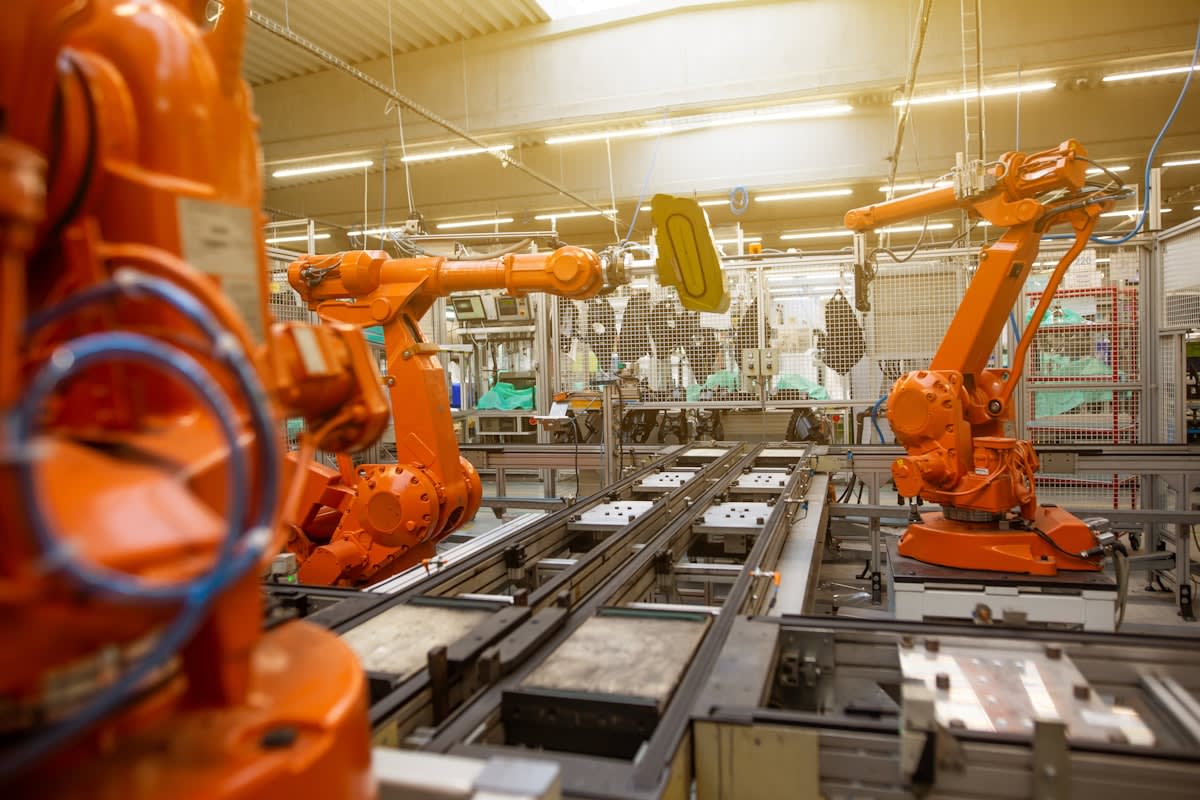
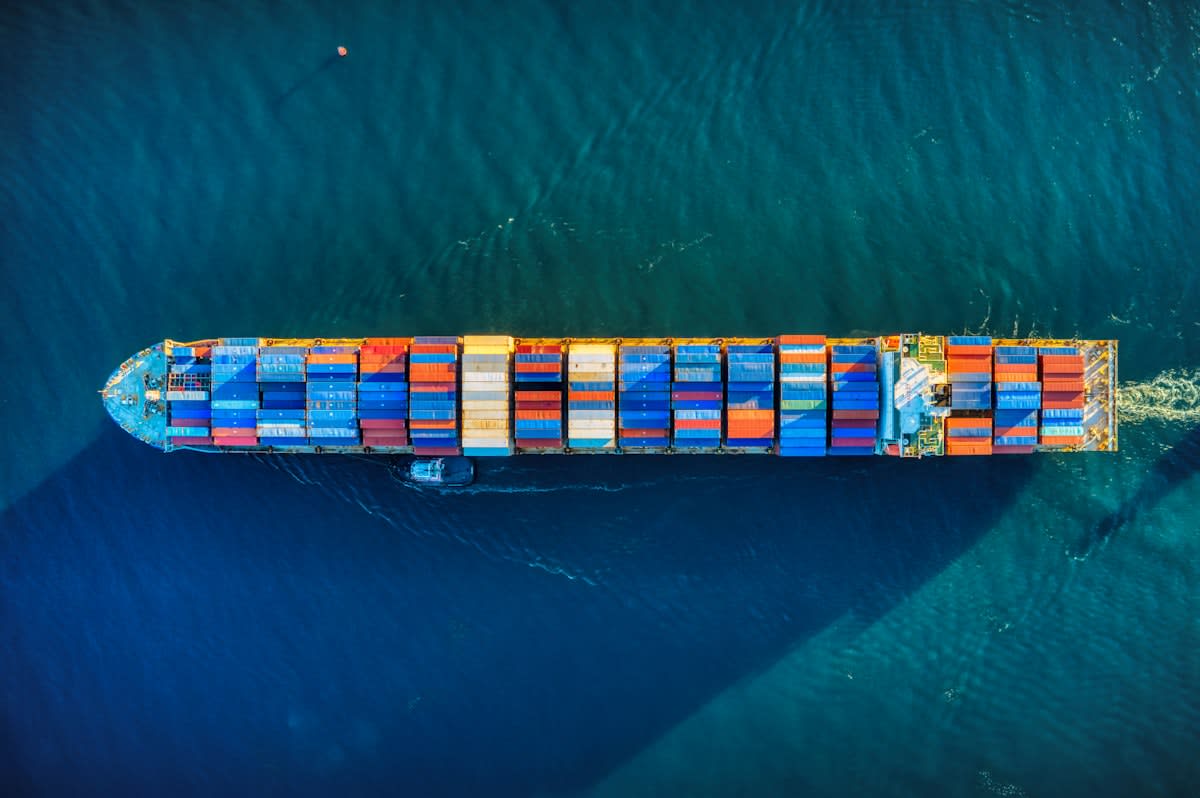
Why continue to gamble on a six-week shipping window when a domestic facility can iterate in real-time? The 'latency tax' of offshoring—the time spent waiting for samples, correcting errors, and managing customs—has become an intolerable burden in a market that demands weekly product pivots. Companies are discovering that the 20% they saved on labor is being eaten by a 30% increase in logistics costs and a permanent loss of agility. The math has simply stopped adding up.
"The global supply chain was designed for a world of static demand and cheap shipping. In a world of AI-driven customization and volatile freight, proximity is the only sustainable competitive advantage."— Marcus Thorne, Industrial Strategist
The TCO Pivot: Intelligence vs. Distance
To understand why repatriation is accelerating, one must look at the Total Cost of Ownership (TCO) rather than the unit price. Traditional offshoring ignores the cost of 'safety stock'—the massive inventories companies must hold to hedge against shipping delays. AI-integrated factories allow for just-in-time production that is actually just-in-time, reducing warehousing overhead by an estimated 15-25% in domestic settings. When you remove the need for a month's worth of inventory sitting on a container ship, the 'expensive' domestic labor cost vanishes.
| Cost Driver | Traditional Offshore (SE Asia) | AI-Repatriated (US/EU/Mexico) |
|---|---|---|
| Direct Labor Cost | Very Low | High |
| Logistics & Freight | High (Volatile) | Low (Predictable) |
| Lead Time | 4-8 Weeks | 24-72 Hours |
| IP Leakage Risk | Significant | Minimal |
| Quality Control | Reactive/Sample-based | Proactive/AI-Real-time |
| Inventory Holding | High (Safety Stock) | Low (On-Demand) |
The table reveals a stark reality: the 'low cost' of offshore labor is a mirage. While the payroll is cheaper, the operational risk is exponentially higher. In regions like the Bajío area of Mexico or Lower Silesia in Poland, we see a hybrid model emerging. These hubs provide a buffer, offering proximity to major markets while utilizing AI to maintain high precision. They are not just 'cheaper' alternatives; they are strategic nodes that prioritize speed over sheer labor volume.
Strategic Insight
The 'Latency Tax' is the invisible drain on corporate margins. Every hour a product spends in transit is capital that is not working. AI repatriation converts this dead time into active market responsiveness.
Furthermore, the rise of generative design is shortening the bridge between concept and creation. When an AI can optimize a part for 3D printing or automated milling in seconds, the need to send blueprints across the ocean for a prototype is gone. The cycle of 'design-test-fail-repeat' now happens within a single building. This compression of the innovation cycle makes the geographic distance of offshore factories an active hindrance to growth.
Does this mean the end of global trade? Not necessarily, but it signals the end of the 'sweatshop' as a viable business model. The value is shifting from the hand that assembles the product to the algorithm that optimizes the assembly. High-wage nations are not competing on labor costs; they are competing on 'intelligence density.' By integrating AI into the factory floor, they can achieve a cost-per-unit that is competitive with offshore sites while maintaining a level of quality control that humans simply cannot match.
Consider the impact on intellectual property. In the traditional offshore model, blueprints were shared with third-party vendors in jurisdictions with lax enforcement. This created a permanent leak of proprietary technology. Repatriation via AI removes the middleman. When the production is handled by a closed-loop AI system in a domestic facility, the secret sauce stays within the company walls. The cost of a single stolen patent often outweighs ten years of labor savings.
We are witnessing a transition toward 'friend-shoring' and 'near-shoring,' where the goal is resilience over raw cost. The fragility of the 2020-2022 supply chain shocks served as a catalyst, but AI is the engine making this transition economically feasible. Without AI, reshoring would have been a political vanity project. With AI, it is a cold, hard financial calculation. The logic of the global factory has collapsed under the weight of its own complexity.
The final nail in the coffin for offshore manufacturing is the move toward hyper-personalization. Consumers no longer want a million identical units; they want one unit tailored to their specific needs. This requires a level of flexibility that a massive, distant factory cannot provide. Small, AI-driven 'micro-factories' located in urban centers can produce customized goods on demand, eliminating the need for mass production and the subsequent waste of unsold inventory.