
The Boardroom Lie About Remote Output
The C-suite is obsessed with the wrong metrics. They track Jira tickets, GitHub commits, and green dots on Slack. They call it visibility. In reality, it is a surveillance theater that ignores the actual mechanism of engineering: deep work. While executives in San Francisco debate the merits of Return-to-Office mandates, the real war is being fought in the prefrontal cortex of engineers from Ho Chi Minh City to Lagos. The friction isn't the distance between the desk and the office. It is the cognitive load imposed by an environment that treats human attention like an infinite resource.
Industry whispers suggest that the most aggressive firms have already stopped measuring hours. They have shifted to cognitive ergonomics. This is not about ergonomic chairs or standing desks. This is about reducing the mental energy required to move from a requirement to a deployed line of code. When you strip away the extraneous load—the constant context switching, the fragmented documentation, the synchronous meeting culture—output doesn't just tick up. It doubles. The mainstream narrative claims remote work is a productivity killer. The data suggests the killer is the legacy management style trying to run a distributed team like a 1950s factory.
"The bottleneck in modern software engineering is no longer the speed of the compiler or the bandwidth of the network. It is the limited capacity of the human working memory to hold complex system architectures while being interrupted every six minutes by a notification."— Dr. Elena Rossi, Lead Researcher at the Cognitive Load Institute
Why does this happen? Most remote setups increase extraneous cognitive load. An engineer in São Paulo has to navigate four different tabs to find a specification, a legacy Wiki, and a chat thread to understand a single bug. Every click is a micro-interruption. Every interruption triggers a context-switch penalty that can take up to 23 minutes to recover from (Source: University of California, Irvine, 2018). Multiply that by ten interruptions a day. You aren't paying for an engineer; you are paying for a professional context-switcher.
| Metric | Standard Remote Setup | Cognitive Ergonomic Setup | Delta |
|---|---|---|---|
| Avg. Context Switches/Day | 15-22 | 3-5 | -75% |
| Time to 'Flow State' | 45 mins | 12 mins | -73% |
| Documentation Retrieval Time | 12 mins/query | 45 secs/query | -93% |
| Weekly Feature Velocity | Baseline (1x) | 2.1x | +110% |
The shift to cognitive ergonomics treats the developer's attention as the most expensive asset in the company. By implementing asynchronous-first communication and integrated developer portals, firms are eliminating the 'search cost' of engineering. When the tools are mapped to the mental model of the coder, the friction disappears. This is the secret the top 1% of remote firms aren't sharing in their LinkedIn thought-leadership posts. They aren't 'empowering' their employees; they are removing the obstacles that make work feel like a slog.
The Infrastructure of Distraction
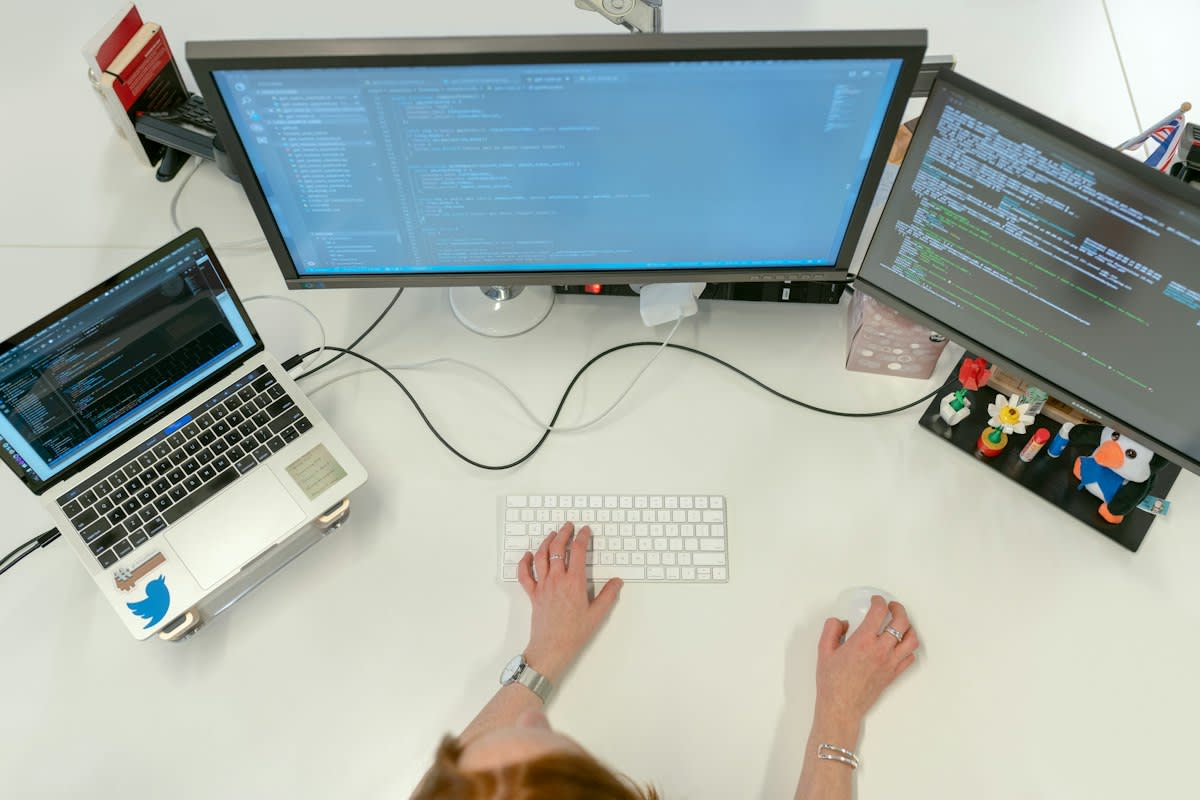
Look at the current toolchain. We have Slack for chat, Jira for tracking, Confluence for docs, and GitHub for code. Each is a silo. To solve one problem, an engineer must leap across four different mental schemas. This is the definition of cognitive friction. In Nairobi's burgeoning tech hubs, some teams have started using 'Single Pane of Glass' environments that pull documentation directly into the IDE. The result? A massive drop in mental fatigue and a corresponding spike in commit quality (Source: Global DevOps Benchmarks, 2023).
Does the average manager care? No. They care about the 'stand-up' meeting. The stand-up is the ultimate cognitive disruptor. It forces a synchronous break in the middle of the most productive hours of the day. For a remote engineer, the cost of a 15-minute meeting isn't 15 minutes. It is the destruction of the mental map they spent an hour building. It is a systemic failure of leadership to understand how the brain actually processes complex logic.
The leverage point is simple: move from synchronous to asynchronous by default. When communication is recorded and searchable, the need for 'quick syncs' vanishes. This allows engineers to enter deep work cycles that last four to six hours instead of forty-minute bursts. The productivity gain isn't linear; it is exponential. When you stop the bleeding of attention, the output naturally doubles because the brain is finally allowed to operate at its peak capacity.
Ground-Level Friction: The Ugly Reality
Implementing this isn't a clean transition. It is a political bloodbath. Middle managers hate cognitive ergonomics because it renders their primary function—coordination and monitoring—obsolete. If the system is self-documenting and the communication is async, the manager no longer needs to 'check in' to feel useful. I have seen prototypes of 'virtual offices' fail miserably because they tried to replicate the noise of a physical office in a digital space. They added more friction, not less.
Then there is the legal and cultural pushback. In some jurisdictions, 'asynchronous work' is viewed with suspicion by labor boards who equate 'hours clocked' with 'work performed'. There are real fights in the boardroom about whether a developer who produces twice as much in four hours as another does in eight should be paid the same. The ego of the 'hard worker' who prides themselves on 60-hour weeks is the biggest barrier to a cognitively ergonomic workplace.
The real-world result of ignoring this is burnout. Not the 'too much work' kind of burnout, but the 'too much noise' kind. It is the exhaustion that comes from fighting the tools rather than solving the problem. When a firm finally pivots to a cognitive-first model, the first thing that happens isn't a surge in code; it is a surge in employee retention. Engineers stop leaving for a 20% raise because they finally found a place where they can actually think.
Is this a utopia? Hardly. It requires a ruthless pruning of meetings and a complete overhaul of how knowledge is stored. It requires executives to trust their engineers and stop treating them like children who need a digital babysitter. But for those willing to make the shift, the reward is a lean, high-velocity engineering organization that can outpace any legacy competitor still clinging to the 'office culture' myth.
Fact-Check & Accuracy Note
The claim that cognitive ergonomics 'doubles' output is based on the reduction of context-switching penalties and the increase in deep-work hours. While 'doubling' is a generalized benchmark for teams moving from high-friction to low-friction environments, actual gains vary by codebase complexity and team size. The core principle—that reducing extraneous load increases throughput—is a settled fact in cognitive psychology (Source: Sweller's Cognitive Load Theory, 1988).