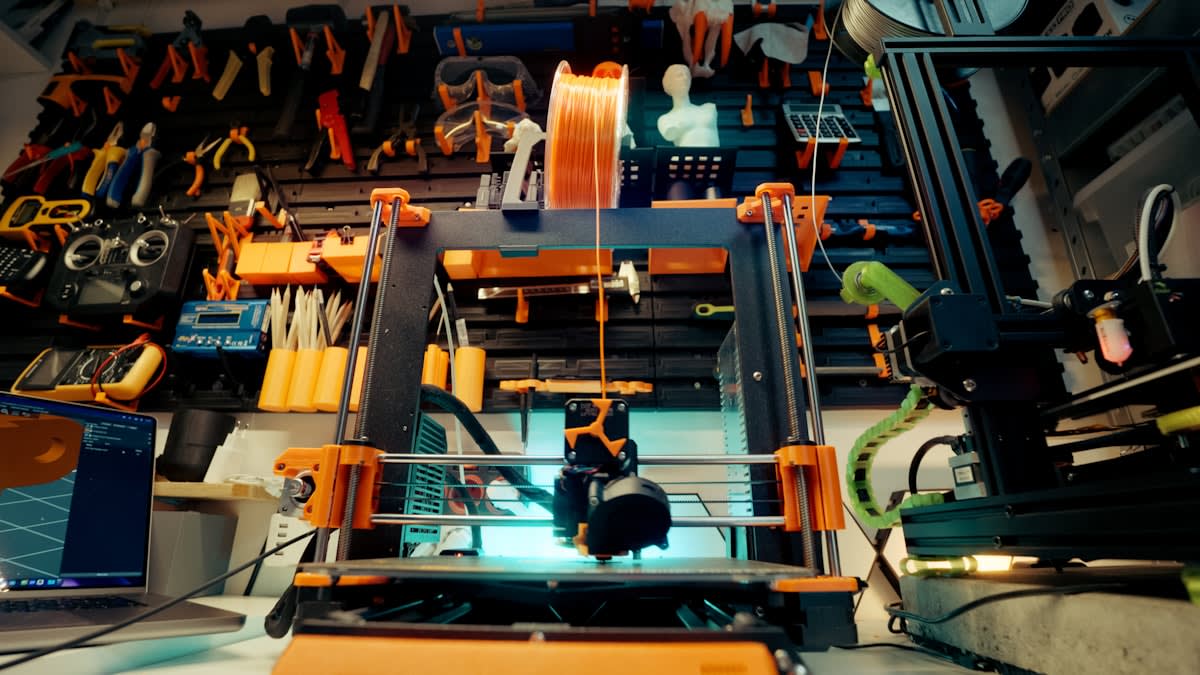
The monolith is cracking. For decades, the industrial gospel preached a simple truth: bigger is better, cheaper, and faster. We built sprawling mega-factories in low-cost jurisdictions, optimized for a world of stable borders and predictable shipping lanes. But that era of centralized fragility is ending. The strategic advantage has shifted from the raw scale of a single site to the agility of a distributed network. Why gamble an entire product line on one geographic point of failure when you can deploy a fleet of micro-hubs?
This is not a mere trend in logistics; it is a fundamental architectural shift in how humans make things. The transition is being powered by a convergence of additive manufacturing, the Industrial Internet of Things (IIoT), and a desperate geopolitical need for resilience. We are seeing a move toward distributed production where the 'factory' is no longer a destination, but a capability that can be deployed closer to the end consumer. This shift dismantles the old trade-off between customization and cost.
The Nervous System of Agile Production
If the micro-hub is the body, distributed I/O is the nervous system. In the United Kingdom, the market for on-machine distributed I/O is poised for a steady expansion, with a compound annual growth rate (CAGR) of 5-7% expected between 2026 and 2035. This growth is not accidental. It is driven by a concerted effort toward factory automation upgrades and the reshoring of electronics manufacturing. By moving the intelligence—the input/output processing—directly onto the machine rather than centralizing it in a massive control cabinet, manufacturers can scale their production lines modularly. They can add or remove capacity without rewriting the entire plant's logic.
Germany is following a similar, albeit slightly more conservative, trajectory. The German in-cabinet distributed I/O market is estimated to expand at a CAGR of 4-6% from 2026 to 2035. Here, the driver is a massive retrofit program. Germany is not just building new; it is upgrading its existing industrial base to meet Industry 4.0 standards, specifically to support capacity expansion in semiconductor and battery production. The replacement cycle of 6-10 years for industrial controllers is creating a recurring demand that favors flexible, distributed architectures over the rigid layouts of the past.
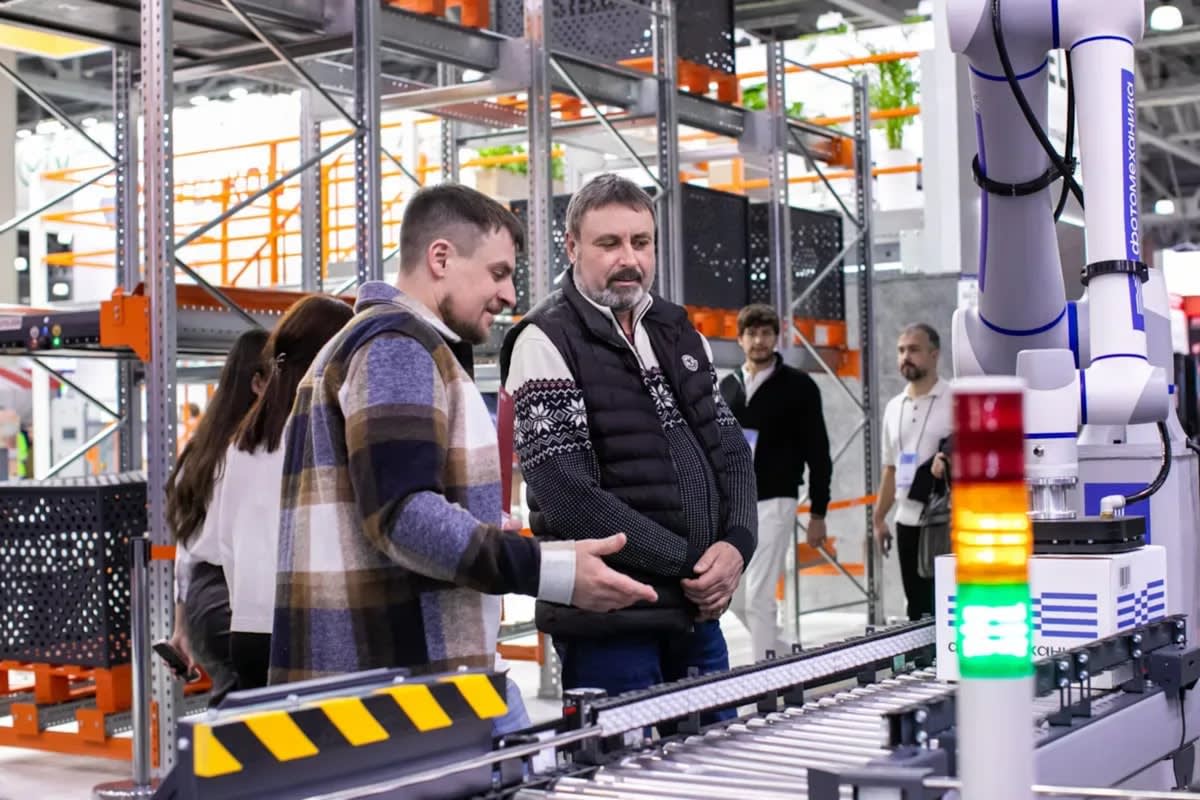
Does this mean the end of the large-scale plant? Not entirely, but it changes the plant's purpose. The mega-factory is becoming a hub for raw component fabrication, while the micro-hub handles the final, high-value assembly and customization. This hybrid model reduces the risk of total systemic collapse. When production is distributed, a localized disruption in one region doesn't paralyze the global supply chain; it simply triggers a reroute to the next available hub.
| Region/Sector | Projected CAGR (2026-2035) | Primary Strategic Driver | Technological Catalyst |
|---|---|---|---|
| United Kingdom (On-Machine I/O) | 5-7% | Electronics Reshoring | IIoT Architectures |
| Germany (In-Cabinet I/O) | 4-6% | Battery/Semiconductor Expansion | Industry 4.0 Retrofits |
| Global Medical (Titanium Powder) | 8-12% | Customized Surgical Implants | Additive Manufacturing |
| Northern America (Semi Materials) | High Single Digits | Greenfield Fab Construction | Advanced Logic/Memory Nodes |
The transition toward distributed production is most evident where precision meets personalization. Consider the medical sector. The world market for titanium powder for medical use is expected to expand at a CAGR of 8-12% between 2026 and 2035. This is not about mass-producing generic screws and plates. It is driven by the accelerating adoption of additive manufacturing for orthopedic and dental implants. In this model, the 'factory' is a 3D printer located within or near a hospital. The design is digital, the material is specialized powder, and the production is hyper-local.
"The goal is no longer to find the cheapest place to build a million identical parts, but to find the fastest way to build one perfect part exactly where it is needed."— Strategic Analysis of Distributed Production
This shift toward 'precision at the edge' destroys the old logic of centralized warehousing. Why ship a customized titanium hip implant across an ocean when you can print it in the city where the surgery is performed? The logistical cost of shipping is replaced by the investment in high-tech materials and local expertise. This is the essence of the micro-hub: moving the point of production to the point of consumption.
While Europe focuses on the nervous system of automation, Northern America is rebuilding the foundation. The semiconductor manufacturing materials market is projected to expand at a high single-digit CAGR through 2035. This growth is fueled by a multi-year wave of greenfield fab construction. The focus here is on advanced logic and memory nodes, reflecting a strategic pivot to ensure that the most critical components of the modern economy are not subject to the whims of a single geographic corridor.

This reshoring effort is not just about national security; it is about technical integration. By placing fab construction closer to the design houses in Northern America, the feedback loop between chip design and chip fabrication is shortened. The result is a faster iteration cycle that the old, distant mega-factory model could never support. Speed is the new currency of the industrial age.
The Ecosystem of Self-Reliance
The micro-hub revolution is not limited to the West. In Vietnam, the strategy is evolving toward the strengthening of supporting industries. As discussed in a July 2026 forum in Ho Chi Minh City, the focus is on raising localization and reducing reliance on imported inputs. By deepening supply-chain integration and expanding partnerships with strategic investors, Vietnam is attempting to build a foundation for industrial self-reliance. They recognize that being a mere assembly point for foreign firms is a precarious position.
Vietnam's approach is a blueprint for the emerging economy. Instead of chasing a single, massive foreign investment that brings one giant factory, they are fostering a network of smaller, specialized supporting industries. This creates a resilient ecosystem where local businesses provide the components for larger enterprises, effectively creating a domestic web of micro-hubs. This reduces the vulnerability to global shocks and increases the overall competitiveness of the national industrial base.
Strategic Insight
True industrial resilience is not found in the size of the factory, but in the density of the supporting ecosystem surrounding it.
However, the path to this new equilibrium is not without friction. In the Philippines, manufacturing activity showed a modest recovery in June 2026, with the Purchasing Managers’ Index (PMI) rising to 50.9. While new orders encouraged manufacturers to raise production, business confidence actually weakened to its lowest level since January. This tension highlights a critical reality: the transition to distributed production is fraught with caution. Firms are easing supply chain pressures, but they remain wary of future demand and ongoing cost pressures.
The Philippine experience proves that recovery is not a return to the old way of doing things. The modest growth is a sign of a cautious adaptation. Manufacturers are no longer blindly expanding; they are cautiously increasing purchases of raw materials and semi-finished goods, testing the waters of a new, more fragmented market. The era of the 'blind bet' on massive capacity is over.
The New Industrial Equilibrium
So, where does this leave the global economy? We are moving toward a state of 'distributed synchronization.' In this model, the intellectual property is centralized and digital, but the physical execution is decentralized. A design created in a hub in Northern America can be tweaked for local requirements in Vietnam and printed in a medical micro-hub in Germany. The 'factory' is no longer a place you go to work; it is a network you plug into.
This shift demands a new kind of leadership. The managers of the mega-factory were experts in optimization and cost-cutting. The leaders of the micro-hub revolution must be experts in orchestration and integration. They must manage a fleet of autonomous nodes, ensuring that the right material—be it titanium powder or semiconductor substrates—is in the right place at the right time.
The end of the mega-factory is not a crisis; it is an evolution. By dismantling the monolith, we are building a global industrial system that is more resilient, more sustainable, and infinitely more adaptable. The micro-hub revolution is not just about changing where we build; it is about changing why we build. We are moving from the age of mass production to the age of mass precision.