
Your degree is lying. While academic institutions still grade based on the final deliverable, the global market now ignores the result to scrutinize the hidden process of creation. Truth lives in the logs. Do you really believe a hiring manager cares about a finished codebase when the volume of produced code has skyrocketed from 2.3 KLOC in 2021 to 11 KLOC by 2025 (Source: Arxiv, 2026)? Volume is a mask.
The New Baseline of Competence
Output is cheap now. When GenAI tools saturate the market, the ability to generate a thousand lines of code or a ten-page technical manual becomes a baseline expectation rather than a skill. This creates a collision between old credentials and new realities. We see this in technical translation where professionals report faster work but simultaneously face increased verification demands to catch AI-generated hallucinations (Source: Slator, 2026). Speed is no longer the prize.

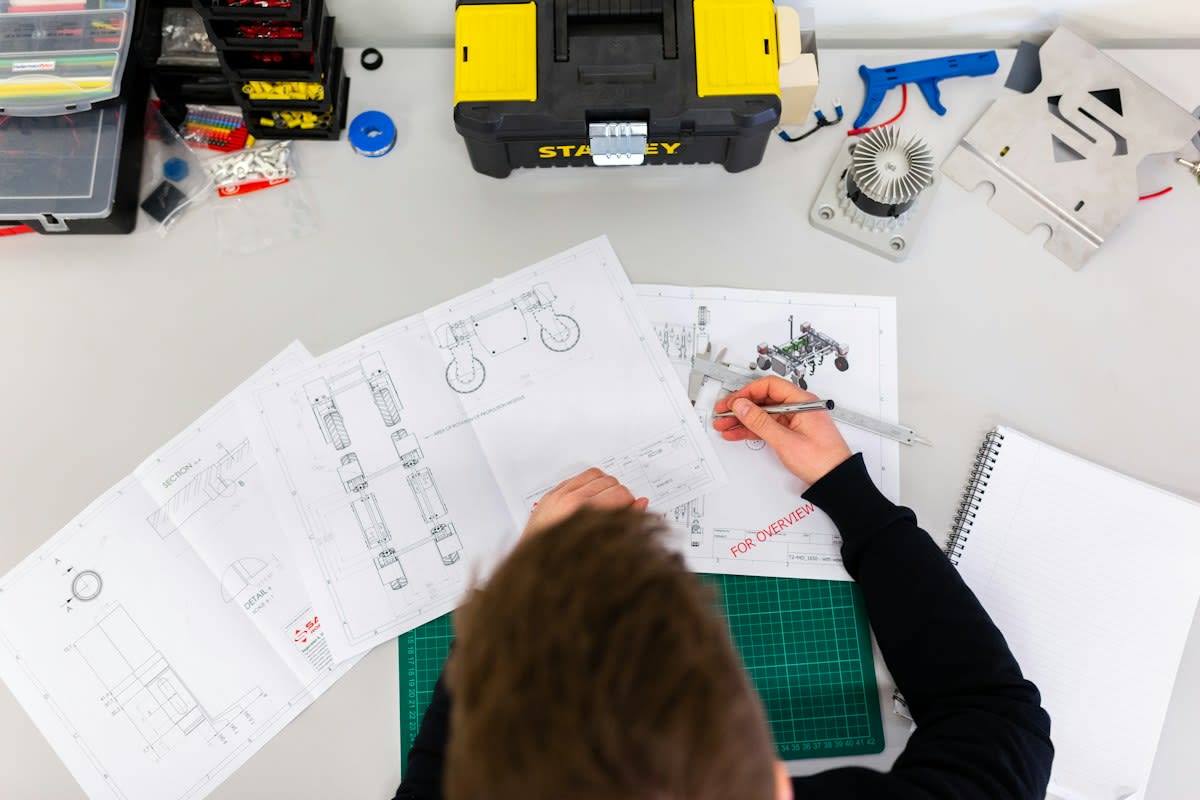
Verification is the new skill. In the engineering sectors of Turkey and Germany, the benchmark for a lead engineer has moved beyond technical knowledge to the ability to combine that knowledge with precise professional English (Source: Flalingo, 2026). If you cannot explain a technical drawing to a global stakeholder, your technical skill is effectively zero. Communication is the filter.
"Linguists described faster work and improved output while also reporting additional effort, quality problems, and increased verification demands."— Slator Research Report, AI and the Transformation of Professional Translation Work
Prerequisites for Modern Verification
Stop collecting certificates. The market now demands evidence of the struggle, not just the victory. You need a transparent audit trail of your decision-making process. This includes version control history, rejected iterations, and a log of how you corrected AI errors. Proof is the currency.
- A version-controlled repository showing non-monotonic progress (Source: Arxiv, 2026).
- A verification log detailing specific AI corrections in technical documentation.
- Proof of domain-specific terminology alignment across multiple languages (Source: Blarlo, 2026).
- Case studies demonstrating the resolution of regulatory compliance errors in industrial manuals.
How to Verify Your Skills in the AI Era
Audit your volume. If your output has increased significantly without a corresponding increase in your deep-work hours, you are likely relying on invisible benchmarks that will fail during a live technical interview. Analyze your code size growth. The jump in median end-project code size from 3.4 KLOC in 2023 to 11 KLOC in 2025 suggests that the weight of the project is shifting toward management rather than authorship (Source: Arxiv, 2026). Volume hides fragility.
- Document the Delta: Record the difference between the AI's first draft and your final verified version to prove your editorial value.
- Build a Technical Lexicon: Create a personal database of domain-specific terms to ensure consistency across global projects (Source: Blarlo, 2026).
- Simulate Mechanical Failure: Intentionally introduce errors into your work and document the process of finding and fixing them.
- Bridge the Language Gap: Practice explaining complex technical results in simplified professional English to avoid the communication bottleneck (Source: Flalingo, 2026).
Focus on the edges. The most valuable professionals are those who can manage the transition between automated production and human-centric regulatory compliance. Look at industrial translation processes where the real value lies in assessing target audience regulations and domain complexity before a single word is written (Source: Blarlo, 2026). Preparation is the differentiator.
The Practitioner's Reality: Internal Industry Disputes
The boardrooms are fighting. I have sat in meetings where senior architects scream at junior developers for submitting 10,000 lines of perfectly functional code that no human can actually maintain. The dispute is not about whether the code works but who owns the logic. Juniors argue that productivity is up; seniors argue that the technical debt is now an invisible mountain. This is the real battleground of modern employment.
| Metric | 2021 Baseline | 2025 Projection | Verification Requirement |
|---|---|---|---|
| Median End Code Size | 2.3 KLOC | 11 KLOC | Logic Audit Trail |
| Translation Speed | Standard | Accelerated | Hallucination Check |
| Comm. Precision | Technical Only | Technical + Global English | Stakeholder Alignment |
Adapt your narrative. Instead of claiming you can use AI to work faster, claim you can use AI to produce a volume of work that you can then rigorously verify. This shifts you from a user to an auditor. Auditors are the ones who survive the cull.
Fact-Check & Accuracy Note
The data on code size growth is derived from a longitudinal study of team-based capstone projects (Source: Arxiv, 2026). There is ongoing academic debate regarding whether this increase in KLOC represents actual complexity or merely the inclusion of boilerplate AI-generated code. Similarly, the effects of screen exposure on neurodevelopment (Source: Cureus, 2026) highlight the difficulty of establishing direct causality in longitudinal designs due to selection bias.
Common Pitfalls in Skill Verification
Relying on volume. Many professionals mistake a high volume of output for high productivity, ignoring the fact that verification demands have increased in tandem with AI adoption (Source: Slator, 2026). This is a trap. You are not being paid to produce more; you are being paid to be right.
Ignoring the soft-skill filter. Technical experts often assume their brilliance transcends language, yet the global market requires a specific blend of technical precision and language mastery (Source: Flalingo, 2026). This gap kills careers. Your expertise is invisible if you cannot communicate it.
Editorial Note
Avoid the temptation to present AI-generated portfolios as purely human work. Experienced reviewers now look for the non-monotonic patterns in development—the dips and rises in progress—that characterize genuine human problem-solving (Source: Arxiv, 2026).