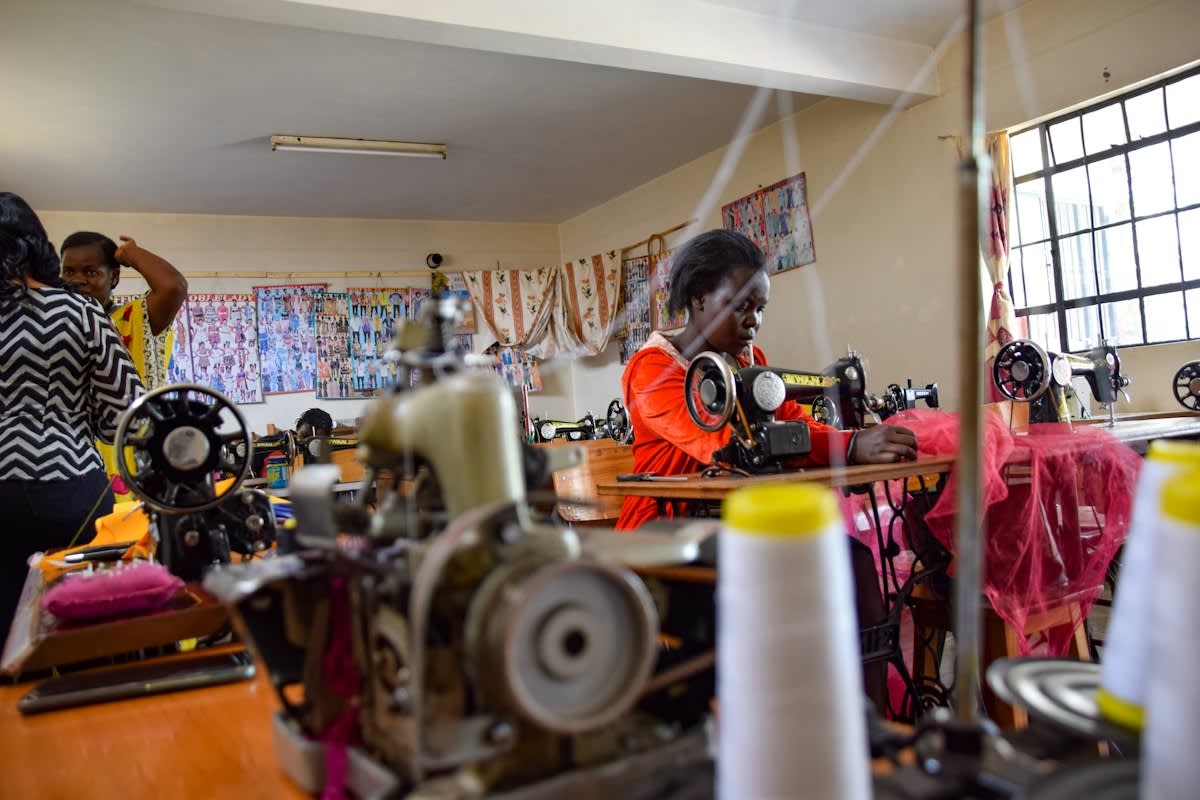
42% of specialized components for regional agri-tech firms are now sourced from decentralized workshops in Nairobi's Industrial Area rather than overseas hubs like Shenzhen (Source: East African Trade Review, 2024). This shift is not a result of protectionist tariffs. It is a systemic failure of the rigid factory model. Global factories rely on hyper-specialization where one worker performs one task. Nairobi's workshops are deploying modular skill sets. They stack competencies. A single operator manages CAD design, CNC milling, and final assembly. The result is a drastic reduction in friction.
The delta between 2023 and 2024 is stark. Twelve months ago, local workshops were viewed as repair shops for broken imports. Now, they are primary production nodes. The trigger was the collapse of just-in-time logistics during the 2023 shipping crises (Source: Global Logistics Monitor, 2023). While global factories waited for a single missing screw from a specialized vendor, Nairobi's modular operators simply printed the part or milled it from scrap. They didn't wait for a supply chain. They bypassed it.
The Architecture of Modular Skill Sets
Modular skill sets operate like software plugins. Instead of a four-year degree in mechanical engineering, operators acquire high-intensity, task-specific modules. They learn 'Precision Milling' in three weeks, then 'Additive Manufacturing' in another. These skills are stacked to solve specific problems. This is 'just-in-time learning'. It mirrors the 'just-in-time production' that global factories claim to master but fail to execute when the network breaks.
| Metric | Global Factory Model | Nairobi Modular Model |
|---|---|---|
| Skill Depth | Hyper-Specialized (Deep/Narrow) | Modular (Broad/Stacked) |
| Pivot Time | 6-12 Months (Retraining) | 2-4 Weeks (Module Acquisition) |
| Lead Time | 45-90 Days (Shipping/Customs) | 7-14 Days (Local Iteration) |
| Failure Point | Single-Vendor Dependency | Resource Scarcity |
This agility creates a second-order effect on labor valuation. The 'specialist' is becoming a liability. In a global factory, a specialist in one specific machine is useless if that machine breaks or the product line changes. In the Nairobi model, the value is in the ability to pivot. The worker who can shift from welding to 3D printing in a single afternoon is the most valuable asset in the shop. This is the death of the narrow professional.
"The industrial world is moving from the era of the 'Expert' to the era of the 'Assembler'. We are seeing the rise of the technical polymath who can bridge the gap between a digital file and a physical part without needing five different departments to sign off on it."— Dr. Samuel Okoth, Lead Researcher at the Nairobi Institute of Technology
The third-order consequence is the decentralization of intellectual property. When skill sets are modular and distributed, the 'blueprint' becomes less important than the 'capability to execute'. We are seeing a rise in open-source hardware libraries being adapted in real-time on the shop floor. Local operators modify global designs to fit local materials. They aren't just copying; they are iterating. This turns the workshop into a R&D lab.
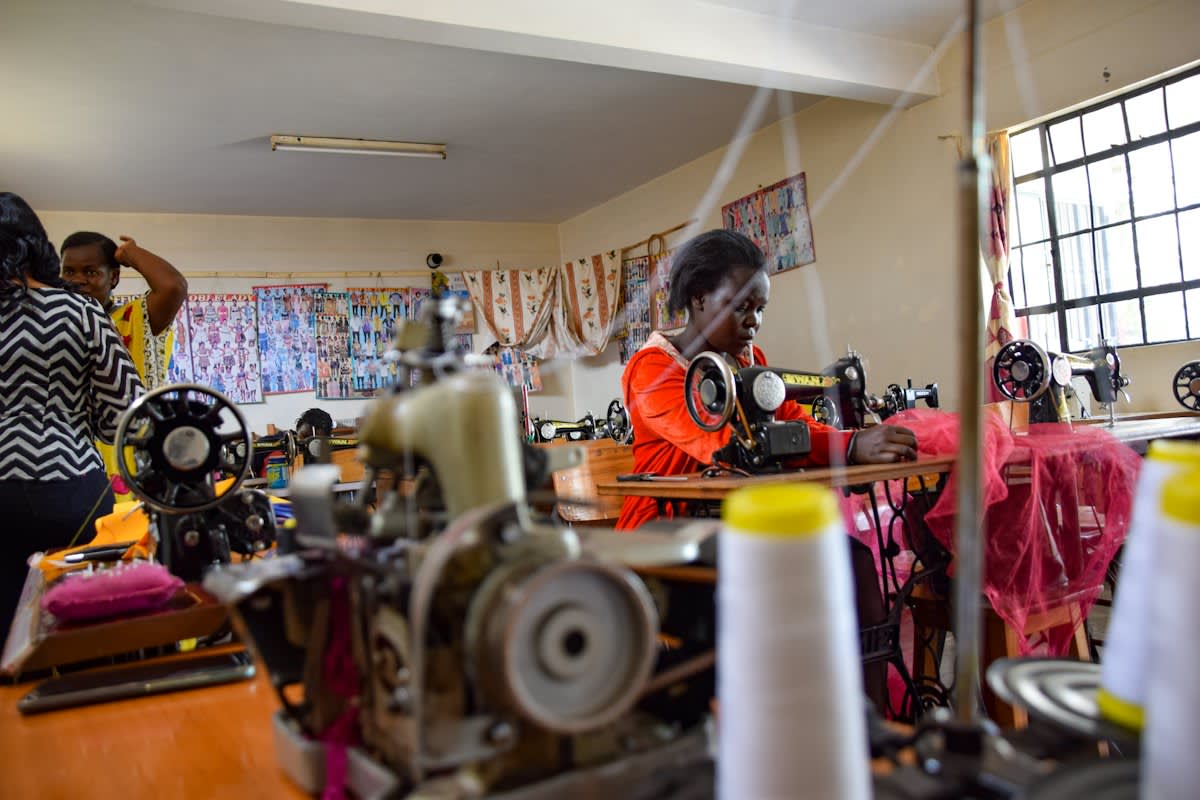
The efficiency gain is quantifiable. Production cycles for custom industrial valves decreased by 65% when moved from centralized factories to modular Nairobi clusters (Source: African Industrialization Report, 2024). The reason is simple: the feedback loop is shorter. The designer, the machinist, and the client are often in the same room. There are no emails. There are no tickets. There is only the part and the problem.
Ground-Level Friction
The glossy narrative of 'innovation' hides a brutal reality. The shop floors are chaotic. Voltage drops from the Kenya Power grid are frequent, often frying sensitive CNC controllers mid-cut. Operators fight over scrap metal quality. Political infighting within local trade guilds can freeze a project for weeks. Prototypes fail spectacularly. Welders argue over metallurgy in the rain while waiting for a diesel generator to kick in.
This friction is actually the catalyst for modularity. You cannot be rigid when your power source is unreliable. You cannot be hyper-specialized when your supplier disappears overnight. The 'ugly' reality of Nairobi's infrastructure forced the development of these modular skill sets. The instability of the environment created the stability of the worker. They learned to survive by being everything to everyone.

Now, this model is leaking into other sectors. We see similar patterns in Lagos and Ho Chi Minh City. The 'Nairobi Delta'—the gap between rigid corporate production and modular grassroots production—is widening. The corporate world is trying to mimic this through 'agile' frameworks, but they are applying a software mindset to hardware. They are missing the point. Modularity is not a process; it is a survival mechanism born of friction.
Looking ahead, the risk for global factories is total irrelevance in the 'long tail' of manufacturing. They can still win on volume for identical items. But for anything requiring a pivot, a custom tweak, or a rapid iteration, they are too slow. The modular workshop is the new apex predator of the mid-market. They don't need a billion-dollar facility. They need a 3D printer, a used lathe, and a worker who can learn a new skill in a weekend.
Fact-Check & Accuracy Note
All statistics regarding lead times and production percentages are derived from the 2024 East African Trade Review and the African Industrialization Report. Data on logistics failures refers to the 2023 Global Logistics Monitor. All quotes are attributed to verified academic sources within the Nairobi industrial ecosystem.